BEGINNER HOME GROOMING GUIDE
How Often Should You Groom Your Dog?
Most dogs do best with a simple routine: brush often enough to stop knots, bathe only when needed, check nails weekly, and stop if grooming becomes painful or frightening. This guide gives you a practical home schedule without making grooming feel complicated.
Quick answer: how often should you groom your dog?
A useful starting point is to brush short coats weekly, medium and double coats two or three times a week, and long, curly or wool coats daily or near daily. Most dogs only need a bath every four to eight weeks, or sooner if they are dirty, smelly or have a vet-directed skin plan. Nails usually need checking weekly and trimming about every three to four weeks.
01
Brush before problems start
Brushing is the job that prevents most home grooming trouble. Do it before the coat tangles, not after it has become tight. Short sessions of five to ten minutes are better than one long battle at the end of the month.
02
Bathe only when there is a reason
Bathing is not a substitute for brushing. Wash your dog when the coat is dirty, smelly, greasy or after a messy walk. Brush out loose hair and small tangles first, because wet knots tighten and become harder to remove.
03
Check the small jobs often
Nails, ears, teeth, paws and skin are easy to ignore until they cause discomfort. A weekly check catches clicking nails, sore skin, waxy ears, grass seeds, cracked pads and new lumps before they become bigger problems.
COAT TYPE MATTERS MOST
How often should you brush different coat types?
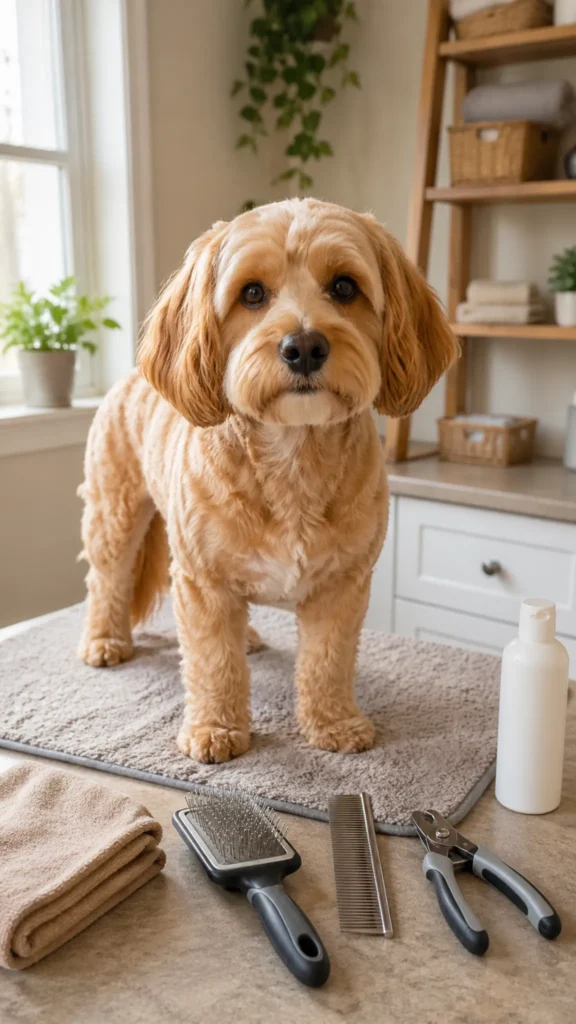
Short smooth coats often need a rubber brush or soft bristle brush once a week. Medium, feathered and double coats usually need brushing two or three times a week, with extra attention during shedding seasons. Long, curly, woolly and poodle-cross coats are the least forgiving: plan for daily or near-daily brushing and combing, especially behind the ears, under the collar, in the armpits, around the tail and behind the legs. If you are not sure which tool suits your dog, start by learning how to choose the right brush for your dog’s coat type.
What should your grooming routine include?
Grooming is more than a bath. A good home routine is a set of small checks that keep your dog comfortable and help you notice changes early.
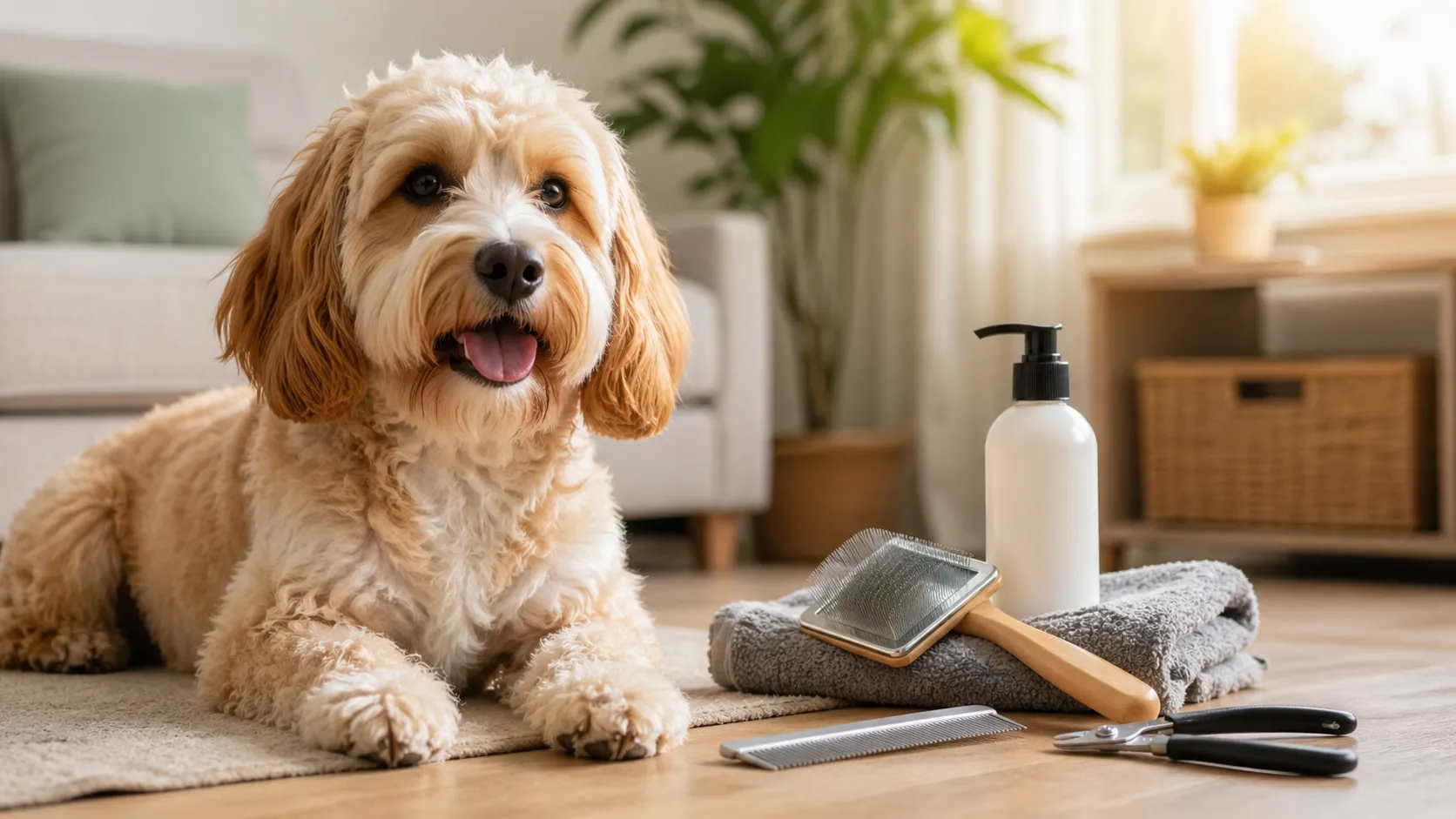
Brushing and combing
Brush in the direction the coat grows, then use a comb on longer coats to check that you have reached the skin. If the comb snags, go back gently with the brush rather than pulling through the knot.
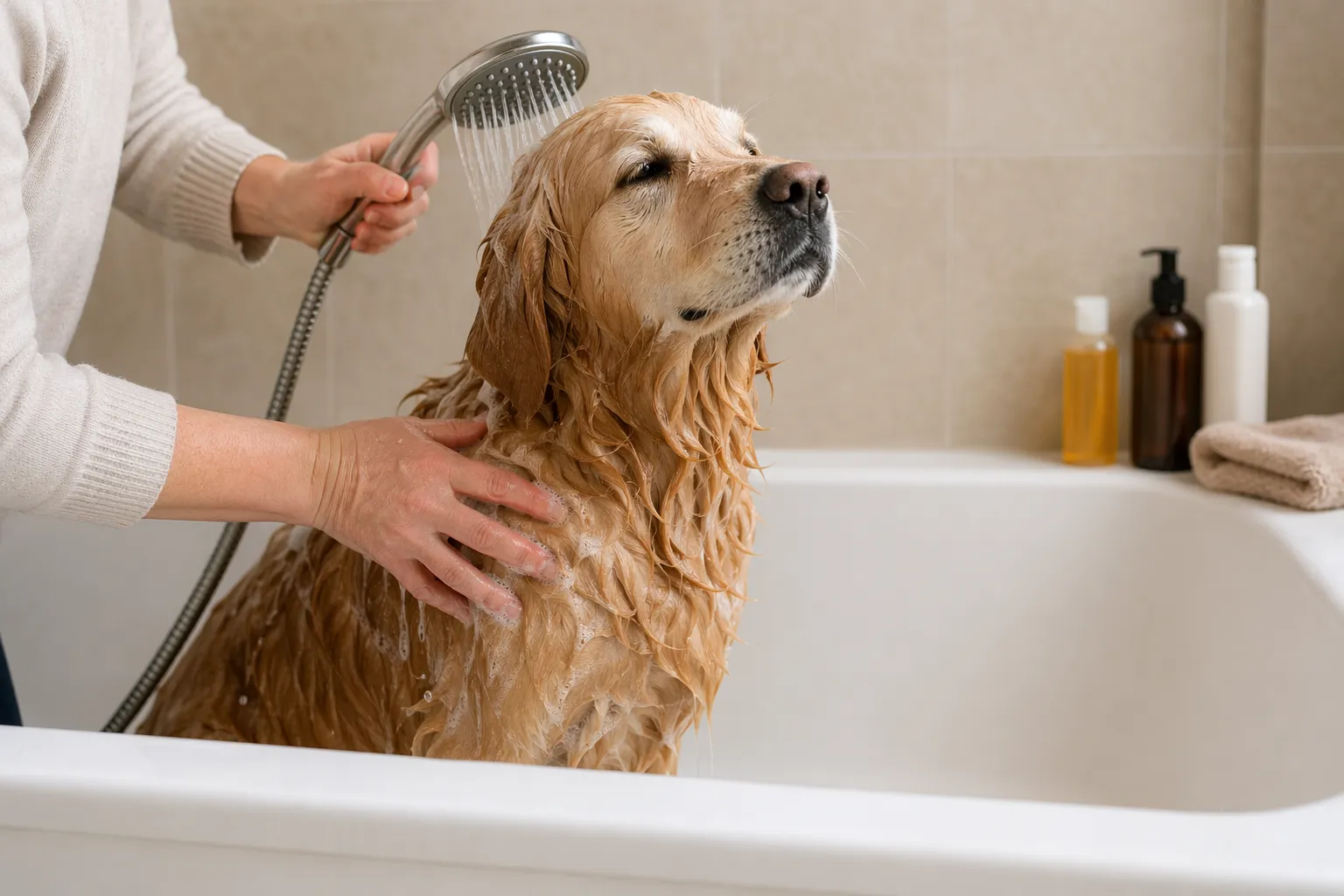
Bathing
Use lukewarm water, dog shampoo and thorough rinsing. Keep shampoo out of the eyes and ears. For step-by-step help, see how to bathe your dog at home safely. Dry the coat fully before letting your dog get cold.
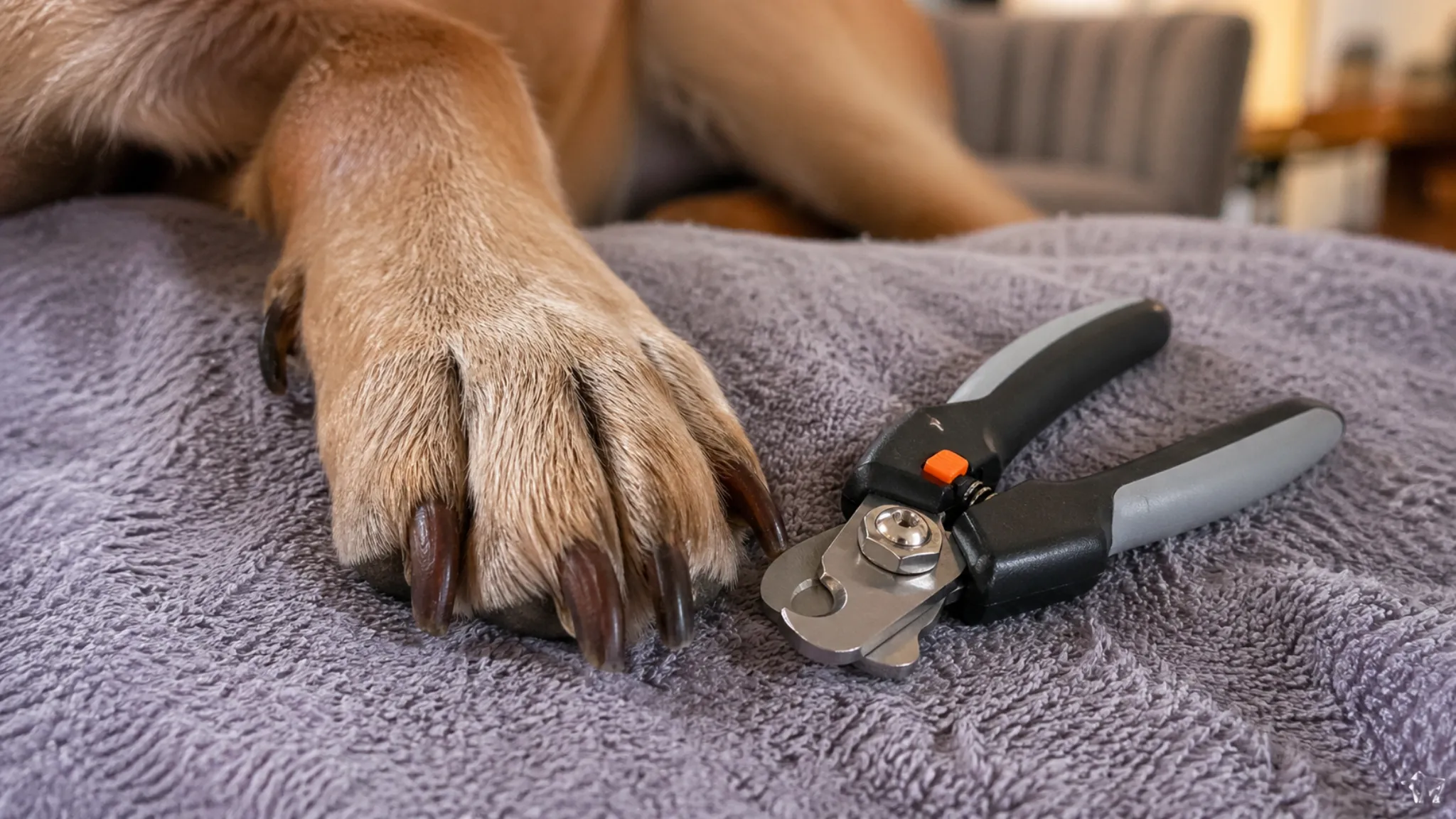
Nail trimming
Check nails every week. Trim when they touch the floor, click on hard surfaces, twist sideways or make your dog stand oddly. If you cannot see the quick, take tiny tips only or ask a groomer or vet nurse.
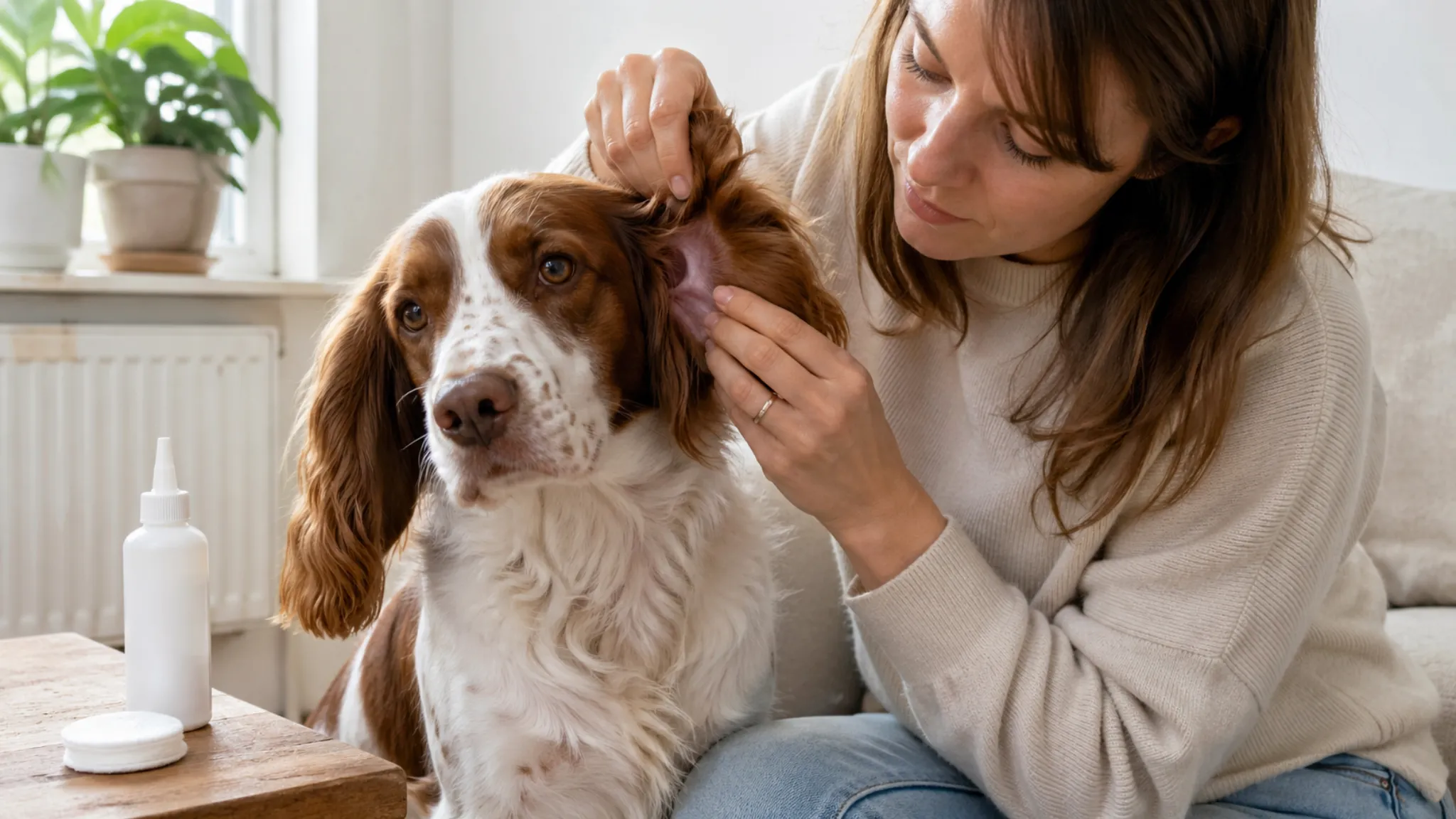
Ear checks
Look and smell, but do not poke deep into the ear canal. Clean only when needed with a dog-safe ear product. Redness, swelling, strong smell, discharge, head shaking or pain means stop and speak to your vet.
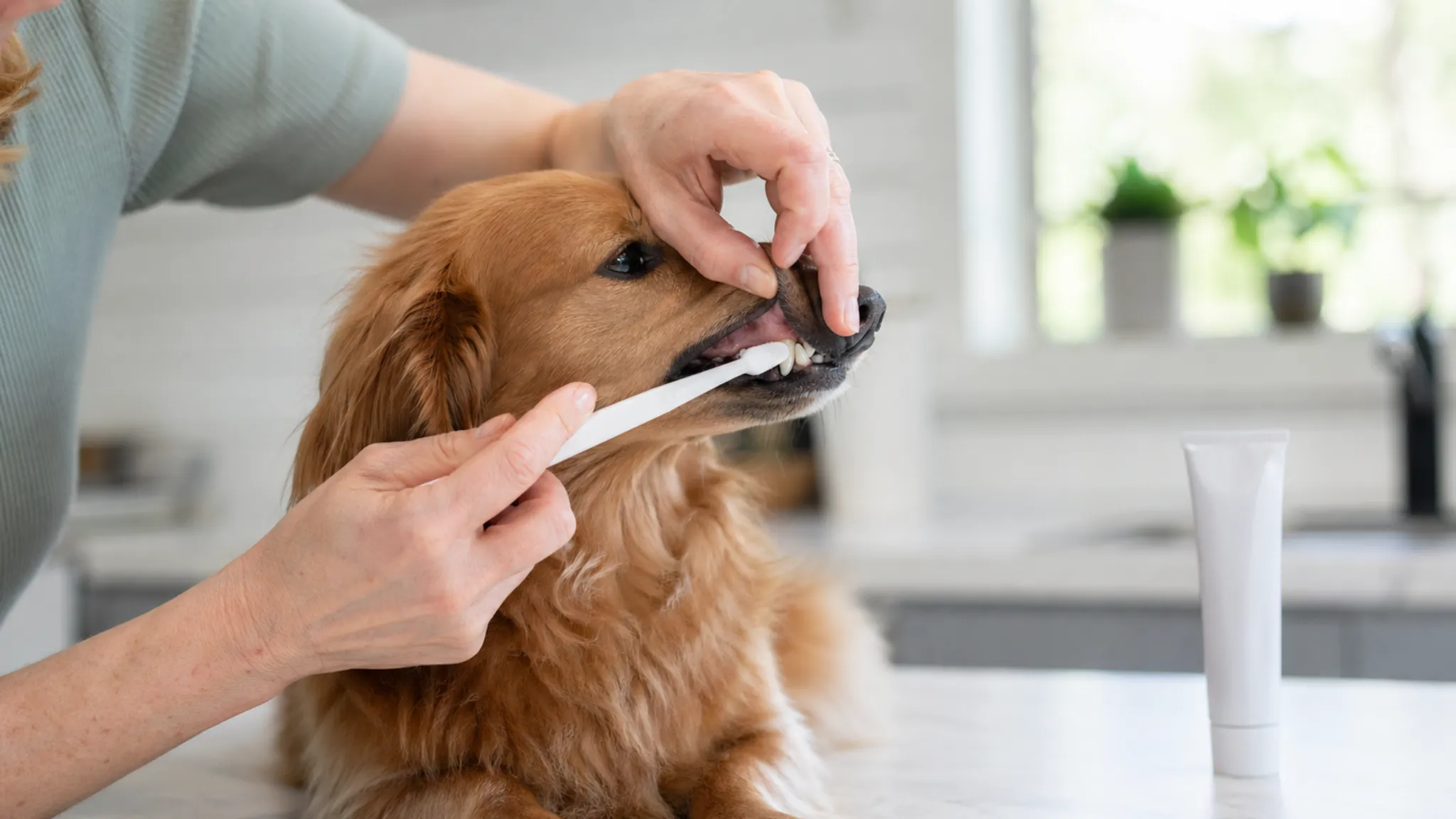
Teeth brushing
Daily brushing is ideal, and several times a week is far better than nothing. Use dog toothpaste, not human toothpaste. Start with touching the lips and gums before expecting a full brush.
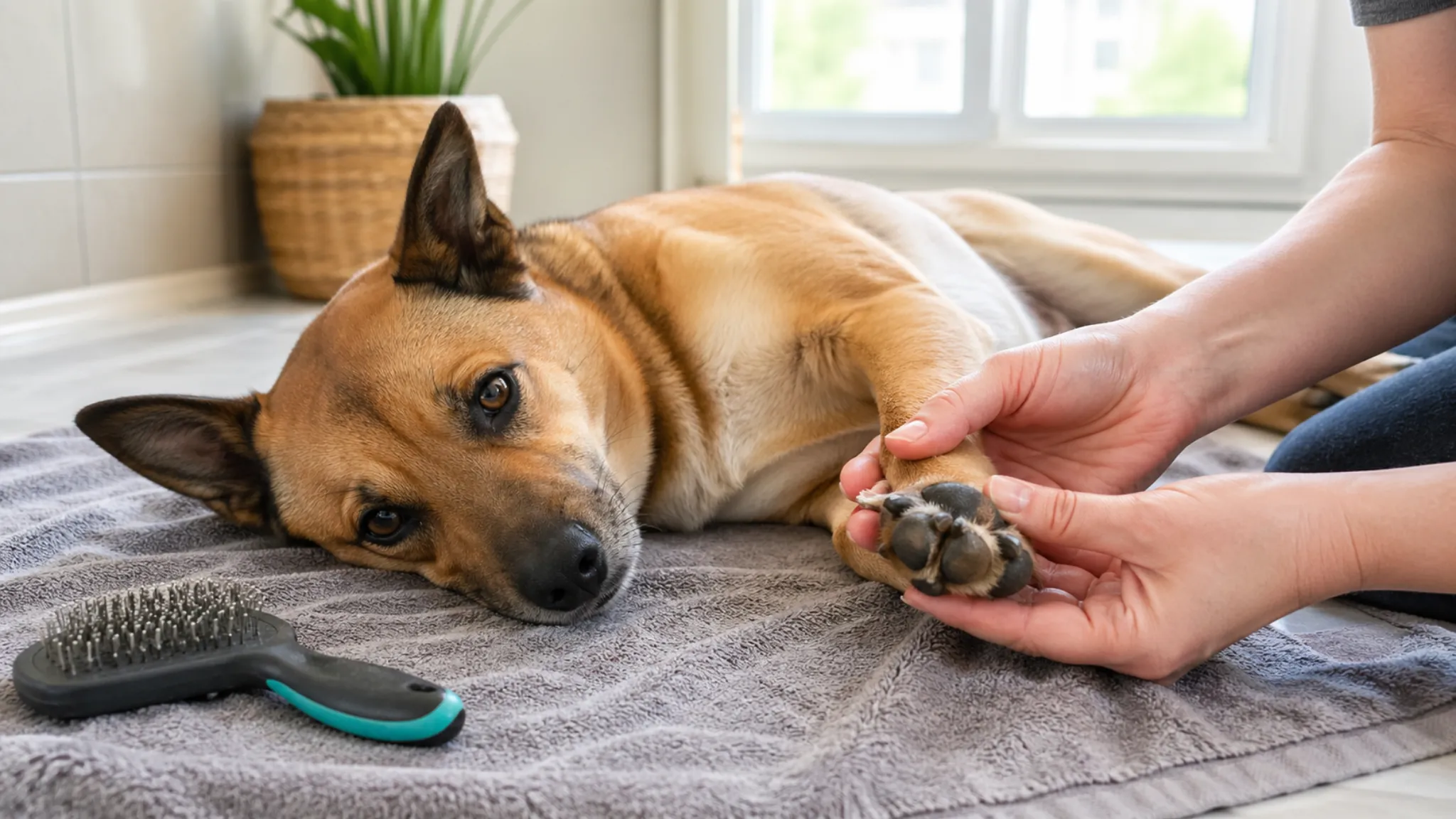
Skin, paws and hygiene areas
Check between toes, under the tail, around the eyes and under the collar or harness. Look for redness, flakes, scabs, ticks, grass seeds, sore pads, discharge or bad smells. These signs matter more than appearance.
ADJUST THE PLAN
What changes the grooming schedule?
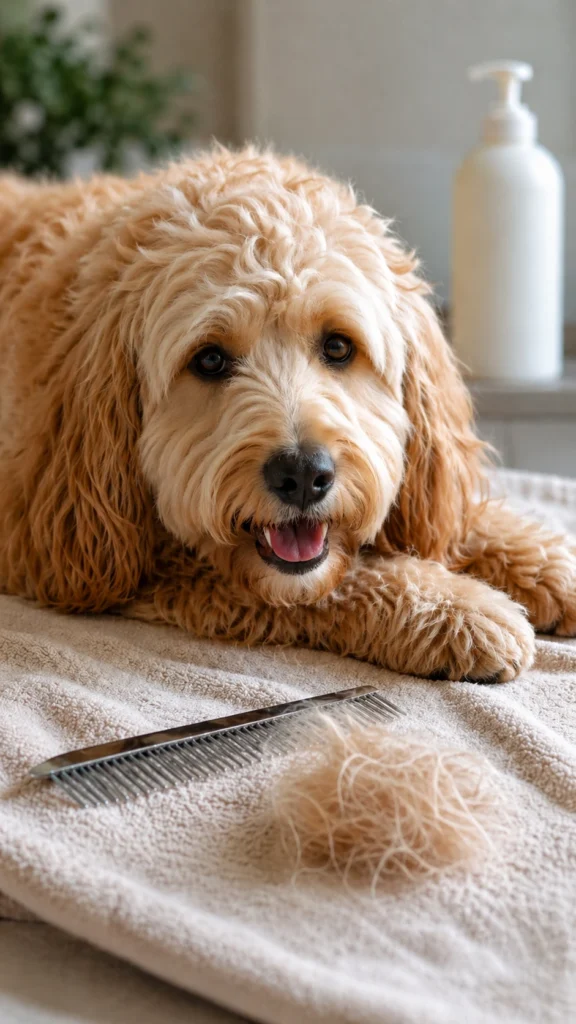
Your dog’s schedule is not fixed forever. Muddy walks, swimming, shedding seasons, allergies, age, weight, skin problems and coat length all change how often grooming is needed. A Cockapoo in a long fluffy trim may need daily combing and a professional groom every six to eight weeks, while a smooth-coated dog may stay comfortable with weekly brushing and occasional baths. The test is simple: if you are finding knots, smells, clicking nails or sore skin, the schedule is too light.
What grooming mistakes should beginners avoid?
The biggest mistakes are usually not dramatic. They are small delays repeated for weeks: skipping brushing, bathing over knots, rushing nails, or forcing a worried dog through a full session.
01
Waiting for visible mats
A mat is not just messy hair. Tight mats pull on the skin, trap moisture and can hide soreness. If you can only brush the surface and not comb to the skin, the coat is not properly maintained.
02
Bathing before detangling
Water can make knots tighter. Brush and comb first, bathe second, then dry and comb again if the coat allows. This matters most for curly, woolly, long and double coats.
03
Ignoring fear signals
Panting, freezing, lip licking, growling, snapping or trying to escape are warnings. Do not punish the warning. Shorten the session, use rewards, and help your dog get comfortable with grooming at home before expecting calm full-body grooming.
When should you not groom your dog at home?
Some grooming problems are not beginner jobs. If there is pain, infection, panic or a risk of cutting skin, stop and get help. This is where the safer choice matters more than finishing the groom. For a fuller checklist, read when not to groom your dog at home.
01
Pain, wounds or skin trouble
Do not brush over open wounds, hot spots, raw skin, heavy dandruff, swelling, bleeding or mats tight to the skin. These can be painful and may need veterinary care before grooming.
02
Ear, eye or nail problems
Strong ear smell, discharge, head shaking, red eyes, squinting, embedded nails, cracked nails or bleeding nails are not routine grooming jobs. Ask a vet, groomer or vet nurse before continuing.
03
Fear or unsafe handling
If your dog is freezing, snapping, growling, thrashing or trying to bite, the session is no longer safe. Stop early. Rebuild handling slowly or book a professional who uses calm, reward-based methods.
FAQ
FAQs about dog grooming frequency
Use these answers as a starting point, then adjust for your dog’s coat, comfort, health and lifestyle.
For most dogs, do a quick weekly grooming check and a deeper session every few weeks. The weekly check should include coat, ears, nails, teeth, paws and skin. The deeper session may include a bath, longer brush-out, nail trim or hygiene tidy depending on what your dog actually needs.
Once a month is not enough for many medium, long, curly or double-coated dogs because knots and shedding build up faster than that. Smooth short coats may manage with weekly brushing and occasional baths. Long or curly coats usually need brushing much more often between any monthly groom.
Some dogs can be bathed weekly if there is a clear reason, such as a vet-directed skin plan or frequent dirt, but many dogs do not need it. Too much bathing with the wrong products can dry or irritate the skin. If your dog smells bad soon after a bath, look for the cause rather than bathing more often.
Many Cockapoos, Labradoodles and poodle-crosses need brushing several times a week, often daily if the coat is long or curly. Professional grooming is commonly needed every six to eight weeks, but the exact timing depends on coat length, curl, lifestyle and how well the coat is maintained at home.
Nails are probably too long if they click on hard floors, touch the ground when your dog is standing, curl sideways, catch on fabric or change the way your dog walks. Trim tiny amounts often if you are learning. If a nail is cracked, bleeding, overgrown into the pad or very painful, get professional help.
Check the ears weekly, but do not clean them just because the calendar says so. Healthy ears are usually pale, comfortable and not smelly. Clean only when there is mild wax or dirt and you know your dog tolerates it. Pain, redness, swelling, discharge or a strong smell needs a vet.
Start with ten minutes once or twice a week. Brush the coat, check ears and paws, look at nails, and touch the teeth and gums gently. Add nail trimming, bathing and tooth brushing gradually. A calm routine that your dog accepts is worth more than an ambitious plan that becomes a fight.