Grooming confidence
How to Get Your Dog Comfortable With Grooming
If your dog backs away from the brush, bath, towel, clippers, or nail trimmers, do not start with a full groom. Start with short handling practice and reward calm choices.
Start here
What is the fastest safe way to start?
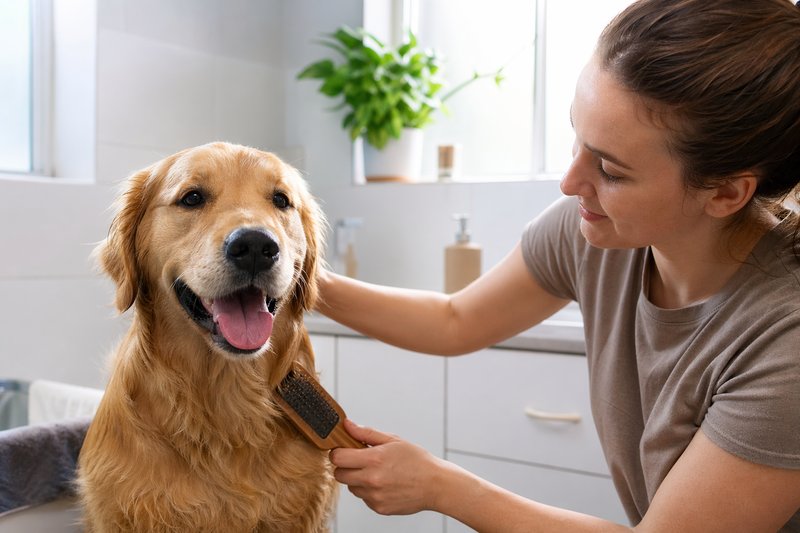
The fastest safe route is not speed. It is making each grooming step so easy that your dog can stay relaxed. Put the brush on the floor. Let your dog sniff it. Touch one easy area, reward, and stop. Repeat for a few minutes, not an hour.
Your first goal is not a perfect coat. It is a dog who can be touched on the shoulder, chest, back, legs, paws, ears, and tail without panic. Once handling is calm, brushing, bathing, drying, and nail care become much easier.
If your dog freezes, leans away, tucks the tail, licks lips, yawns when not tired, growls, snaps, or tries to escape, you have gone too far. Stop, make the next attempt easier, and rebuild. For a basic home order once your dog is ready, see brushing and bathing your dog at home.
What should you practise first?
Work through these six skills before expecting a full grooming session. Do not move to the next skill because the calendar says so. Move on when your dog can stay loose, take treats, and recover quickly.
Calm touch
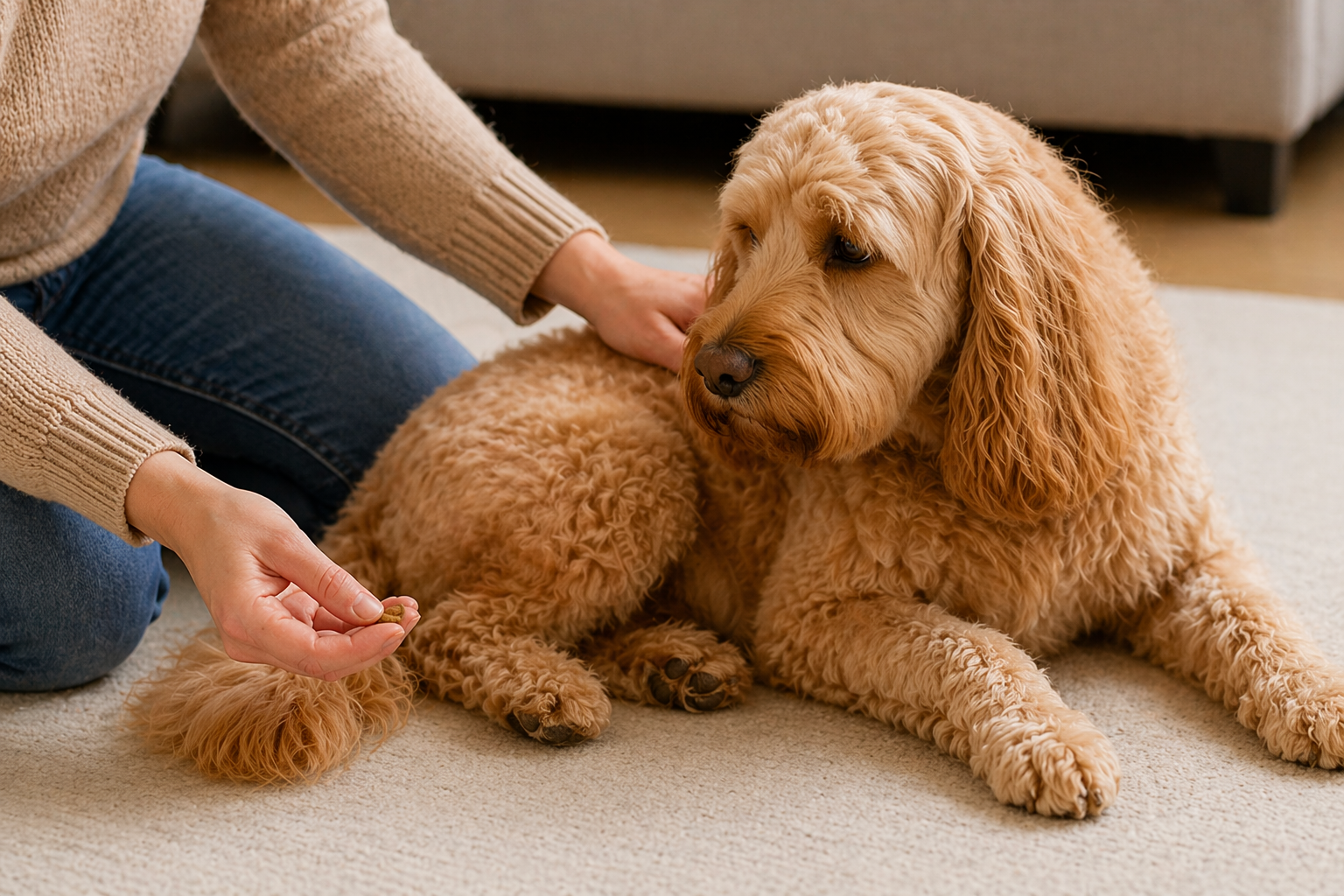
Stroke one easy area for one or two seconds, feed a treat, then take your hand away. Build to paws, ears, tail, belly, and face only after the easy areas stay calm.
Brush contact
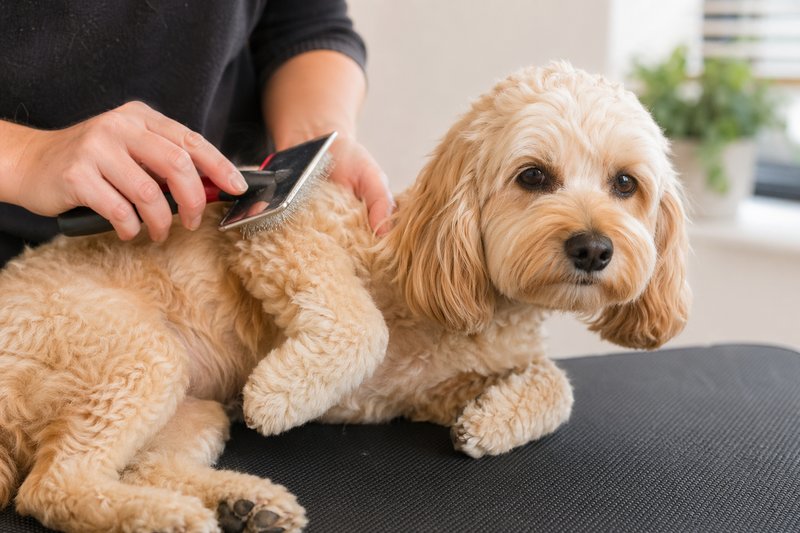
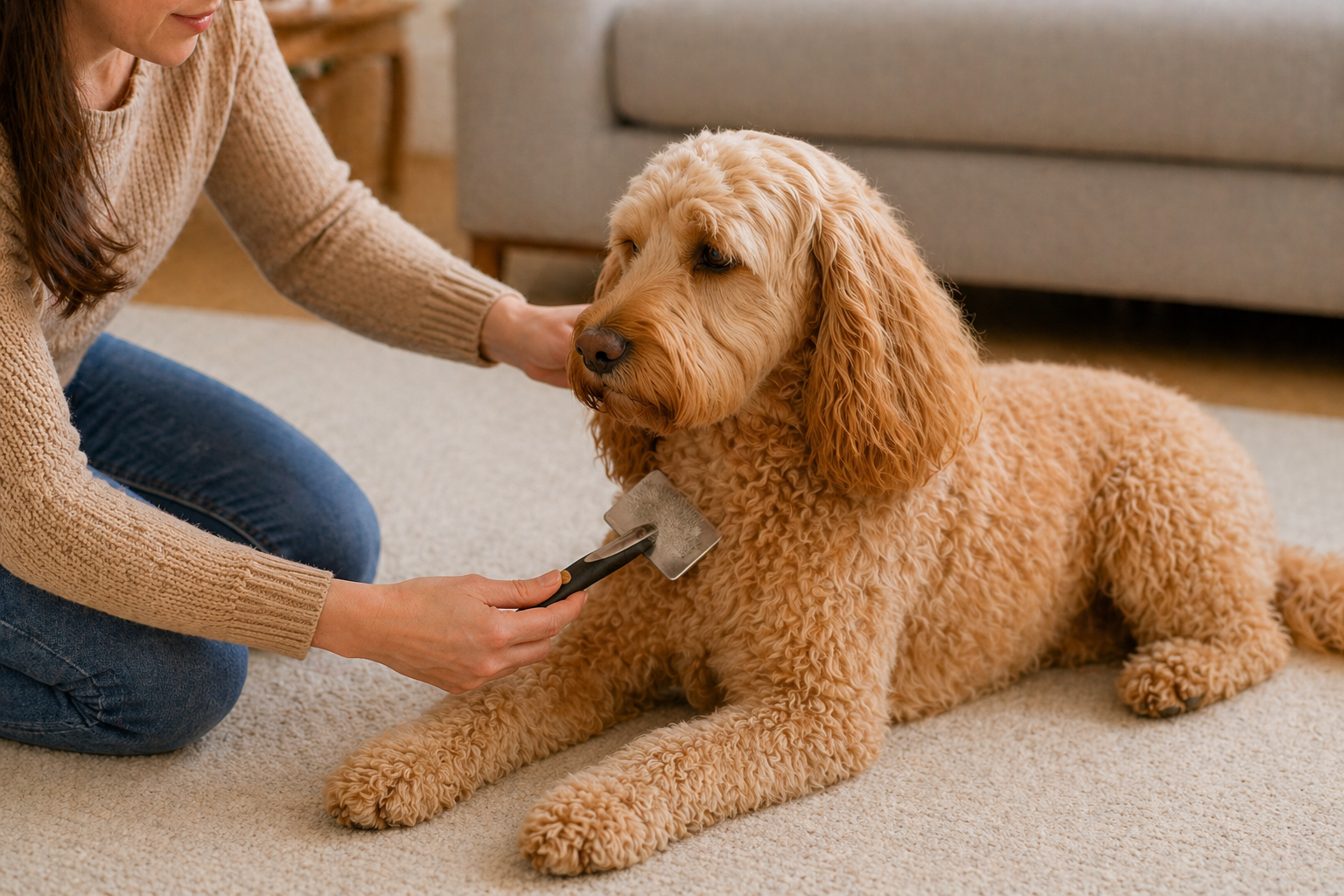
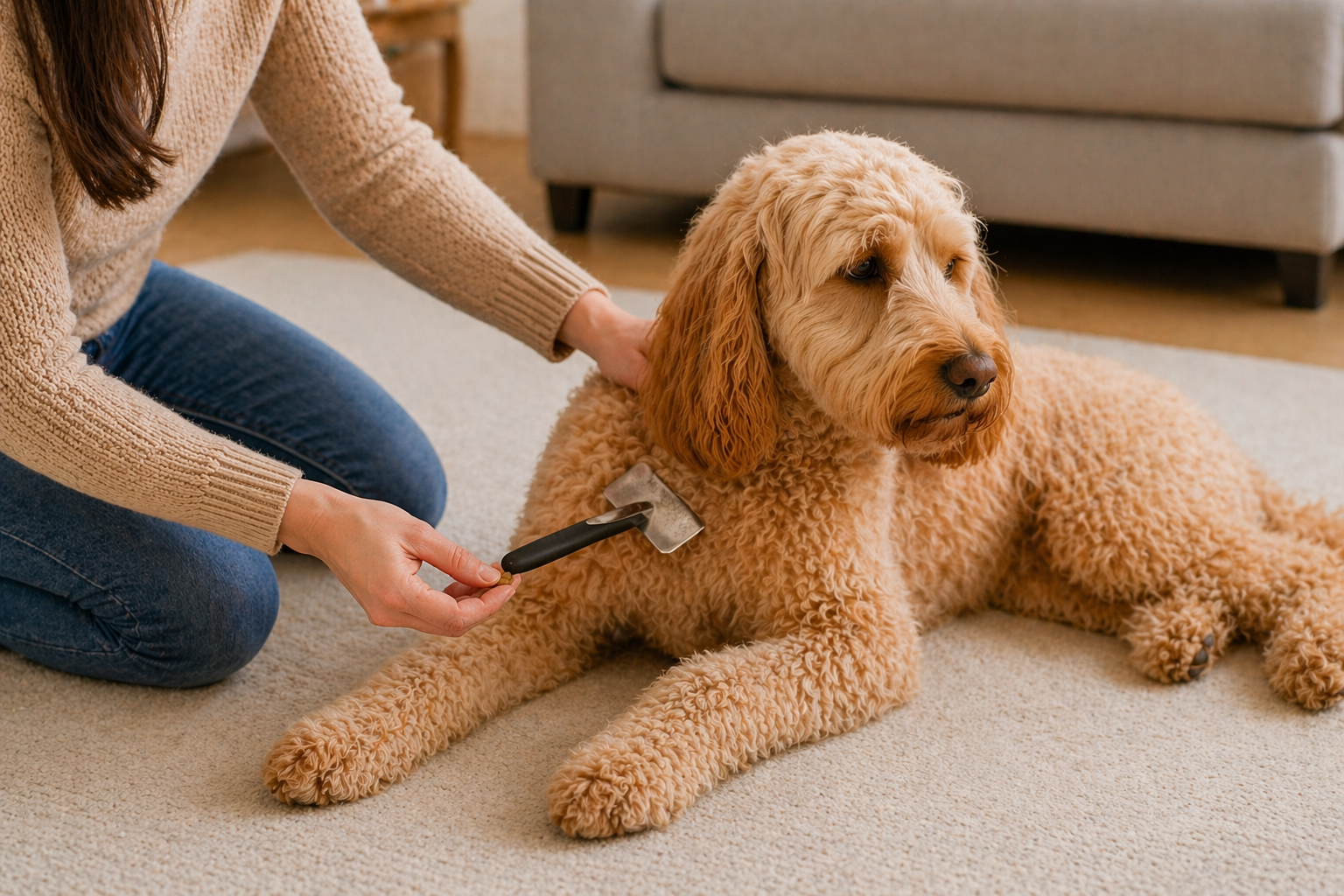
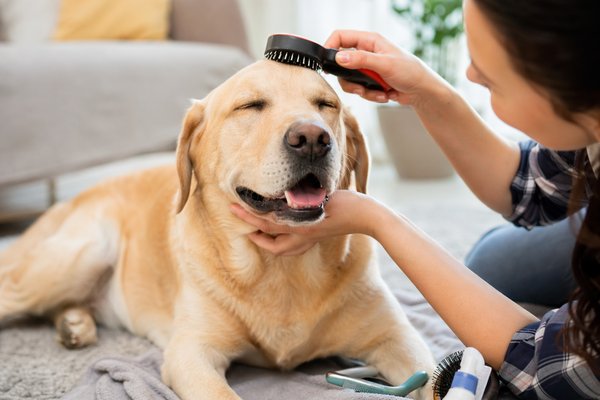
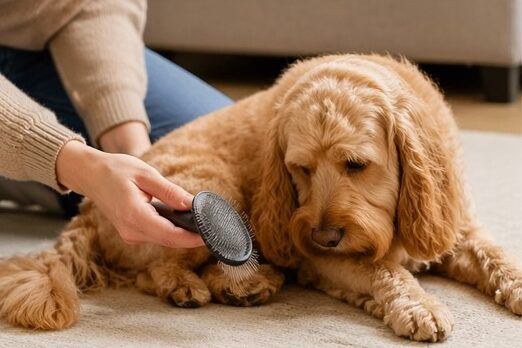
Show the brush, reward, put it away. Then touch the brush to the chest, reward, and stop. One smooth brush stroke is enough at the start. Unsure which brush to use? Read the dog brush by coat type guide.
Easy body areas
Begin where your dog already accepts touch, usually the chest, side, or shoulder. Leave paws, ears, tail, and back legs until your dog trusts the game.
Bath routine
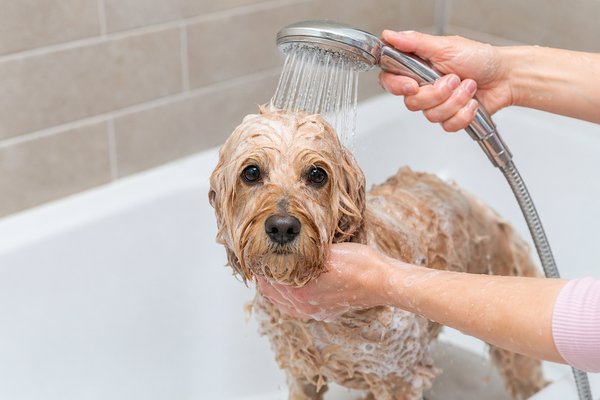
Practise standing in the bath or shower area without water. Add a non-slip mat, treats, and a calm exit before you add lukewarm water.
Dryer sound
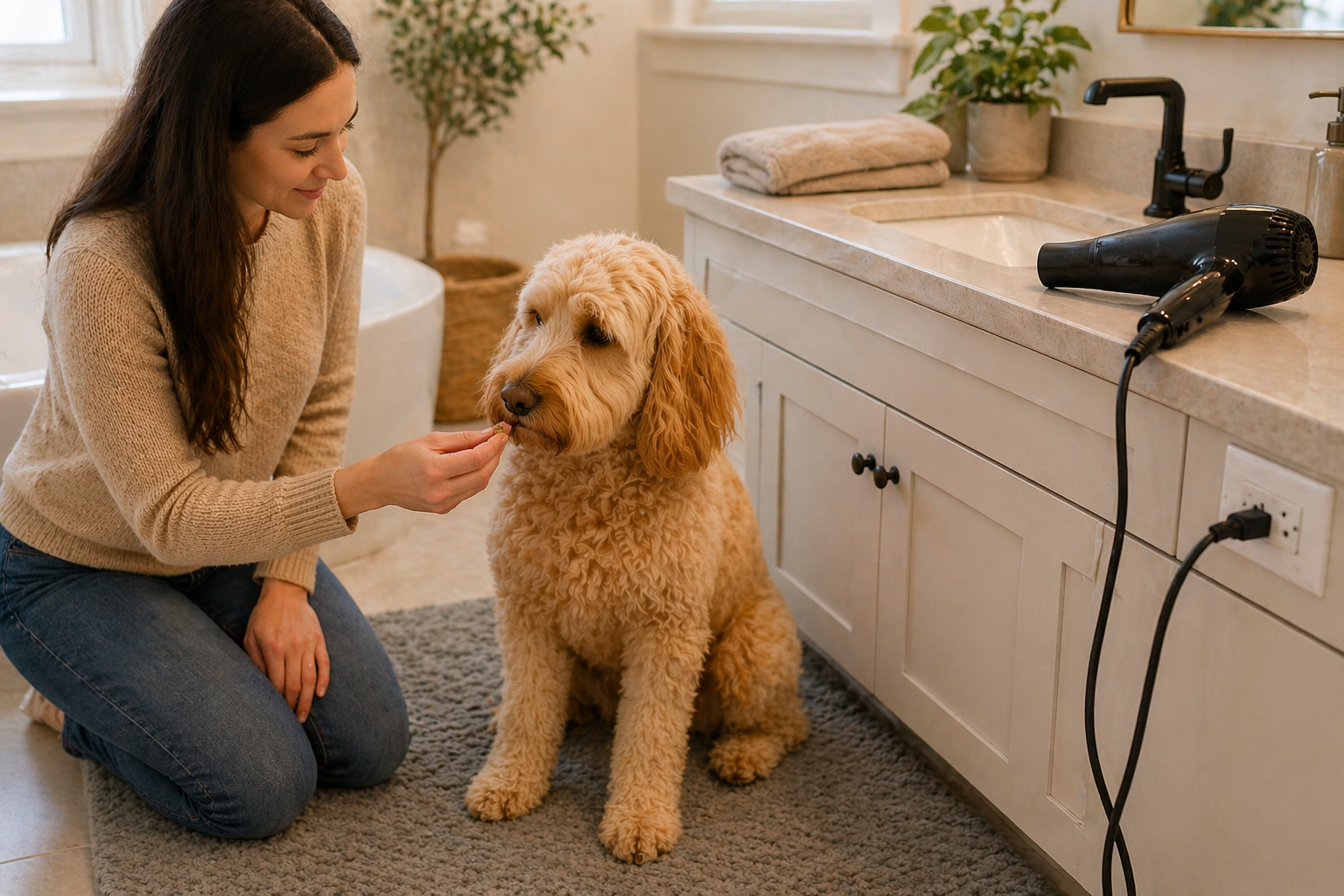
Let the towel and dryer exist before they work. Run a dryer at a distance on a cool or low setting, feed, switch it off, and end the session.
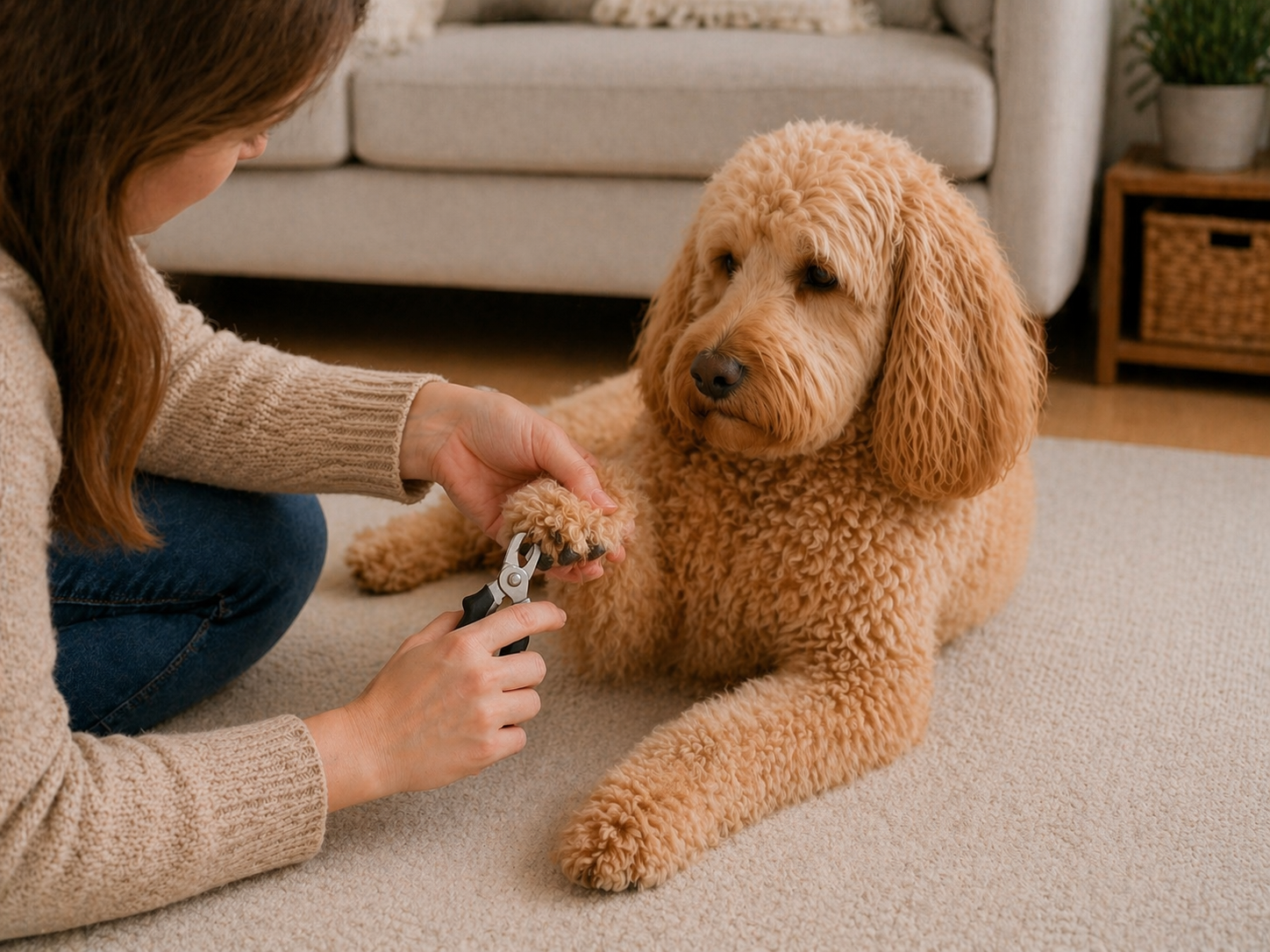
Paws, nails, ears, and face
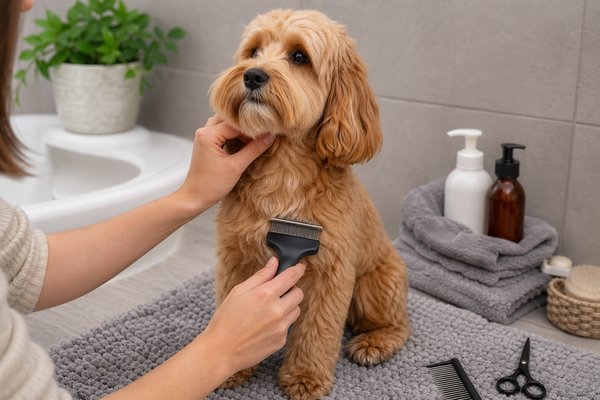
These are sensitive areas. Handle them for seconds, not minutes. For nails, touching dog nail clippers to one nail can be the whole lesson.
Session plan
How do you run a short grooming session?
Use a simple order: set up the space, practise one skill, then stop while your dog is still coping. A good beginner session can be five minutes. A rushed 30-minute session can undo weeks of progress.
-
Put the brush, towel, treats, and non-slip mat within reach before calling your dog.
-
Start with the easiest body area and one tool only.
-
End after a calm repetition, not after your dog loses patience.
Stress signals
What should you do when your dog says no?
A dog saying no is useful information. Pulling away, freezing, repeated lip licking, showing the whites of the eyes, a tucked tail, growling, or snapping means the step is too difficult. Do not punish the warning. Make the task smaller.
-
Pause and let your dog move away if they need space.
-
Return to an easier step, such as touching the brush near the shoulder without brushing.
-
Book professional help if fear is severe, sudden, and remember that it could be linked to pain.
Professional help
When should you use a groomer or vet?
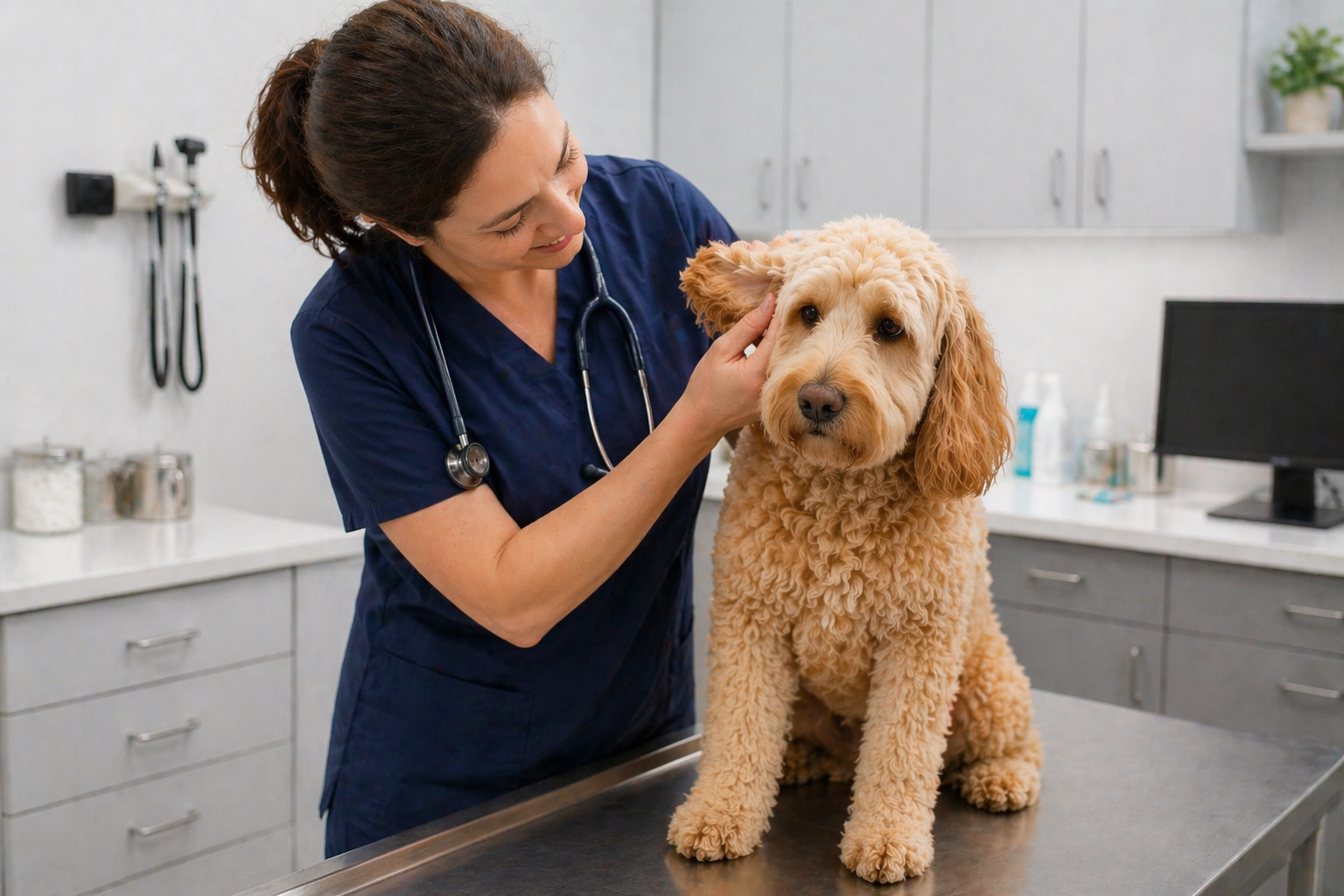
Home grooming is for maintenance, confidence, and simple care. It is not the right place to experiment with painful mats, infected ears, wounds, severe skin irritation, or an anxious dog who may bite.
-
Tight mats close to the skin need a groomer or vet, not scissors at home.
-
Ear smell, discharge, swelling, sores, or sudden touch sensitivity need a vet.
-
If you need to restrain hard, the plan has already failed.
What mistakes make grooming stressful?
Most beginner mistakes come from trying to finish the job instead of teaching the dog to tolerate the job. Avoid these and grooming gets easier.
01.
Forcing the full groom
One long session can teach your dog that grooming removes their choice. Split brushing, bathing, drying, and nails into separate sessions until your dog is relaxed.
02.
Chasing knots with force
Do not drag a brush through a knot or cut tight mats with scissors. Hold the coat near the skin for small tangles. For tight mats, book a groomer.
03.
Skipping health checks
During grooming, check skin, ears, paws, nails, lumps, sore spots, fleas, ticks, and changes in smell. Stop and ask a vet if something looks painful or unusual.
Dog grooming questions
Frequently Asked Questions
Straight answers for beginner owners trying to keep grooming calm at home.
For a nervous or new dog, start with one to five minutes. That may sound too short, but it works because you are training comfort, not just removing hair. End while your dog is still calm.
Stop brushing for a few days and train the brush separately. Put it down, reward your dog for looking at it or sniffing it, then put it away. Later, touch the brush to an easy area for one second and reward. Build slowly.
Yes, if your dog can take them calmly. Use small treats to mark the exact behaviour you want: standing still, accepting touch, letting you lift a paw, or allowing one brush stroke. Food is not bribery when it changes the way your dog feels about grooming.
Start by touching paws without trimmers. Then show dog nail clippers, touch them to one nail, and reward. At first, trimming one tiny nail tip may be enough. Stop before your dog panics. If the nails are dark, overgrown, painful, or you are unsure where the quick is, ask a groomer or vet. The quick is a sensitive, living inner part of a dog’s claw/nail that contains blood vessels and nerves.
Do not punish the growl. A growl is information that your dog feels threatened, trapped, or in pain. Stop, give space, and restart later at an easier step. If growling happens often or appears suddenly, speak to a vet or qualified behaviour professional.
Only if the coat is already brushed and free of tangles. Water can tighten knots. Use lukewarm water, dog shampoo, a non-slip surface, and thorough rinsing. If your dog is only dusty, brushing or a damp towel may be enough.
Use a professional when there are tight mats, painful skin, ear problems, wounds, severe anxiety, bite risk, or a coat that needs clipping or hand-stripping. Home work can still help by making handling and tool sounds less frightening.