Dog brushing tools
How to Choose a Dog Brush by Coat Type
The right brush is the one that reaches the coat your dog has without scraping the skin. This guide gives you a simple starting choice.
Coat check
How do you check your dog’s coat type at home?
Look at three things:
- Is the coat short, medium, or long?
- Is it curly or smooth?
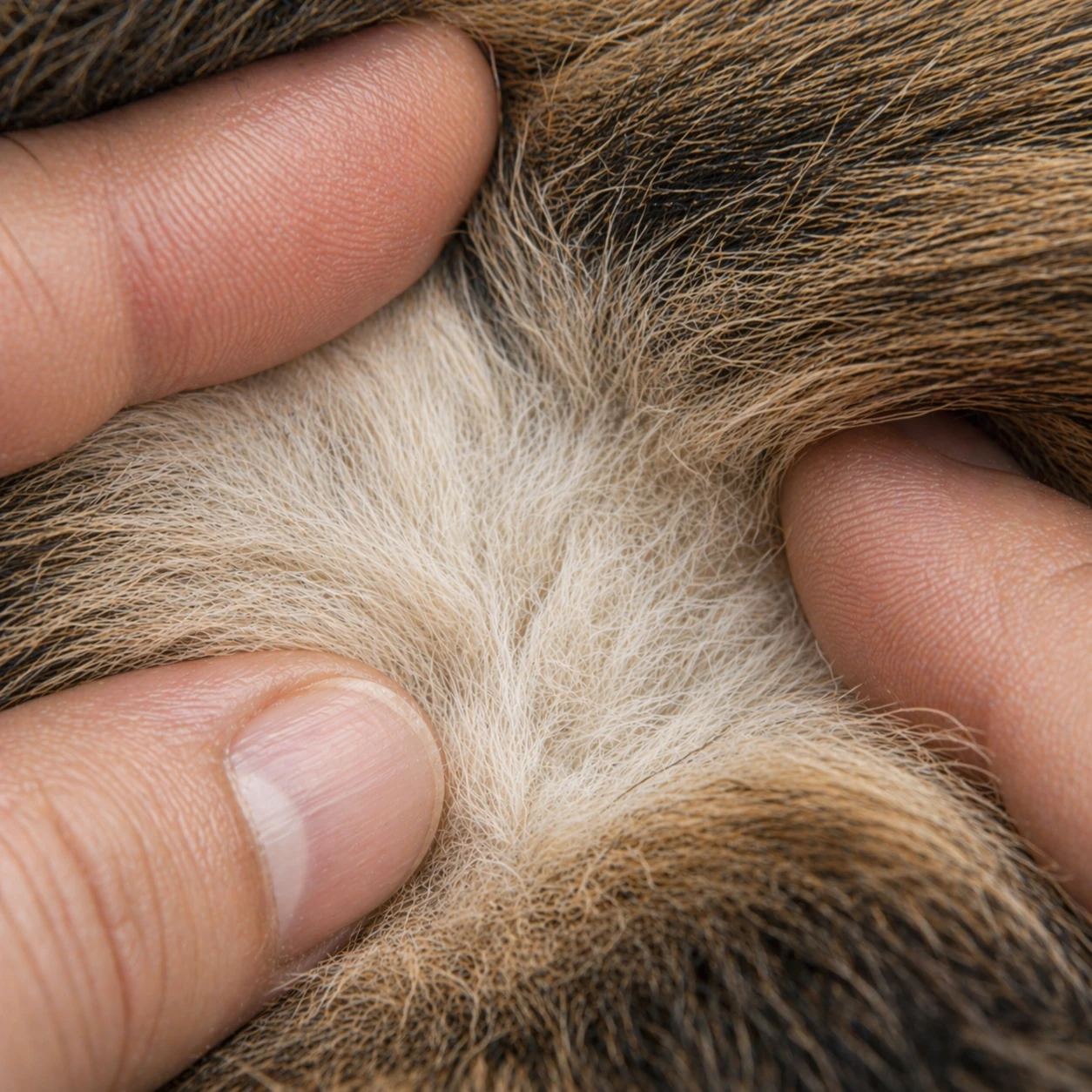
- Can you see a soft undercoat when you part the hair?
- Always remember to check high friction areas such as behind the ears, under the armpits, around the collar, and near the tail! That’s where matting often starts.
Which brush should you use for each coat type?
Match the tool to coat hair length, undercoat, and tangle risk.
Short smooth coats
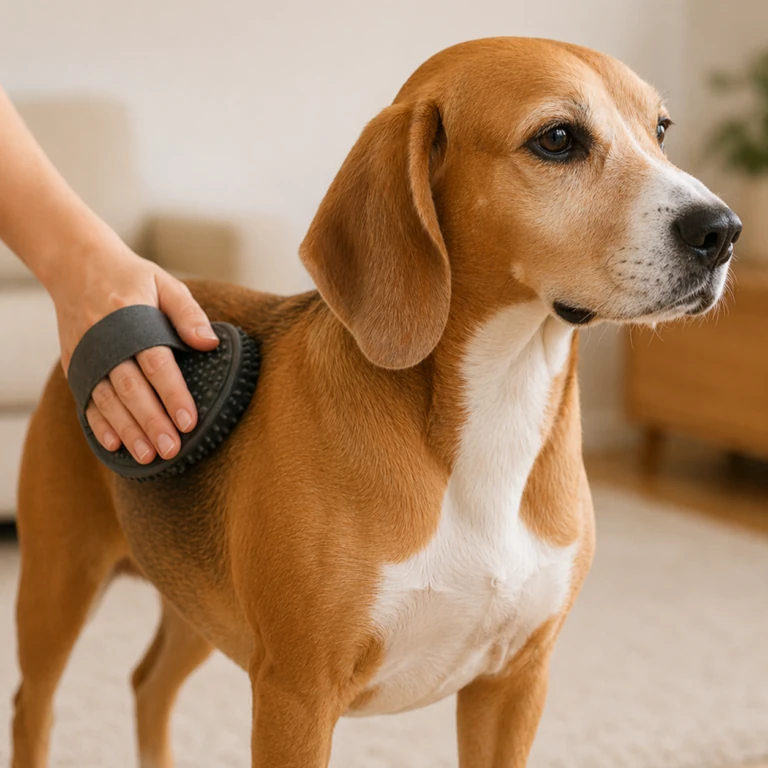
Use a rubber curry brush or grooming mitt first, then a soft bristle brush to lift loose hair and smooth the coat. This suits many staffies, boxers, beagles, and similar short-coated dogs. Avoid long pin brushes; they usually miss the job and can feel scratchy.
Medium and silky coats
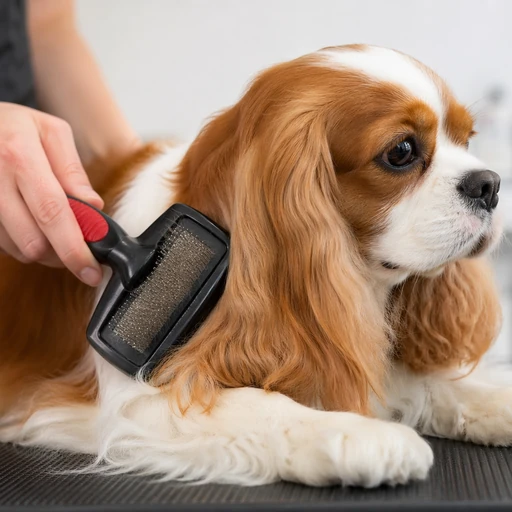
Use a pin brush or soft slicker for light tangles, then finish with a comb to check behind the ears, under the legs, and around the tail. Spaniels and silky-coated small breeds need gentle section-by-section brushing, not hard dragging through knots.
Long or feathered coats
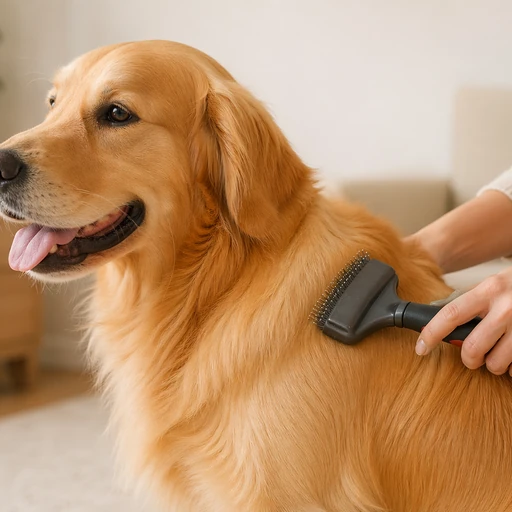
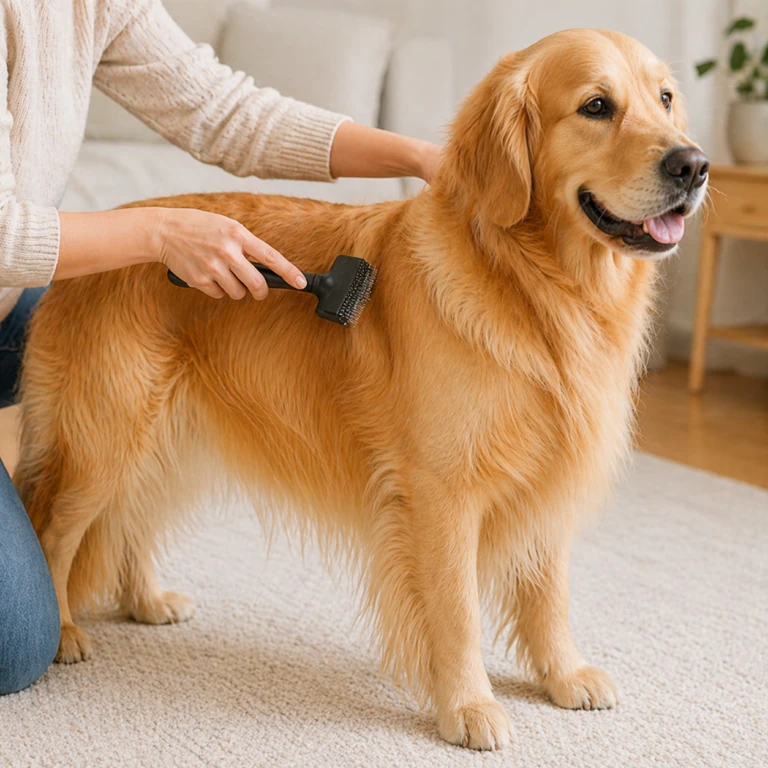
Use a slicker brush for loose hair and tangles, a pin brush to smooth the length, and a metal comb to prove the coat is clear. Work in layers from the ends toward the skin. If the comb catches hard, stop and separate the tangle first.
Curly, wool, and poodle-type coats
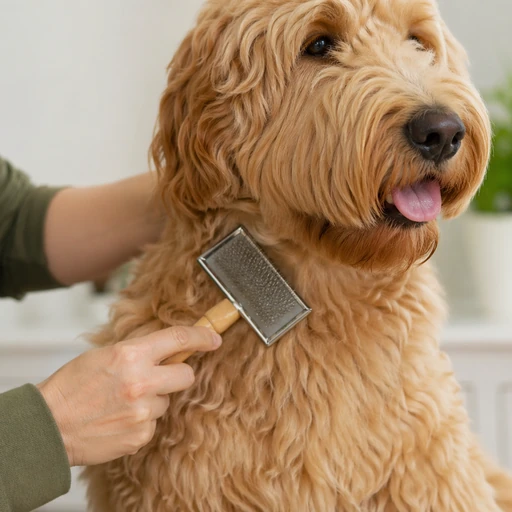
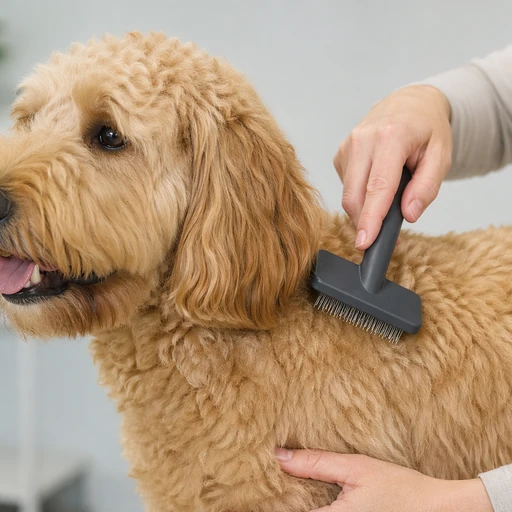
Choose a soft slicker and a sturdy metal comb. Curly coats can hide knots close to the skin, especially after rain or bathing. Brush small sections, then comb through the same area. If you cannot part the coat to the skin, it is not fully brushed.
Double coats
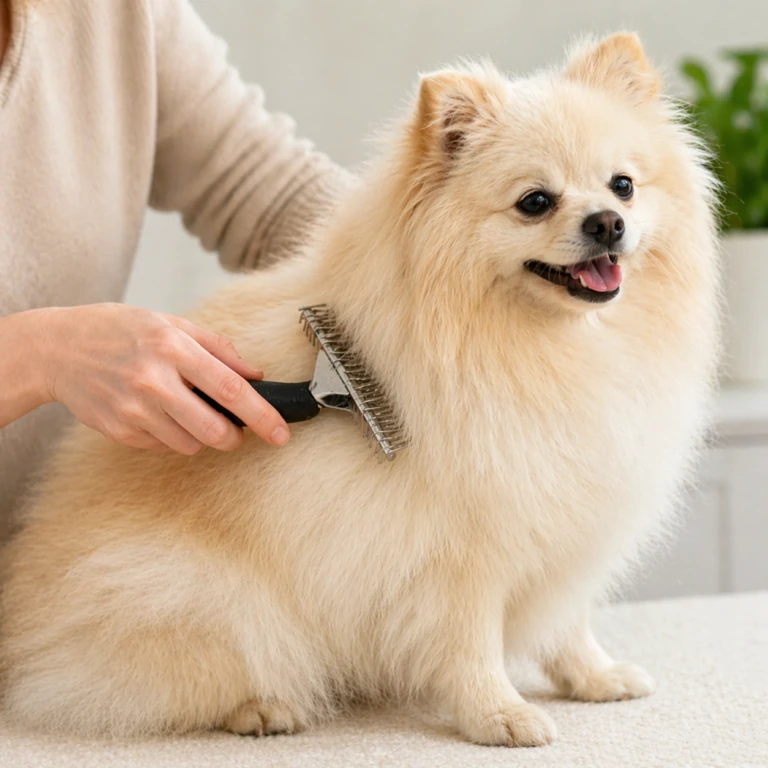
Use an undercoat rake or de-shedding tool sized to the coat, then a slicker or pin brush to tidy the topcoat. Huskies, German Shepherds, many retrievers, and spitz breeds shed from the undercoat. Do not shave a double coat without advice from a groomer or vet.
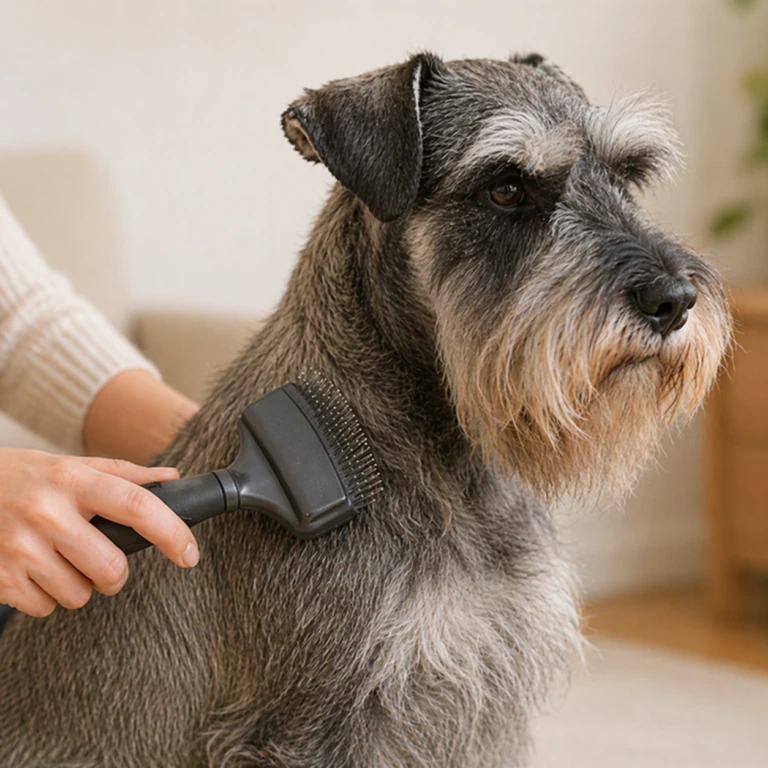
Wire or rough coats
Use a slicker for loose hair, a pin brush for longer furnishings, and a comb for the beard, legs, and belly. Some wire coats also need hand-stripping or clipping from a groomer. At home, focus on keeping dirt and tangles out without flattening the coat.
Tool basics
What do the main brush types do?
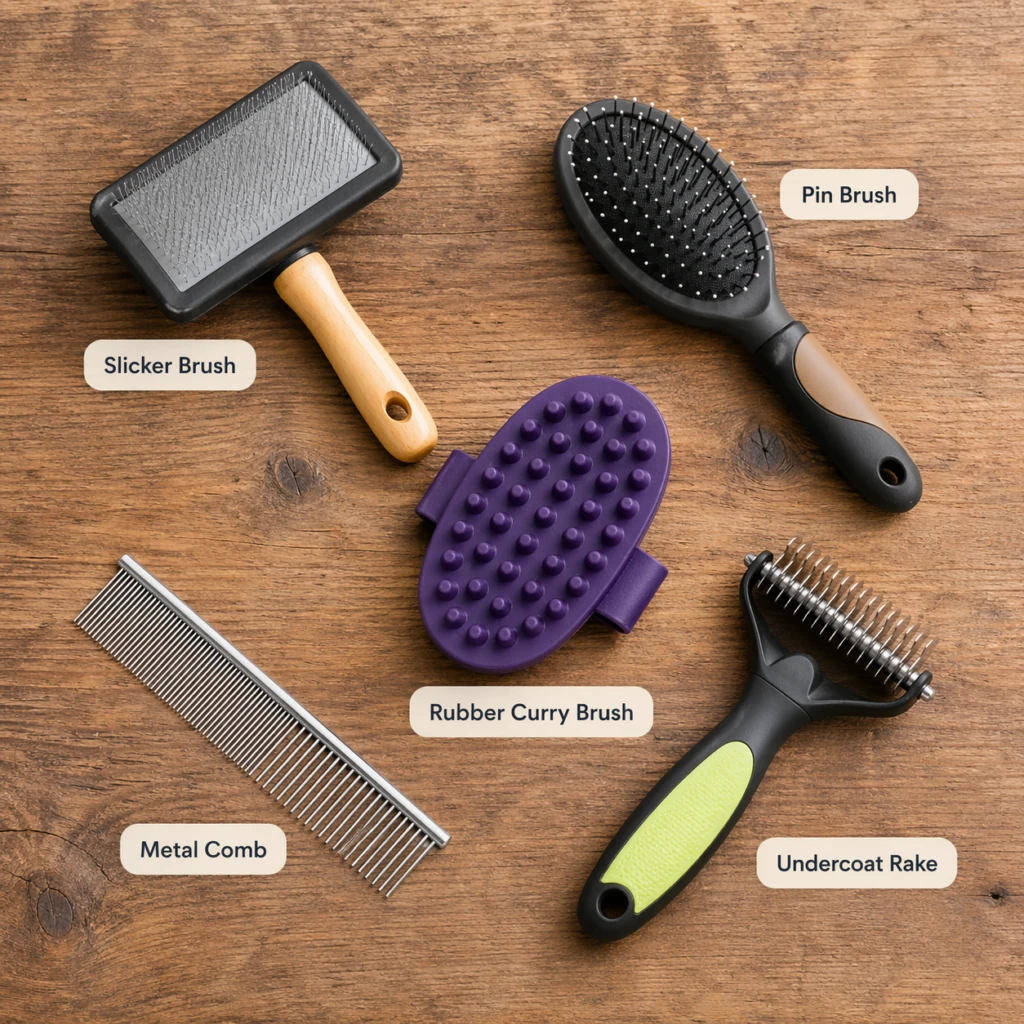
A slicker brush removes loose hair and helps prevent tangles in medium, long, curly, and wire coats, but it needs light pressure. A pin brush smooths longer hair once the coat is already fairly clear. A bristle brush or rubber curry brush is best for short smooth coats. A metal comb checks whether tangles remain.
An undercoat rake reaches loose undercoat on double-coated dogs, but the pins must be long enough for the coat and gentle enough for the skin. Misuse of de-shedding tools can damage the coat, and they are not for every dog.
What mistakes should beginner owners avoid?
Most brushing problems are caused by force, wrong tools, or brushing only the surface. Avoid these three errors and your dog is more likely to stay calm.
01.
Buying the harshest tool first
A powerful de-shedding blade is not suitable for all coats. On the wrong coat it can break hair, irritate skin, or make your dog hate brushing. Begin with the gentlest tool that still reaches the coat.
02.
Brushing only the top of a thick coat
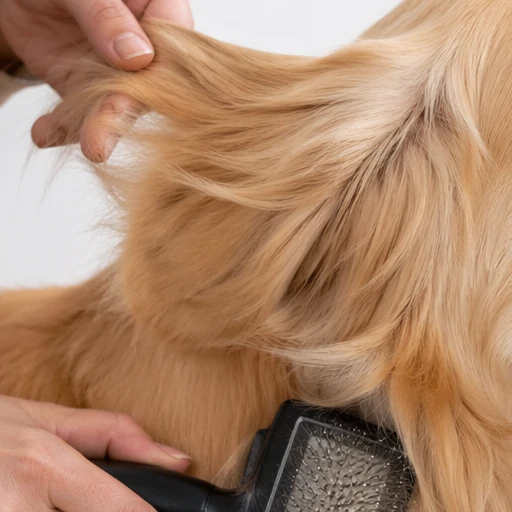
A coat can look tidy on the surface while knots sit close to the skin. Part the hair, brush in small sections, and use a comb to check high-friction areas.
03.
Bathing before removing tangles
Water can tighten knots and make mats harder to remove. Brush and comb first, then bathe only if your dog actually needs a wash.
Routine
How should you start a calm brushing routine?
Keep the first sessions short. Let your dog sniff the brush, touch one easy area, reward calm behaviour, and stop before frustration starts.
Add harder areas later: ears, legs, belly, collar line, tail, and paws.
Brush questions
Frequently Asked Questions
Answers to the questions beginner owners usually have after choosing the first brush.
There is no single best brush for every dog. A soft slicker plus a metal comb is a practical starter pair for many medium, long, curly, and mixed coats. For a short smooth coat, a rubber curry brush or soft bristle brush is often a better first buy.
Yes. Short coats still shed loose hair, carry dust, and benefit from gentle skin checks. Many short-coated dogs only need a quick weekly brush, but heavy shedding, muddy walks, or skin problems may mean more frequent care.
No. Slickers are useful for many medium, long, curly, and wire coats, but they are not automatically right for every dog. On a very short smooth coat, a rubber curry brush or bristle brush is usually more comfortable. If you use a slicker, keep your pressure light.
Use coat type as the starting point. Short smooth coats may only need weekly brushing. Medium coats often need a few brushes a week. Long, curly, or tangle-prone coats may need daily attention. Double coats need extra brushing during heavy shedding.
Start with a soft slicker brush and a metal comb. These coats often look fluffy while knots form near the skin, especially after rain, bathing, harness friction, or wearing a jumper. If the comb cannot pass through after brushing, the coat still has tangles.
Do not rip through mats and do not cut tight mats with scissors. Hold the hair close to the skin and try to loosen only small, easy tangles. If the mat is tight, painful, close to the skin, or spread over a large area, book a groomer or ask your vet.
Brush before bathing. Water can tighten tangles and make mats harder to remove. After the coat is fully dry, brush again if your dog has a long, curly, double, or tangle-prone coat.