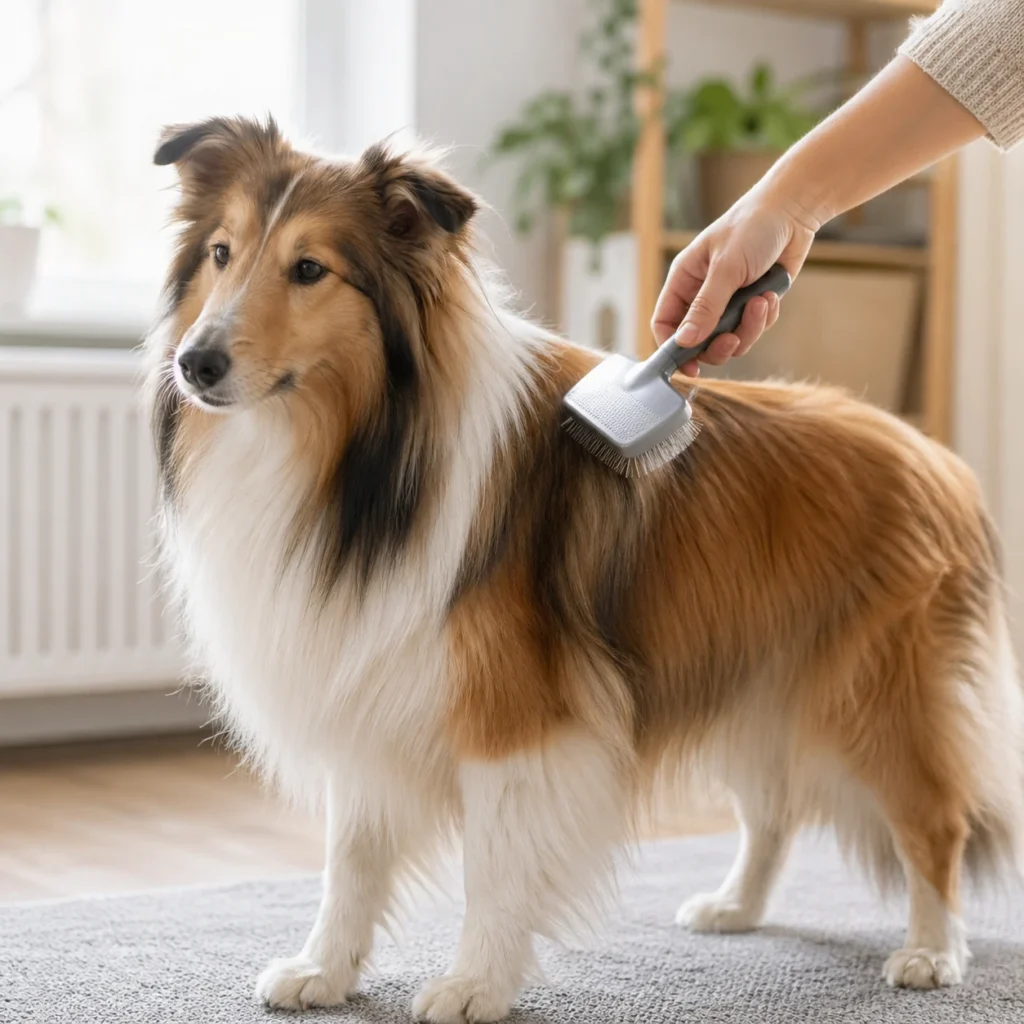
Long coat brushing
How to Brush a Long-Haired Dog Without Causing Knots
A long coat should be brushed in small layers, not dragged from the top. This guide shows you what to use, what to feel for, and when to stop so brushing removes tangles instead of making them tighter.
Step 1
What should you do before brushing a long-haired dog?
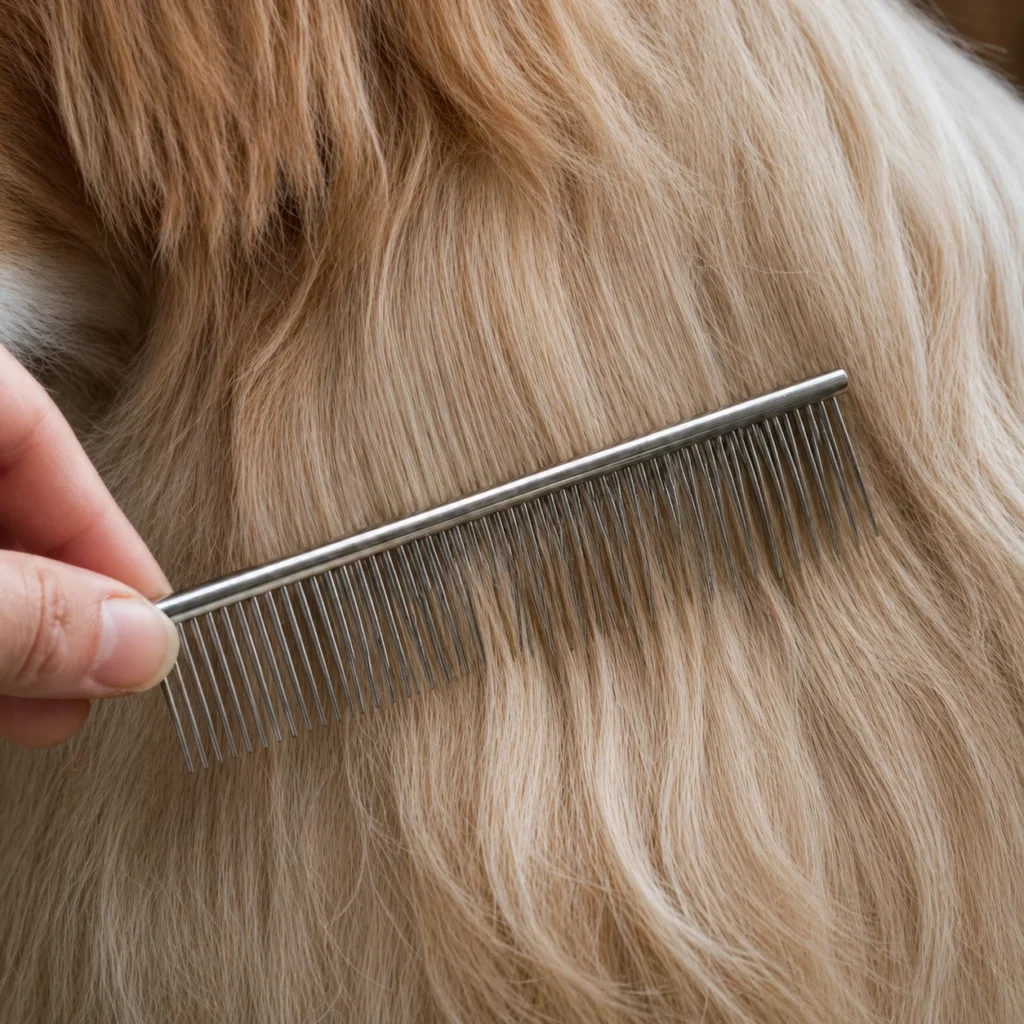
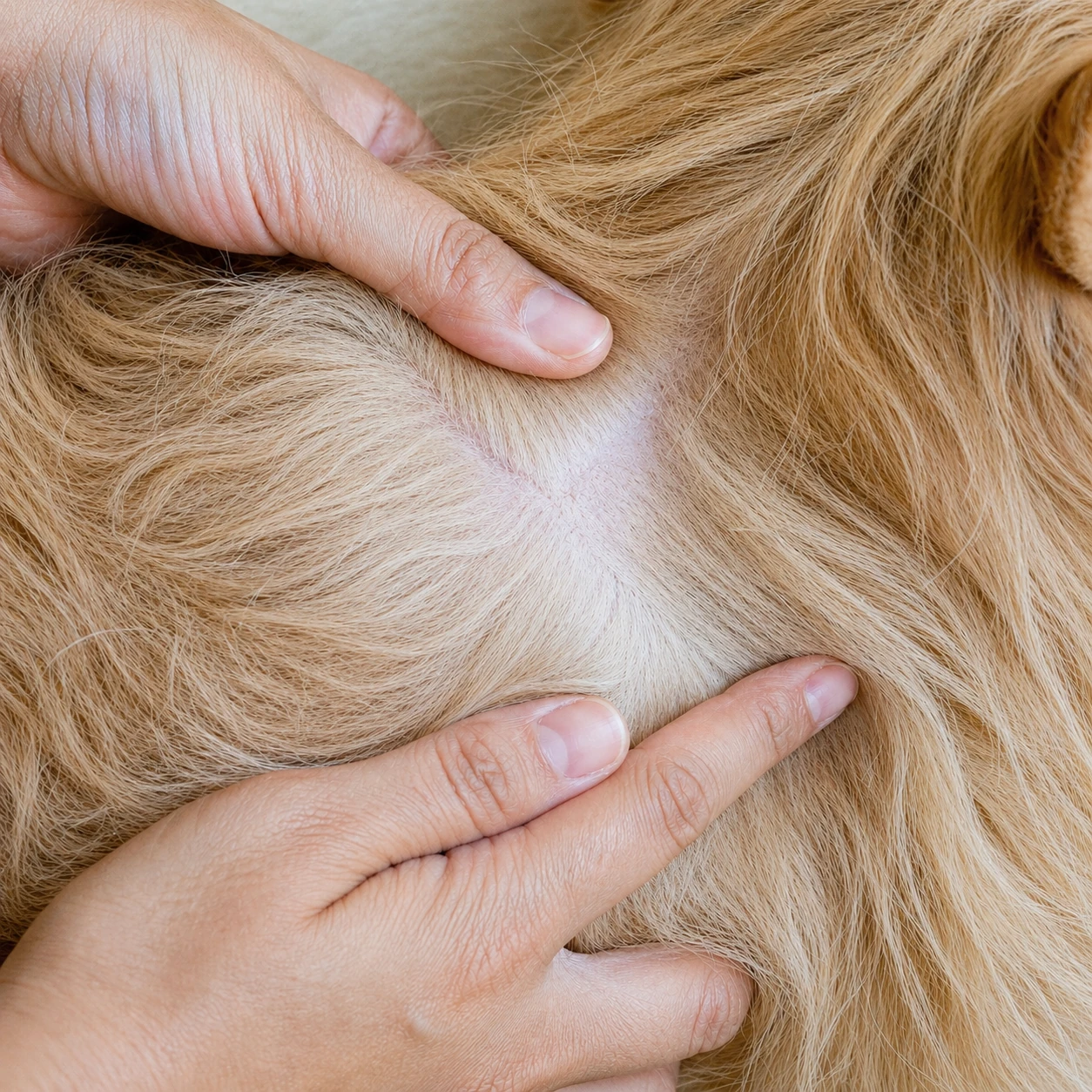
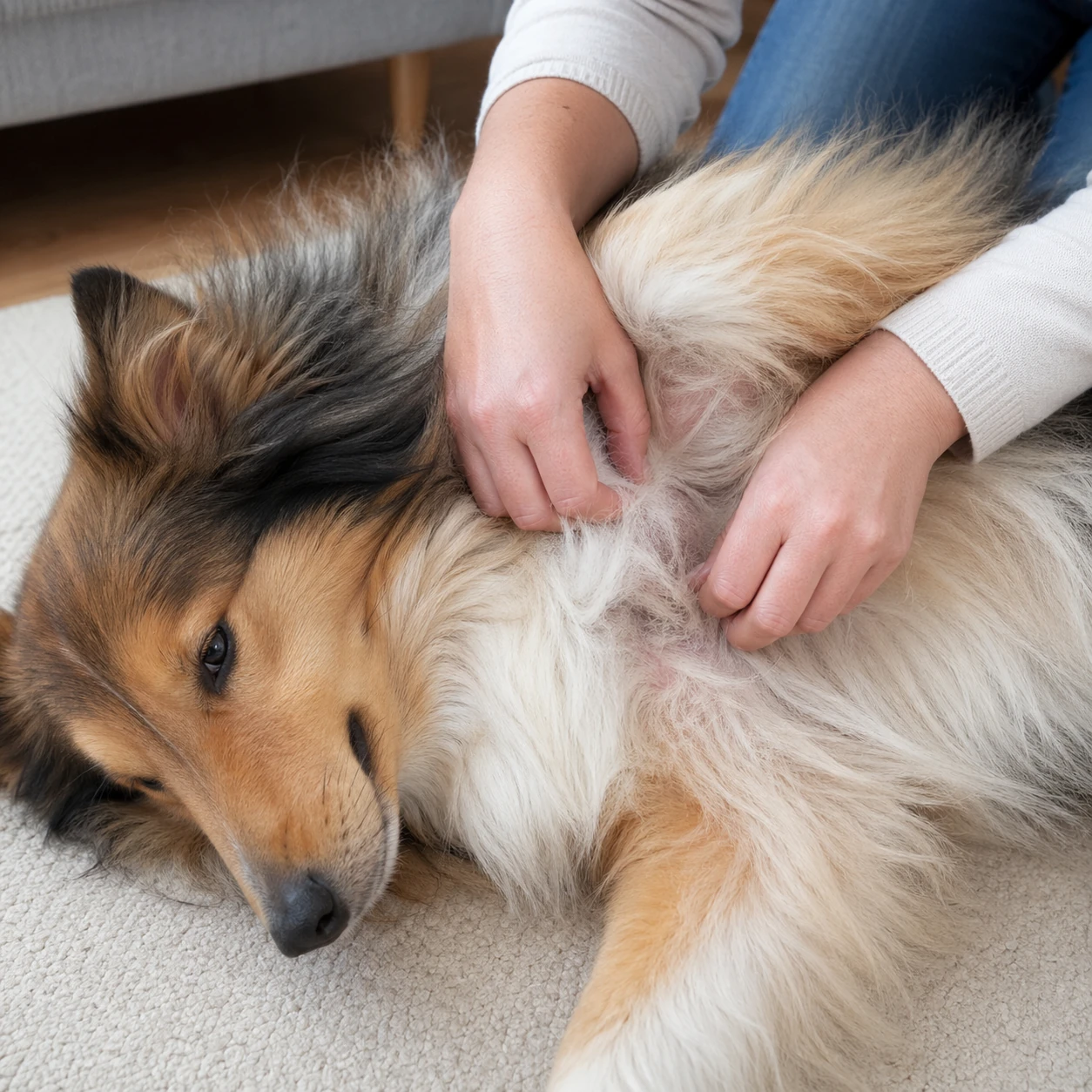
Start by making the coat easy to work with. Put your dog on a non-slip surface, keep treats nearby, and check the coat with your fingers before you touch it with a brush. You are looking for hidden lumps, sticky areas, burrs, damp patches, and tight mats close to the skin. If your dog is worried about the brush, pause and build confidence first with short grooming practice.
-
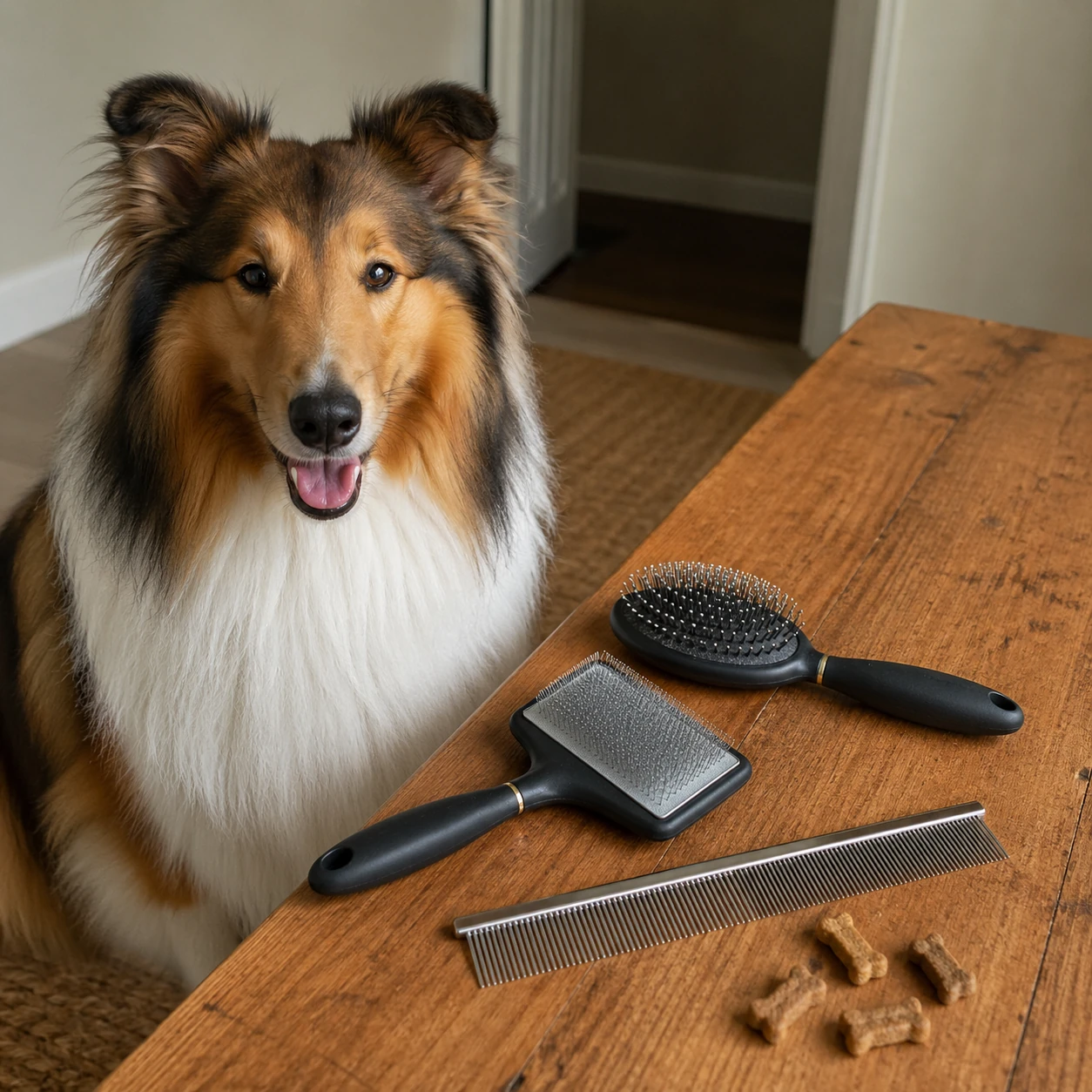
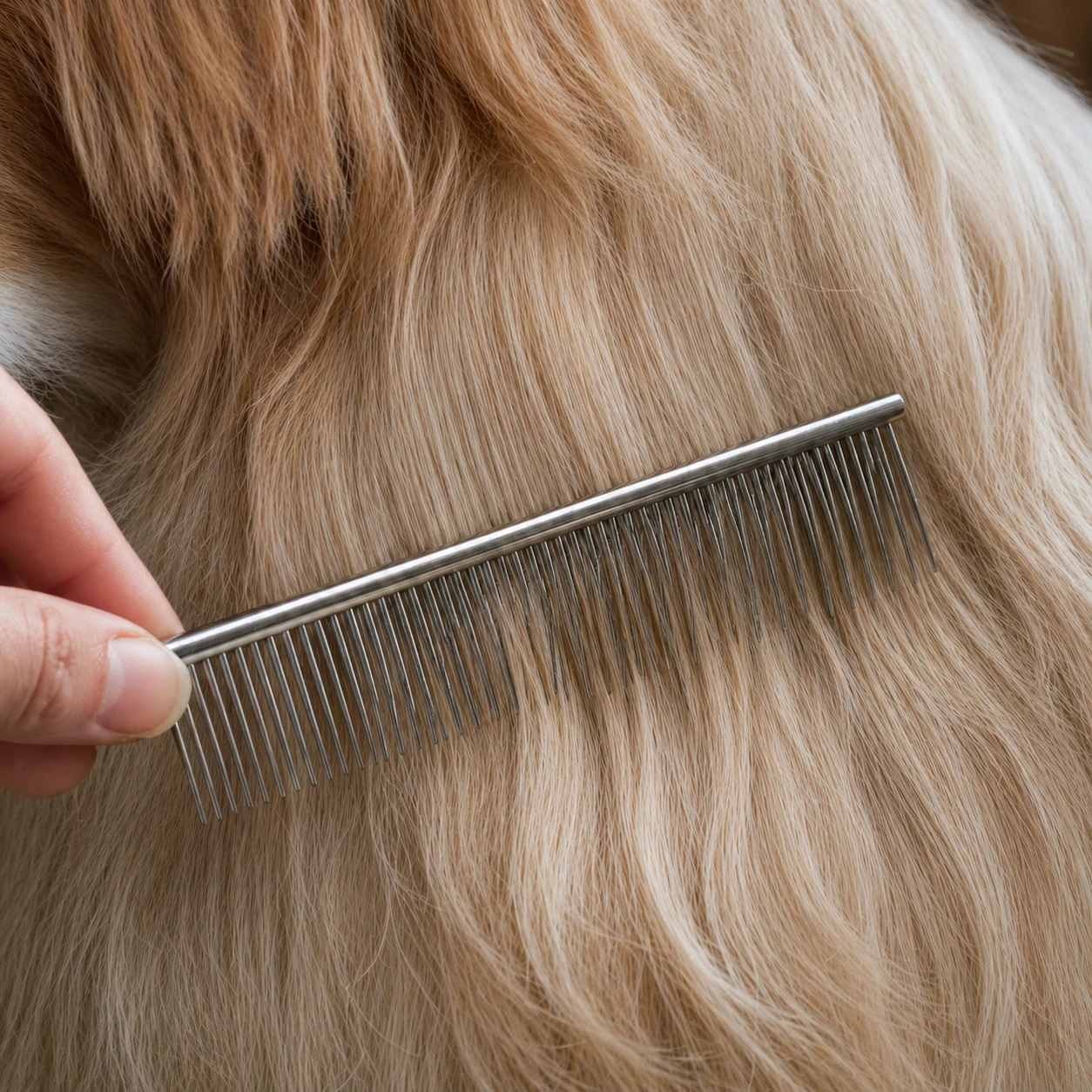
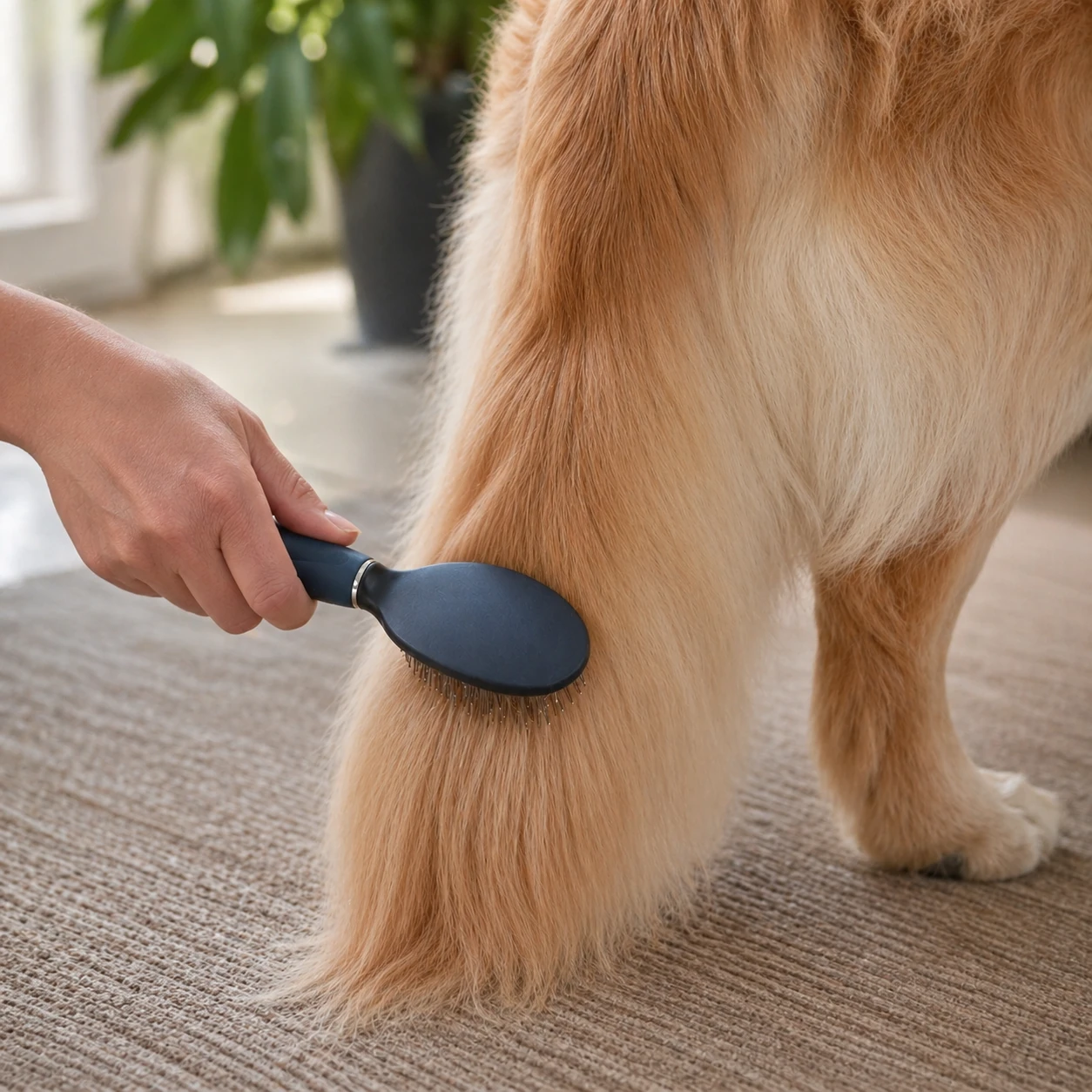
Use a soft slicker for light tangles, a pin brush to smooth longer hair, and a metal comb to check your work.
-
Mist the coat very lightly if it is staticky, but do not soak a knot before brushing.
-
Choose tools for the coat, not the breed name alone. For tool choice, see the dog brush by coat type guide.
Step 2
How do you brush without creating new knots?
Use line brushing. Lift a narrow layer of coat with your fingers or comb, then brush the hair below that line from the ends toward the skin. The stroke should feel light and smooth. You should hear a soft brushing sound, not hard scraping on skin. After each small section, use a metal comb to prove the coat is clear all the way through.
-
Part one narrow line until you can see skin, then brush only the hair below that line.
-
Brush the ends first, then move closer to the base once the brush glides more freely.
-
Comb the same section after brushing. If the comb catches, the section is not finished.
Step 3
How do you work through a small tangle safely?
Do not yank. Hold the hair between the tangle and the skin, then separate the outer edge of the knot with your fingers. Work in tiny pieces, brush the loosened ends, and comb again. If the tangle feels solid, sits tight against the skin, or makes your dog flinch, stop. That is a groomer job, not a force-through-it job.
-
Hold the coat close to the skin so the skin does not pull while you loosen the knot.
-
Tease the outer edge first; never stab, twist, or saw at the middle of the knot.
-
Stop if the skin looks red, hot, sore, flaky, or if your dog cannot stay relaxed.
Where do knots form first?
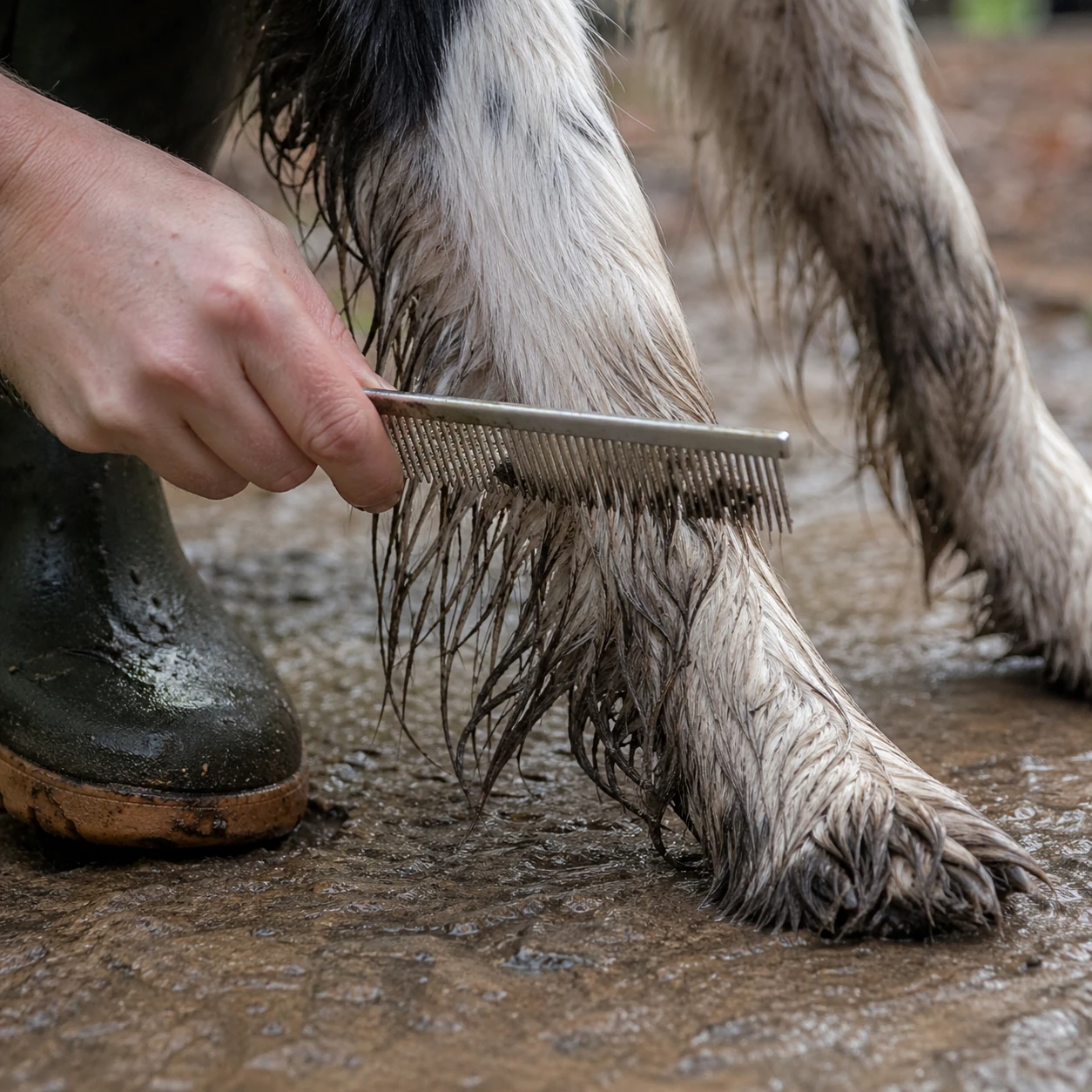
Knots usually start where coat rubs, bends, gets wet, or dries slowly. Check these areas every day on a long-haired dog: behind and under the ears, the armpits, the collar or harness line, the belly, the back legs, the tail, and between the paws after muddy walks. Brush before bathing, and dry the coat fully after washing so damp hair does not tighten into mats.
What mistakes cause knots while brushing?
Most brushing damage is caused by speed, pressure, or missing the coat underneath. Avoid these three mistakes and the whole job becomes easier.
01.
Brushing only the surface
A long coat can look tidy on top while knots sit close to the skin. Part the coat with your fingers, brush in small layers, then comb from skin to tip. If the comb cannot pass, the coat is not fully brushed.
02.
Dragging through a snag
If your dog leans away, licks lips, freezes, yelps, or turns to look at the brush, you are pulling too hard or the area hurts. Make the section smaller, support the hair at the base, reward calm standing, and stop before frustration starts.
03.
Bathing before detangling
Water can make tangles tighter. Brush and comb before the bath, use dog shampoo only when needed, rinse well, and dry the coat fully. A long coat that stays damp behind the ears, under the legs, or around the tail can mat quickly.
Brushing questions
Frequently Asked Questions
Straight answers for beginner dog owners trying to keep a long coat comfortable at home.
For many long-haired dogs, daily brushing or at least a daily tangle check is the easiest plan. The whole coat may not need a full groom every day, but ears, armpits, collar line, belly, legs, tail, and paws should be checked often because these areas knot first.
Brush before the coat is wet. A very light mist can reduce static while brushing, but soaking a tangled coat is a bad move because water can tighten knots. After a bath, dry the coat fully and comb again once it is dry.
A soft slicker brush, a pin brush, and a metal comb are a practical starter set for many long coats. The slicker helps with loose hair and light tangles, the pin brush smooths longer coat, and the comb proves whether the coat is clear. The right tool still depends on coat texture and undercoat.
You are brushing too hard if you hear harsh scraping, see red skin, bend brush pins, or your dog flinches, ducks, growls, snaps, freezes, or keeps moving away. Use lighter pressure, smaller sections, and shorter sessions. A brush should move through coat, not rake skin.
Do not cut tight knots or mats with scissors at home. Dog skin can fold into a mat, and it is easy to cut the skin by mistake. If the mat is tight, close to the skin, painful, large, or dirty, book a groomer or ask your vet.
Do not force a full session. Put the brush down, let your dog sniff it, reward calm interest, touch one easy area, reward, and stop. Build from seconds to minutes. If fear is severe or sudden, pain could be involved, so speak to a vet or qualified behaviour professional.
A dog-safe detangling spray can help with small, loose tangles, especially in silky or static-prone coats. It will not fix tight mats. Use it lightly, avoid eyes and ears, follow the label, and stop if the skin looks irritated.
Further information
Useful external pages checked while preparing this guide
Tools
Brush and comb choice
AKC explains the main dog brush types and why slicker brushes need a light touch. Read the AKC brush guide.
Routine
Frequency and coat checks
PDSA gives simple grooming frequency guidance, and VCA explains why long, silky, and curly coats need frequent brushing. Read PDSA grooming guidance. Read VCA coat care guidance.
Safety
Mats and professional help
ASPCA warns against cutting mats with scissors, and RSPCA gives UK guidance for choosing a responsible groomer. Read ASPCA matting guidance. Read RSPCA groomer guidance.