Seasonal coat change
Dog Shedding Season: Spring and Autumn Coat Care
When your dog starts dropping hair in spring or autumn, do not try to stop shedding. Use the right brush, light pressure, and short repeat sessions so loose coat comes out before it turns into mats, itch, or stress.
What should your shedding-season routine look like?
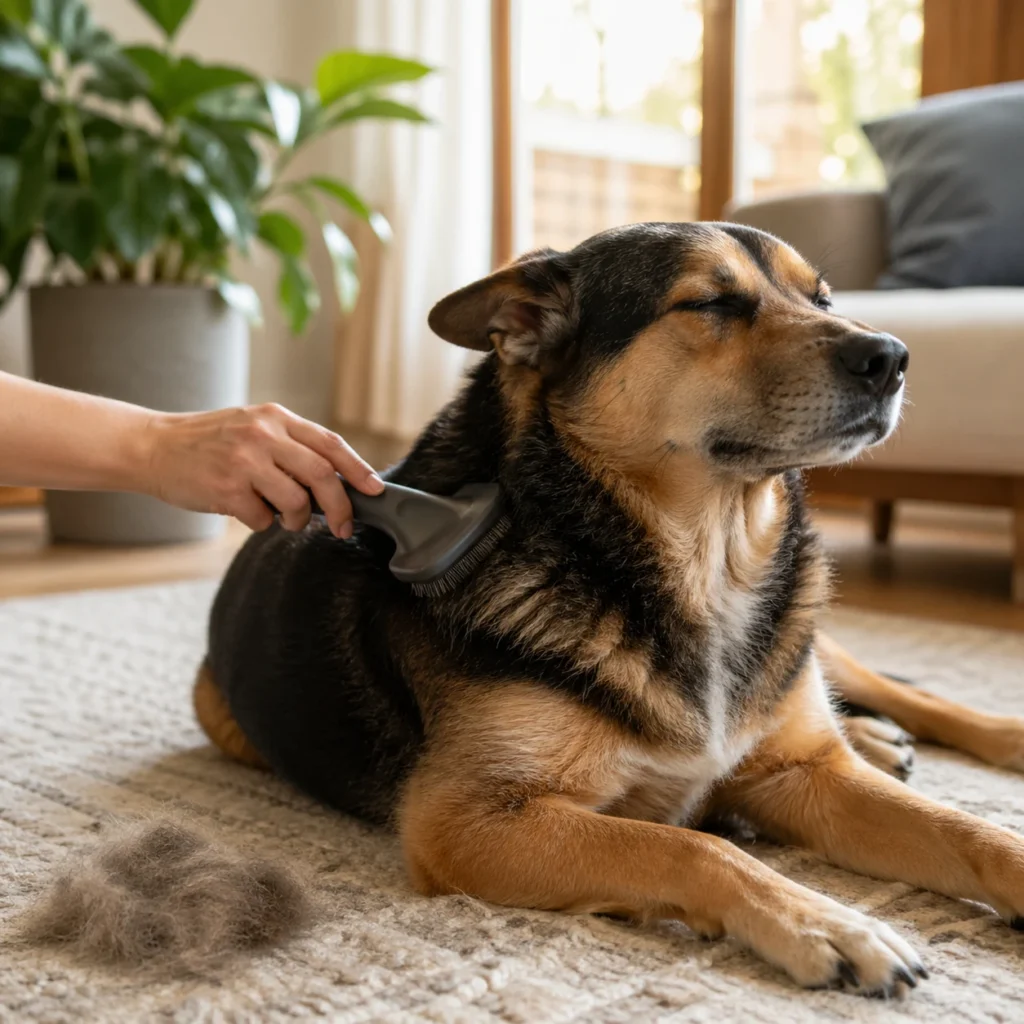
Brush more often, brush gently, and collect loose hair before it spreads around the house. Heavy shedding is managed in short sessions
01.
Brush before hair packs together
During a heavy coat change, use five to ten calm minutes most days. Start at easy areas such as shoulder, side, and chest. Work with the coat first. For thick undercoat, lift small sections and brush until loose hair stops coming away easily.
02.
Use short sessions
A dog that walks away, freezes, lip licks, or flinches is not being difficult; the session is too much. Put the brush down, reward calm behaviour, and rebuild with shorter handling. Nervous dogs should practise with a brush before a full groom; see help your dog get comfortable with grooming.
03.
Bath only after the coat is clear
Water can tighten tangles. Brush and comb first, then bathe only when needed. If the coat is long, curly, thick, or double, dry it properly afterwards so loose hair does not sit damp near the skin. Use the guides to bathe your dog at home and dry your dog without stress.
Spring and autumn
How are spring and autumn coat changes different?
Spring is often the bigger shed for double-coated dogs because the dense winter undercoat is coming out. Autumn can be lighter, but it still matters: old summer coat is leaving while the colder-weather coat grows in. Seasonal shedding is influenced by daylight and temperature, so some indoor dogs shed all year with extra bursts around spring and autumn. In both seasons, your aim is the same: loosen dead hair, keep the skin comfortable, check friction areas, and stop if the coat catches instead of gliding.
Which brush technique should you use for each tool?
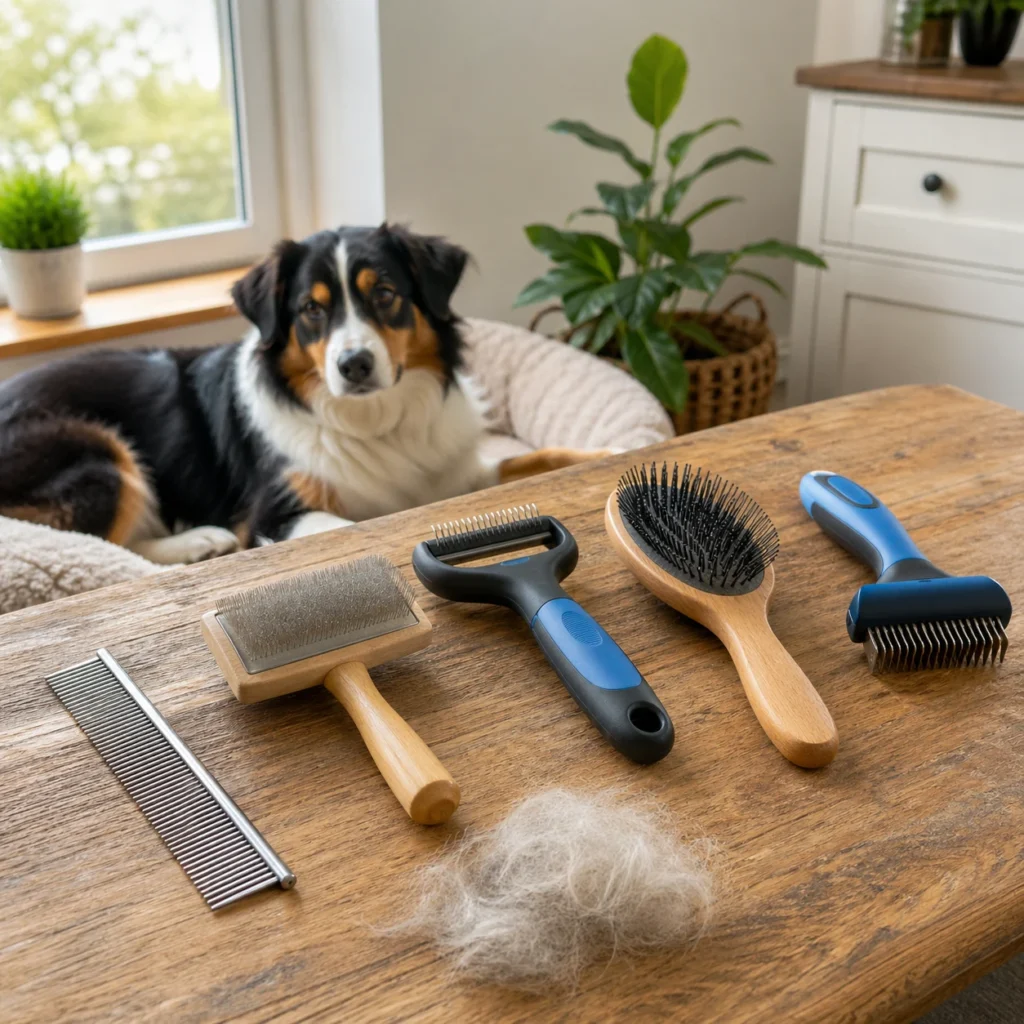
Use the brush that matches the coat. If you are not sure which tool belongs on your dog, start with the dog brush by coat type guide, then use the technique below.
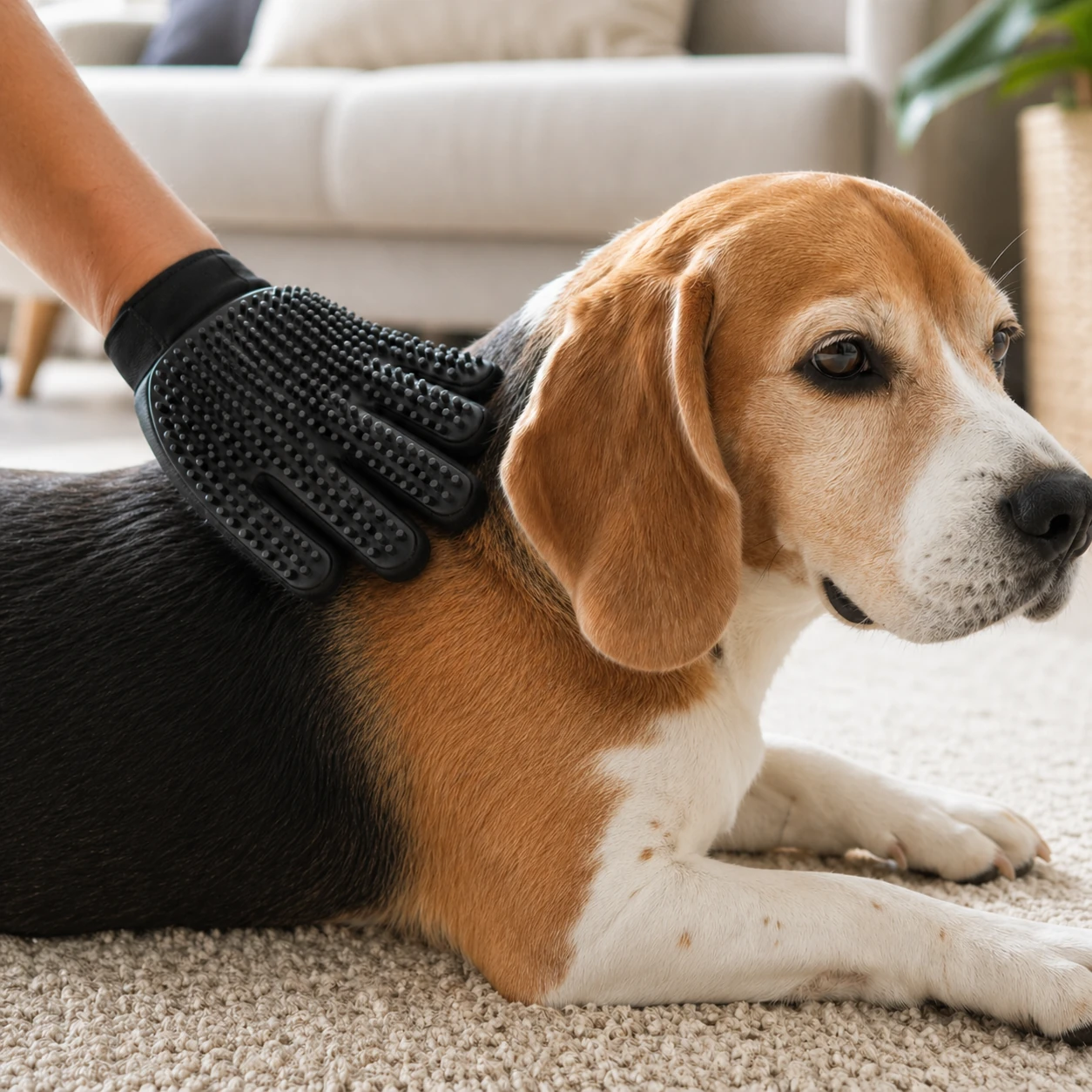
Rubber curry brush or grooming mitt
Best for short smooth coats. Use small circles or short strokes with light pressure, then sweep with the hair growth to collect loose hair. Do not grind it into thin skin, elbows, belly, or face, and do not use it to attack knots in long coats.
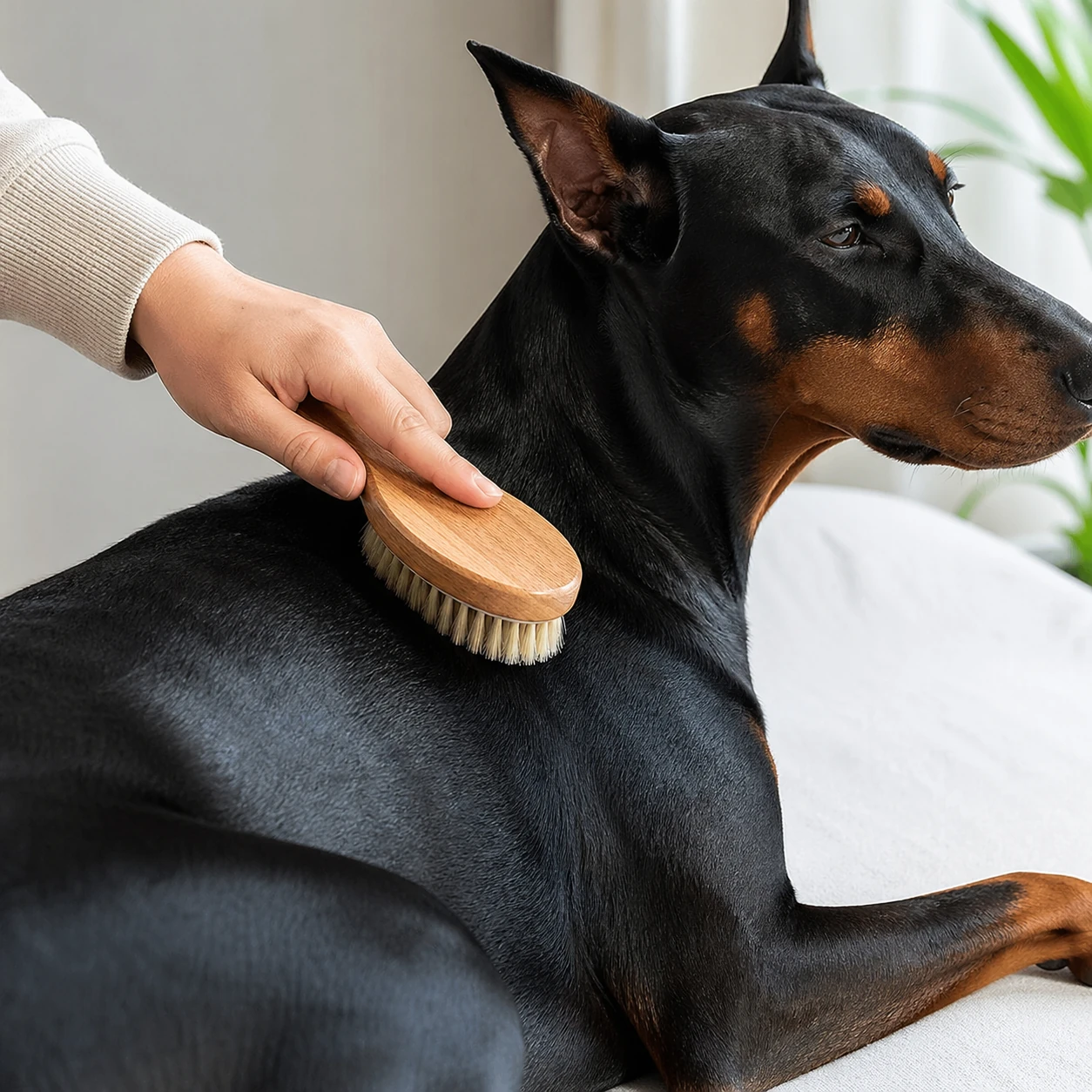
Soft bristle brush
Best for short coats and as a finish after other tools. Brush with the direction of hair growth in long, smooth strokes. It shines the coat and lifts surface dust; it is not for hidden undercoat or mats.
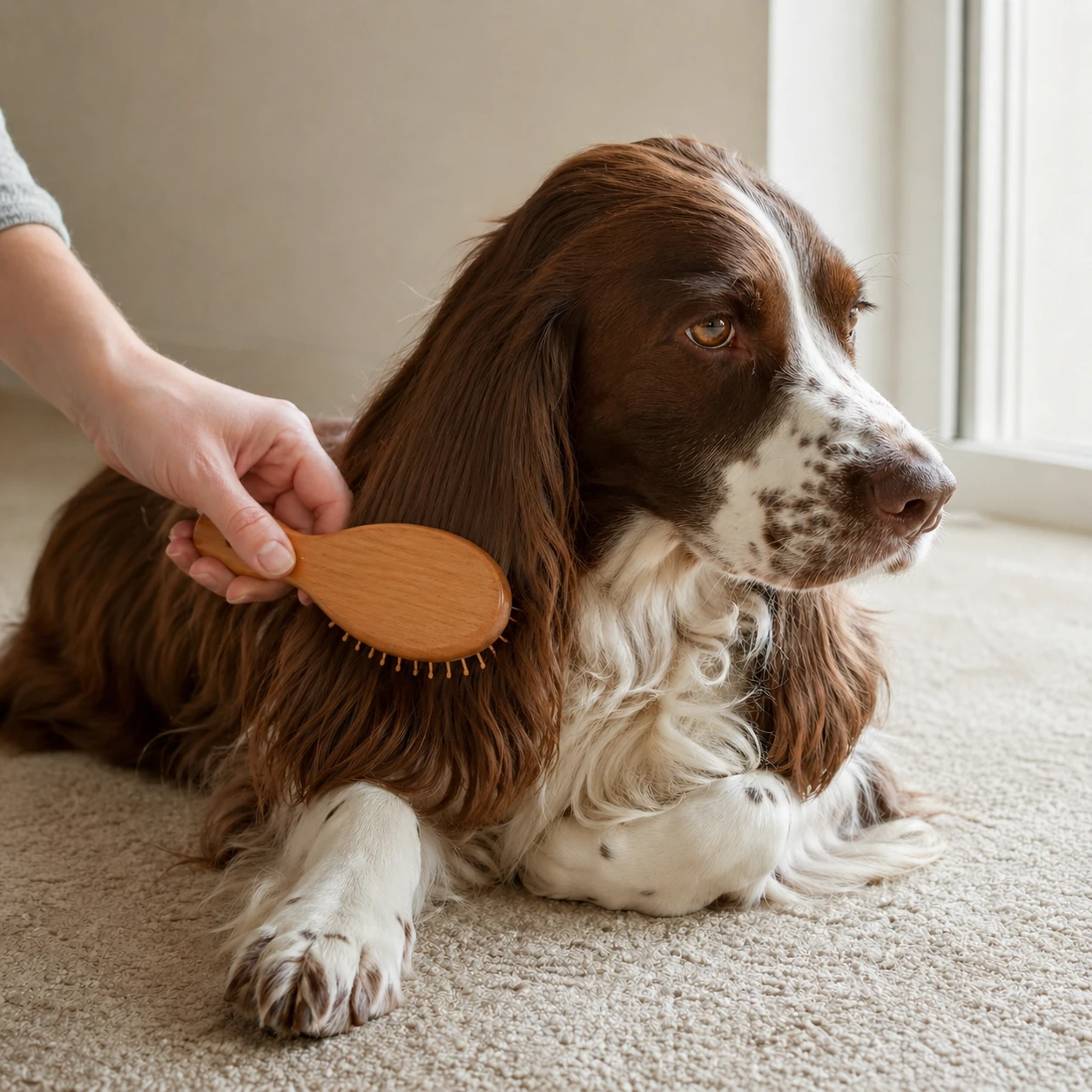
Pin brush
Best for longer silky or feathered coats once tangles are partly cleared. Lift the coat in layers, brush the ends first, then move closer to the body. If the pins snag, stop and loosen the tangle instead of dragging.
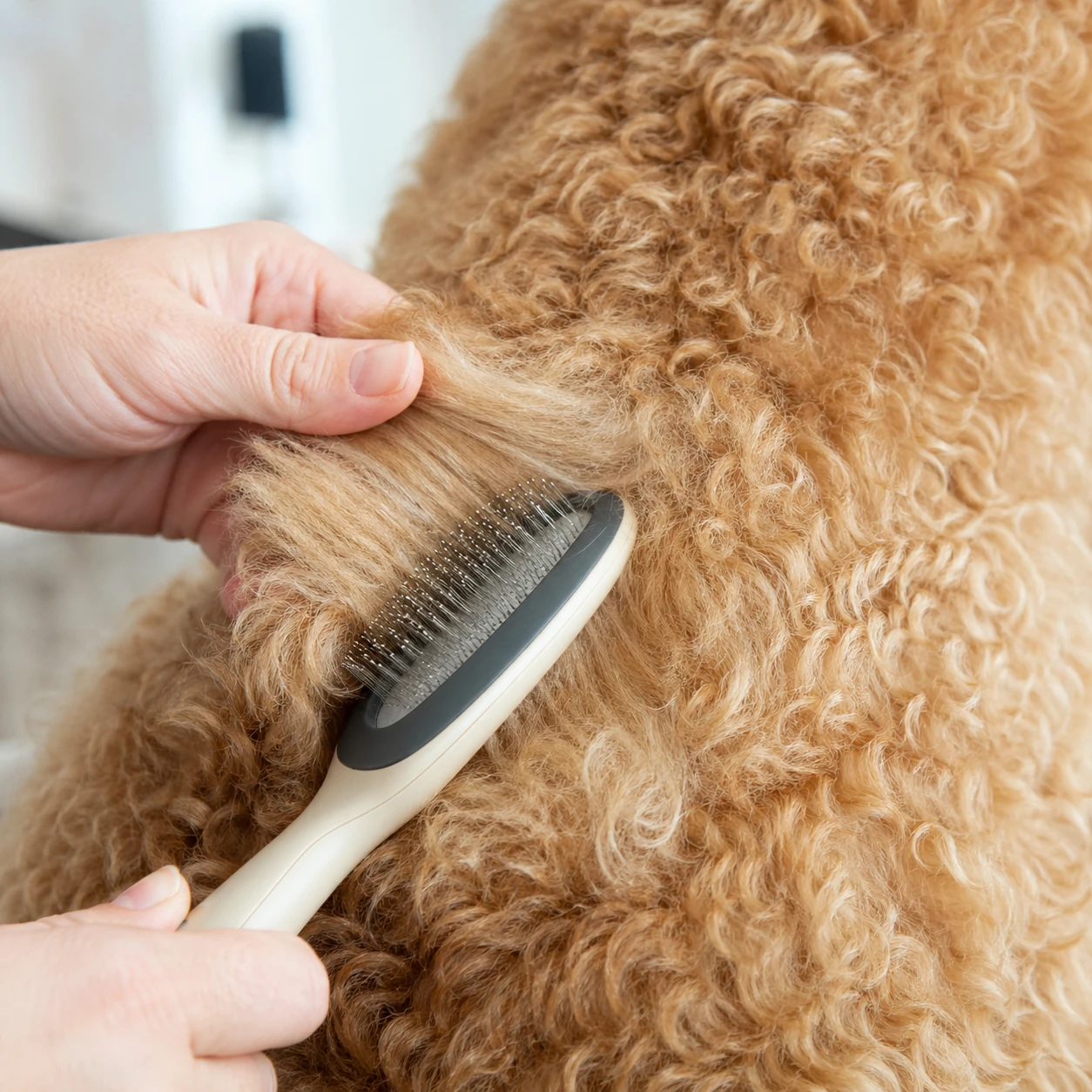
Slicker brush
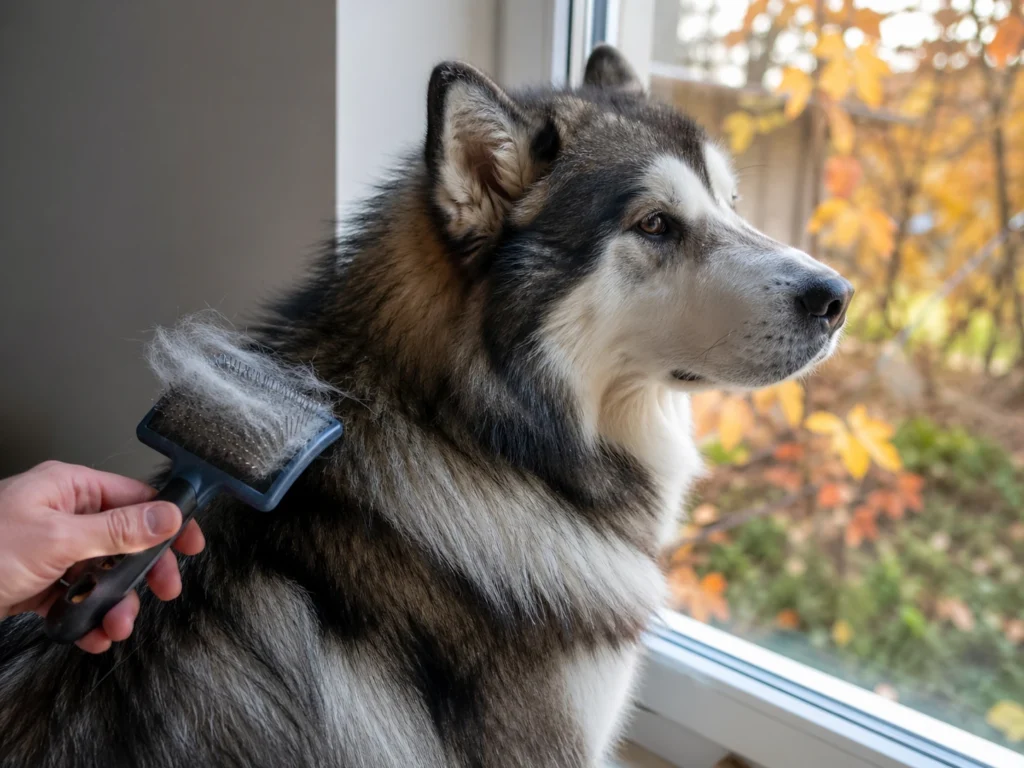
Best for medium, long, curly, and wire coats when used gently. Keep your wrist loose, use short light strokes, and brush one small section at a time. Avoid repeated scraping.
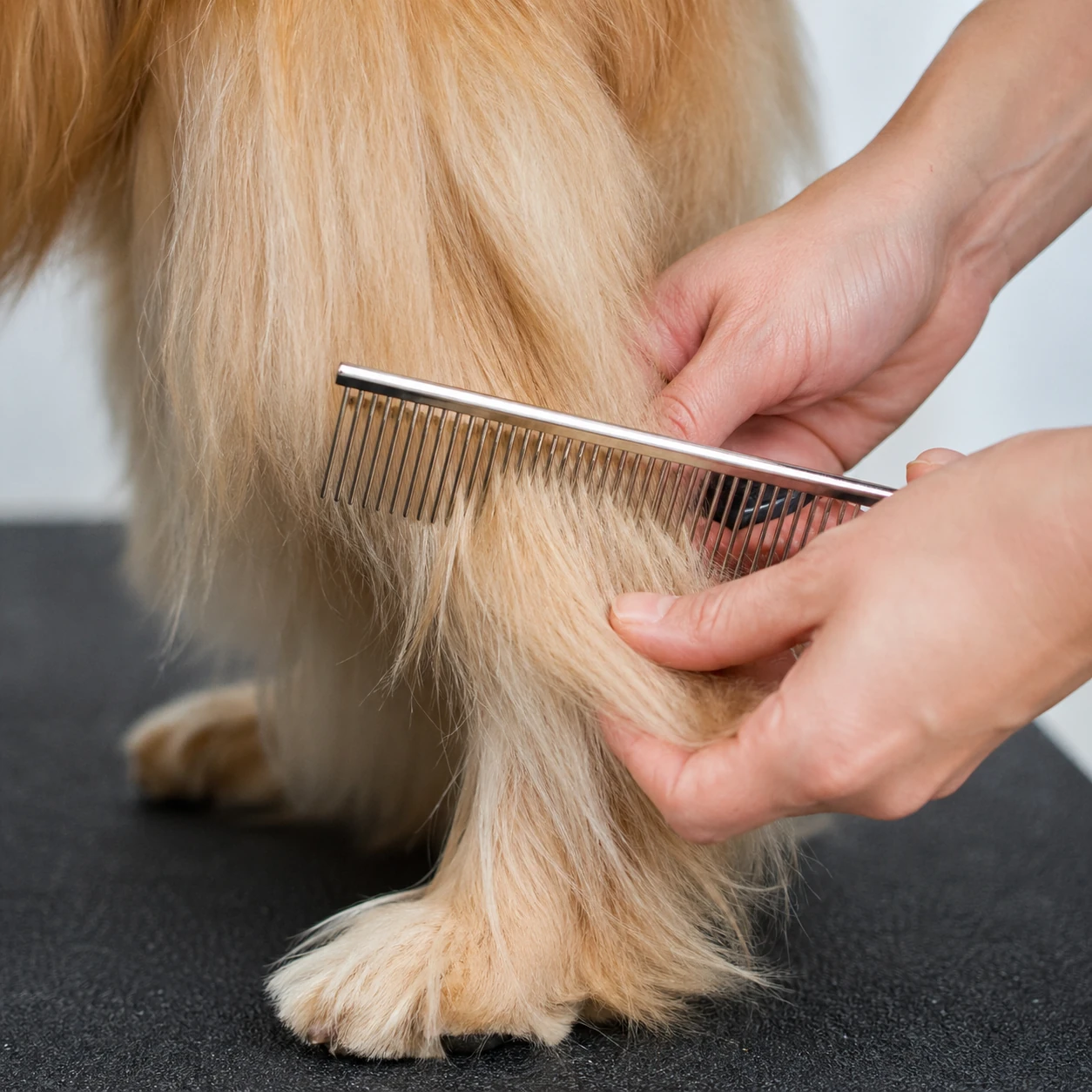
Metal comb
Best as the check after brushing. Start with wider teeth, then finer teeth if the coat allows. Comb behind ears, armpits, collar line, legs, tail, beard, and trousers. If the comb stops, go back to gentle brushing.
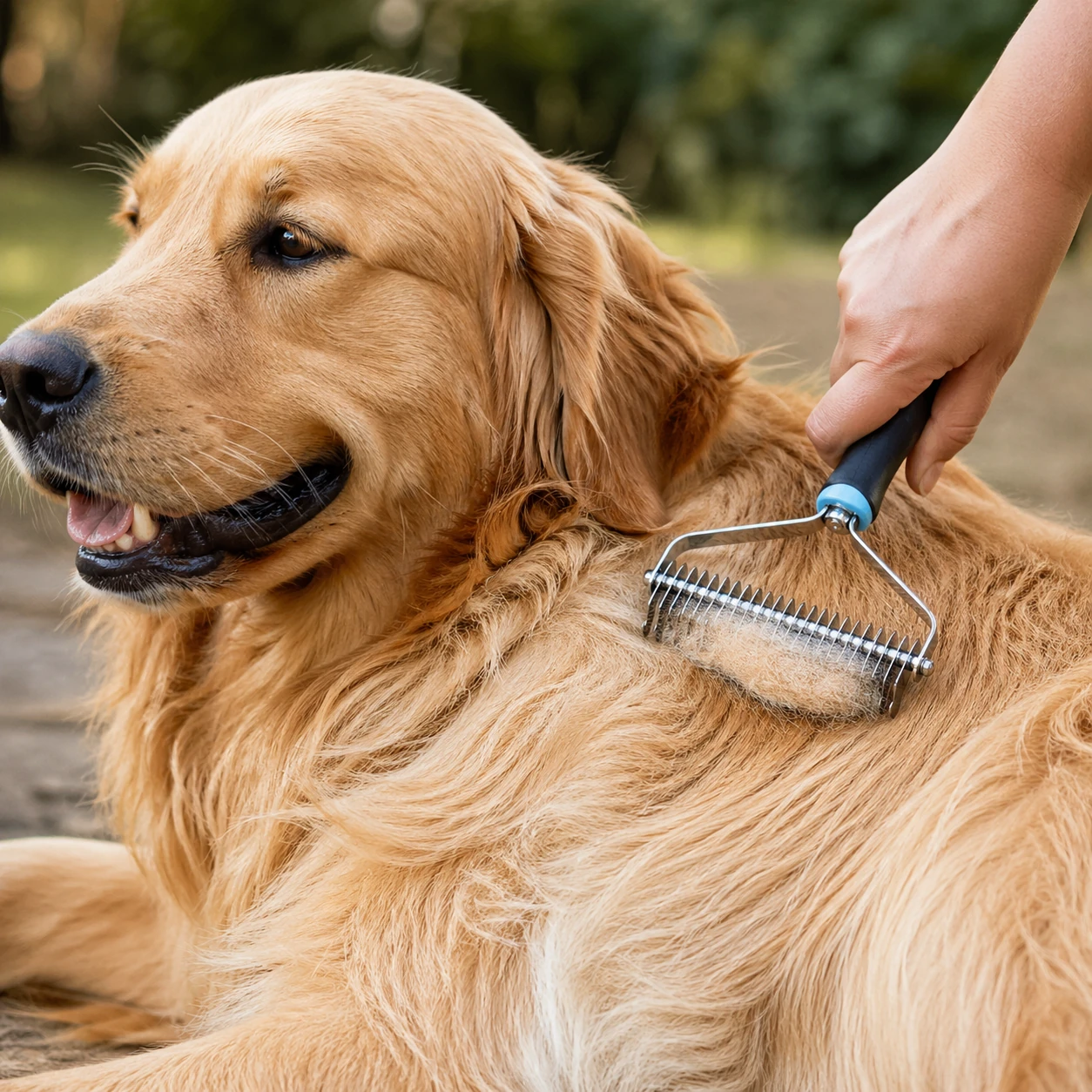
Undercoat rake
For double coats during heavy shed. Part the coat, place the rake lightly into the undercoat, and pull short strokes in the direction the coat grows. The rake should glide; if it digs, catches, or scratches, stop. Not suitable for other coat types.
What mistakes make shedding season harder?
Most home shedding problems come from trying to remove too much hair too quickly. Your dog is not a carpet. Skin is sensitive, and harsh tool use can make brushing harder next time.
01.
De-shedding tool abuse
A de-shedding tool is not a daily scraper and is not suitable for all dogs. Use it only on a dry, untangled coat that suits the tool. Keep it flat to the coat, make short passes, and stop when hair removal slows. Avoid thin, curly, silky, damaged, sore, or already irritated areas.
02.
Only brushing the surface
A thick coat can look tidy on top while dead undercoat or knots sit near the skin. Lift the hair in layers and check high-friction spots: behind ears, under armpits, around the collar, belly, back legs, and tail base.
03.
Forcing one huge session
One aggressive brush-out can teach a dog to hate grooming. Split the job over several days. For tight mats, sore skin, bald patches, scabs, fleas, heavy itching, or sudden abnormal shedding, use a groomer or vet rather than pushing through at home.
Shedding questions
Frequently Asked Questions
Straight answers for beginner owners during spring and autumn coat changes.
No. Normal shedding is a healthy coat process. The practical goal is to remove loose hair before it spreads around the house or packs into the coat. Brush more often during heavy shedding and use the gentlest tool that reaches the loose hair.
For a heavy double coat, daily short sessions can be useful during the worst weeks. Medium coats may need several sessions a week. Short smooth coats may only need a quick rubber or bristle brush a few times a week. Adjust by what comes out and how your dog feels.
Start with the direction of hair growth. On some thick undercoats, gently lifting or brushing small sections back from the skin can loosen shed coat, but finish with the coat growth and keep pressure light. Never scrape backward over sensitive skin.
For a double-coated dog, loose clumps often mean the undercoat is releasing. Use an undercoat rake or suitable slicker in short strokes, then smooth the topcoat. Do not pull clumps by hand if the skin moves or the hair resists.
Sometimes, but brush and comb first. Bathing can help loosen dead hair, but water can also tighten tangles if the coat is not clear. After bathing, dry the coat fully enough that damp undercoat is not trapped near the skin.
Speak to a vet if shedding comes with bald patches, sores, redness, scabs, bad smell, constant scratching, parasites, dull broken hair, weight change, thirst change, or sudden shedding outside your dog’s normal pattern.
Buy for the coat – short smooth dogs often start with a rubber curry brush or soft bristle brush. Medium, long, curly, and wire coats often need a soft slicker plus a metal comb. Double coats may also need an undercoat rake.