How to Bathe Your Dog at Home
Start calm, not rushed
Set up towels, treats, dog shampoo, and a non-slip surface before you wet the coat.
Use dog-safe basics
Lukewarm water, dog shampoo, a damp cloth for the face, and patient rinsing are enough for most home baths.
Rinse and dry properly
Most mistakes happen at the end. Rinse until clear, towel dry well, and keep your dog warm until fully dry.
Bath prep
What should you do before the bath?
For most healthy dogs, the right home bath is simple: brush first, use lukewarm water, use dog shampoo, keep soap away from the eyes and ears, rinse thoroughly, and dry fully.
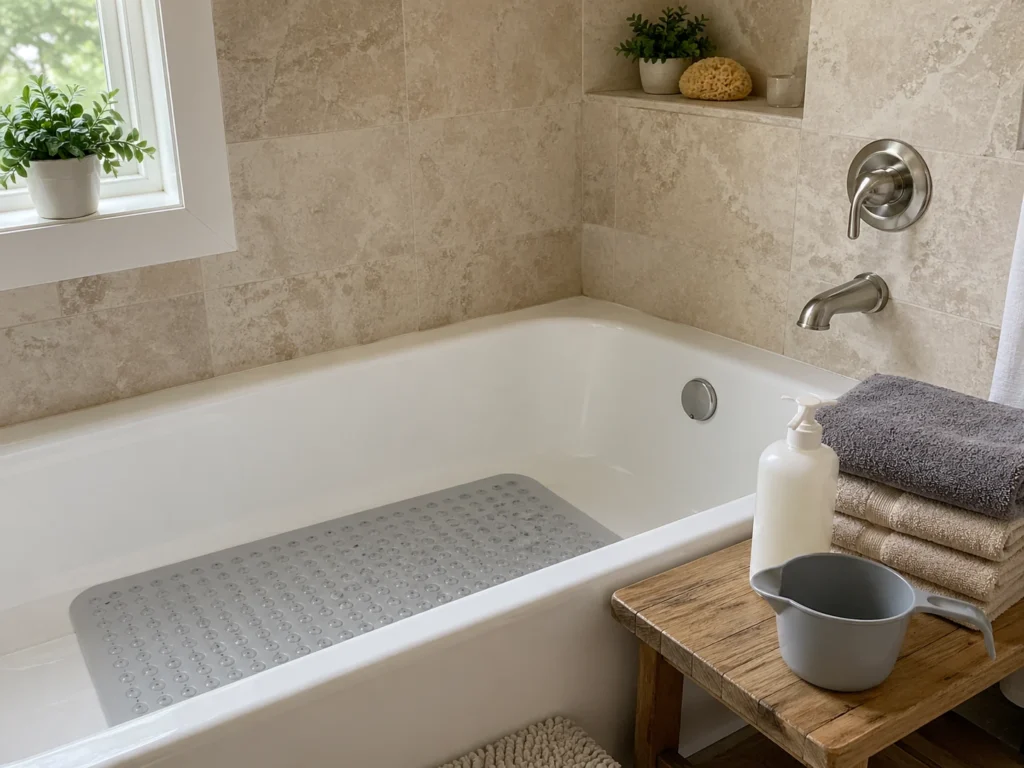
Set everything beside the bath before you start: two or three towels, dog shampoo, a cup or shower head, a damp cloth for the face, treats, and a non-slip mat. Close the door so your dog cannot sprint to the sofa while still wet. If you find tight mats, sore skin, or a strong bad smell from the skin or ears, pause the bath and get proper help instead of pushing through.
How do you bathe your dog at home?
Use this order for a normal home bath. The main rule is to move slowly and rinse longer than you think you need to.
1. Brush first
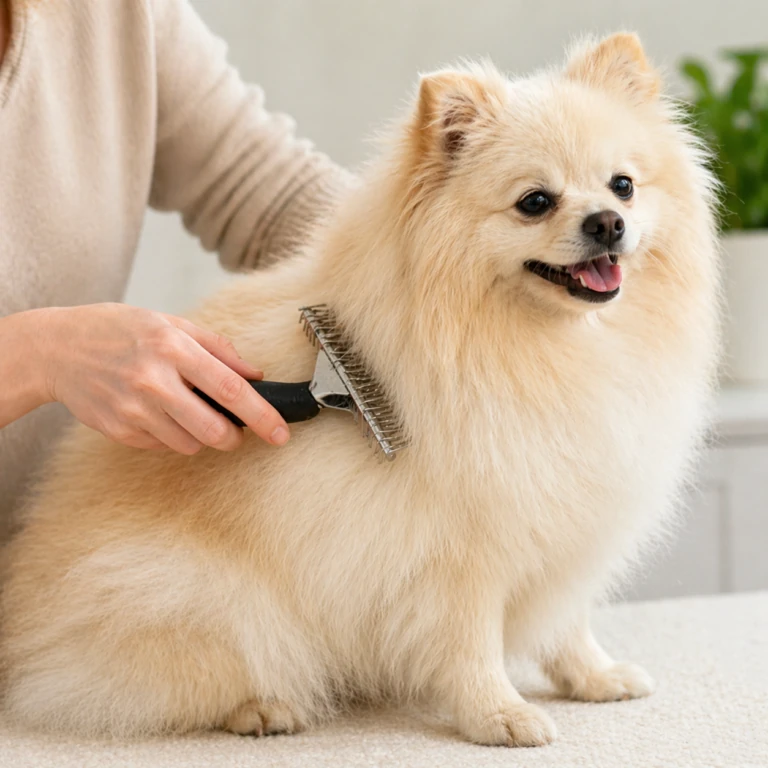
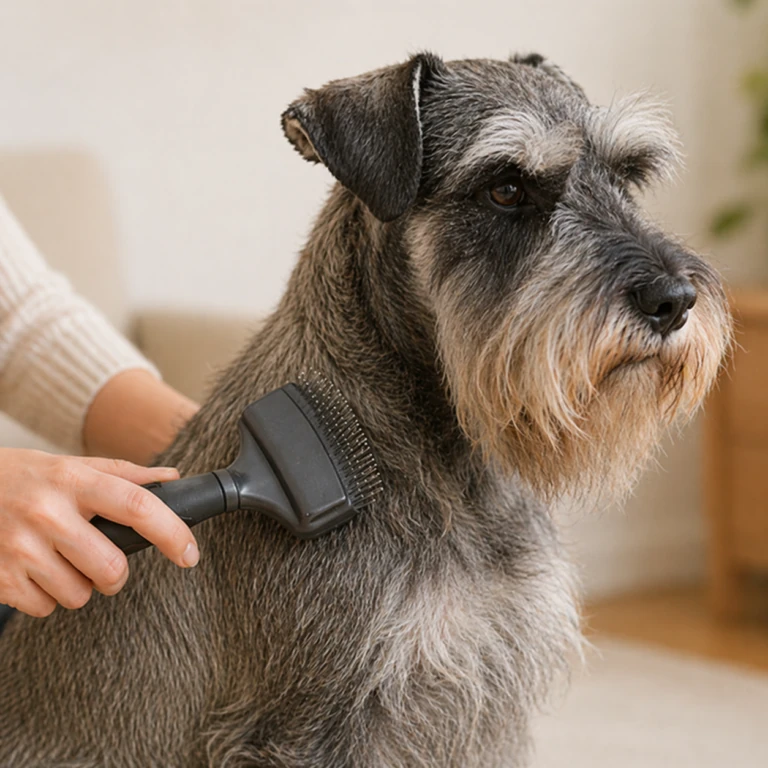
Brush out loose hair and small tangles before water hits the coat. Water can tighten mats and make them harder to remove.
2. Set up the bath
Use a non-slip mat, lukewarm water, and towels within reach. Keep the session calm before your dog is wet.
3. Wet from neck down
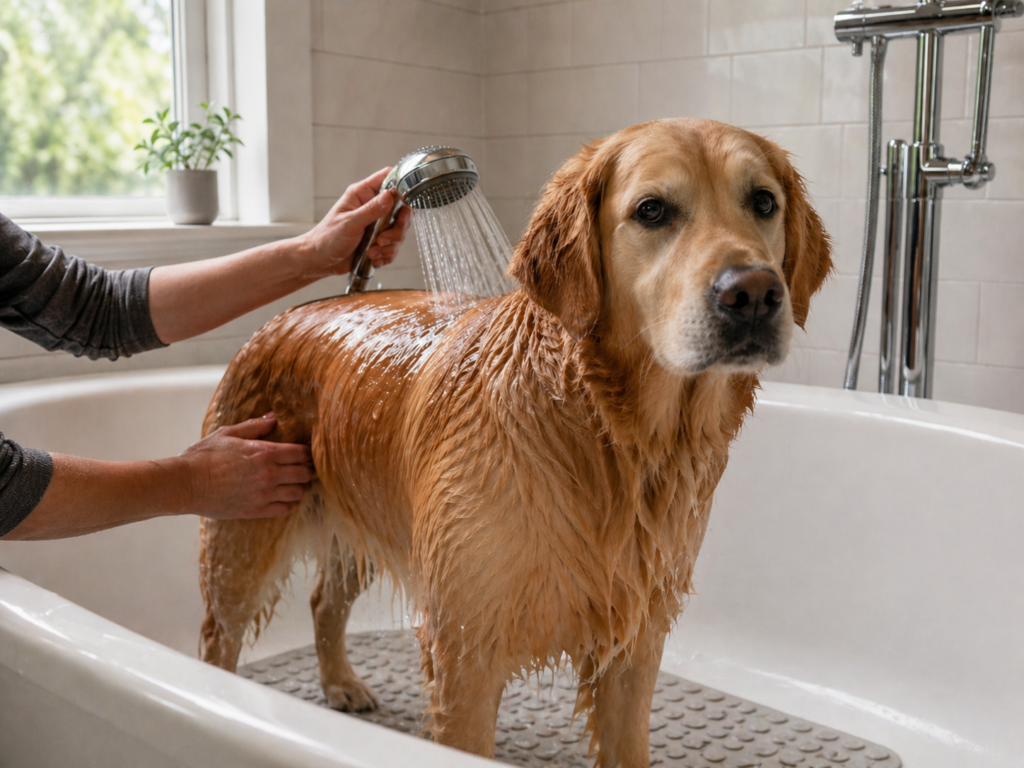
Wet the body slowly, starting around the shoulders or back. Avoid spraying the face and keep water out of the ears.
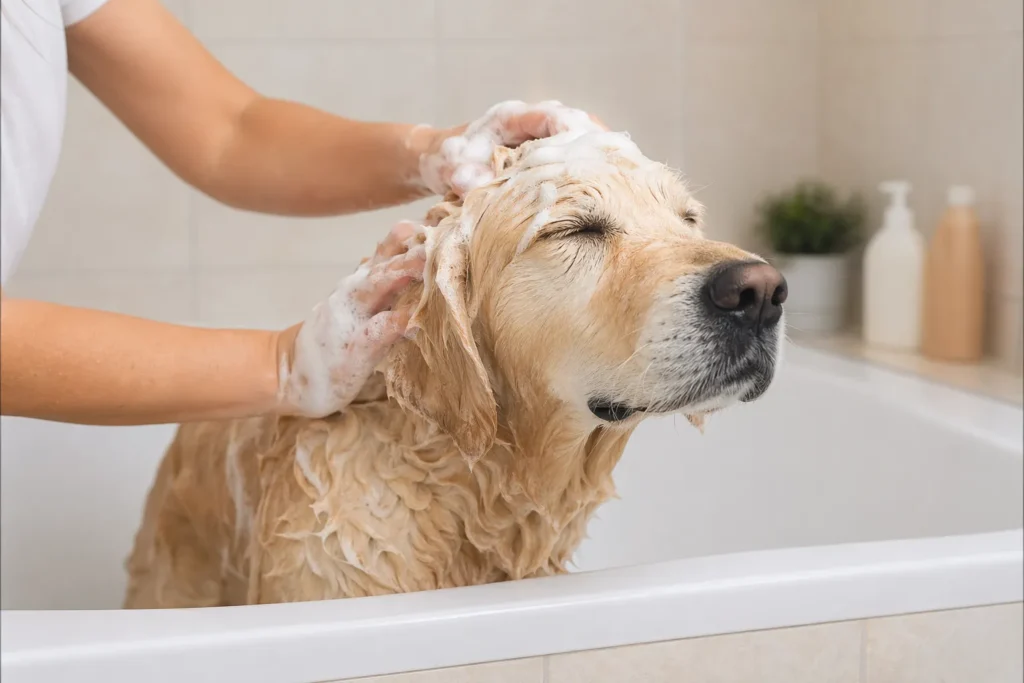
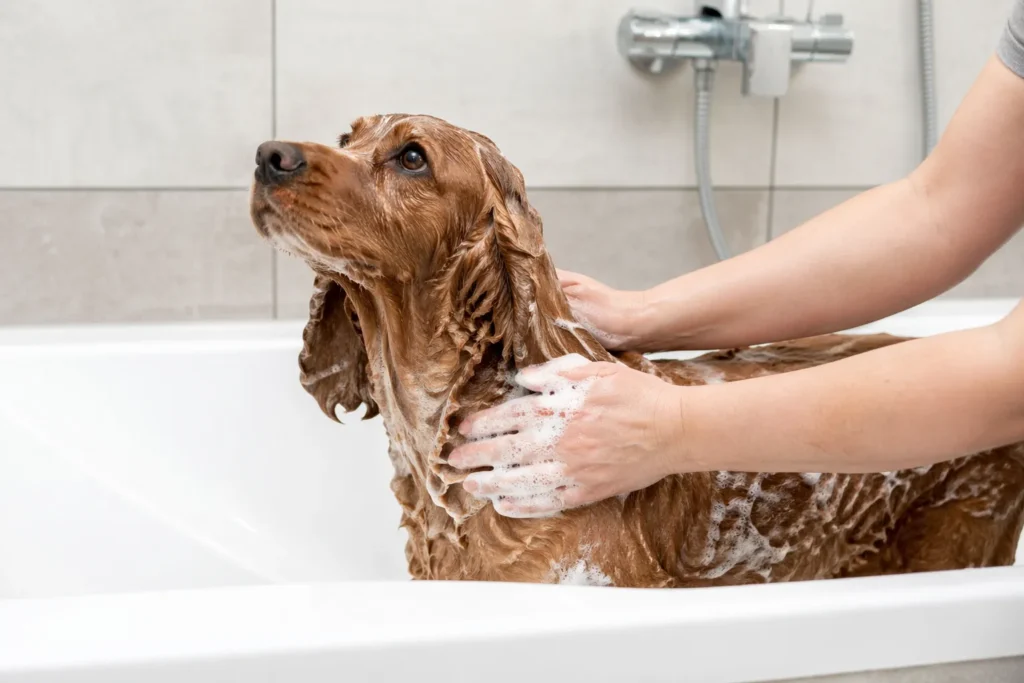
4. Shampoo gently
Use dog shampoo, diluted if the label says to. Massage with your fingers in the direction the coat grows. Avoid inside the ears or eyes.
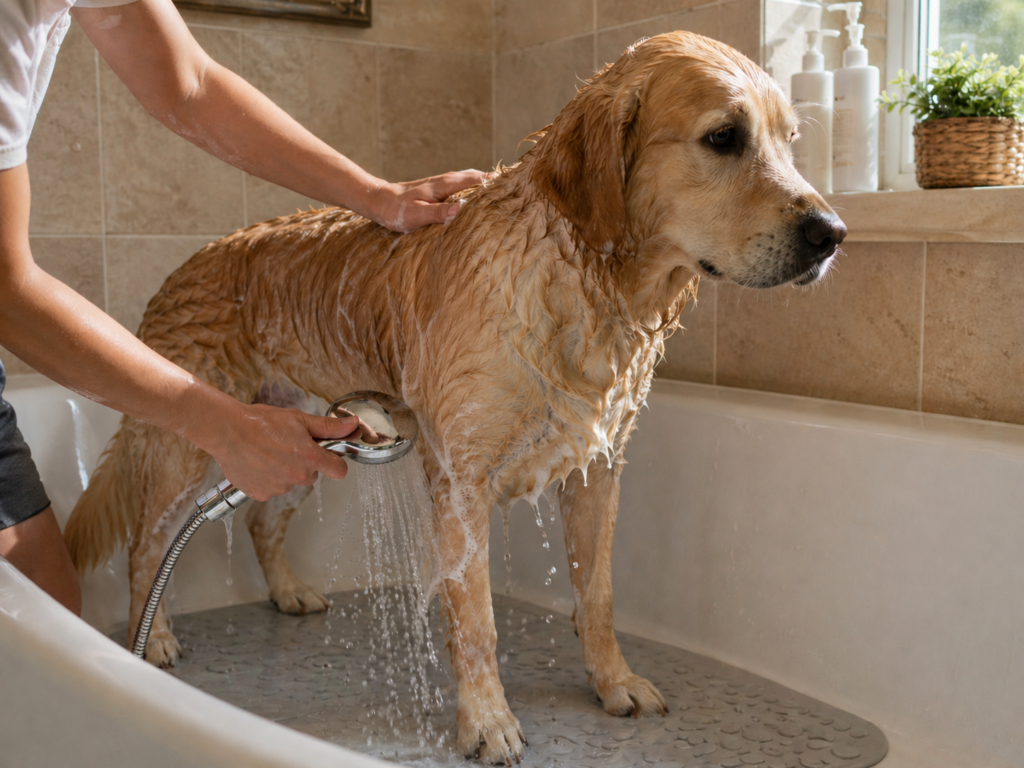
5. Rinse thoroughly
Rinse until the water runs clear and the coat feels free of product. Check the belly, paws, armpits, and under the tail.
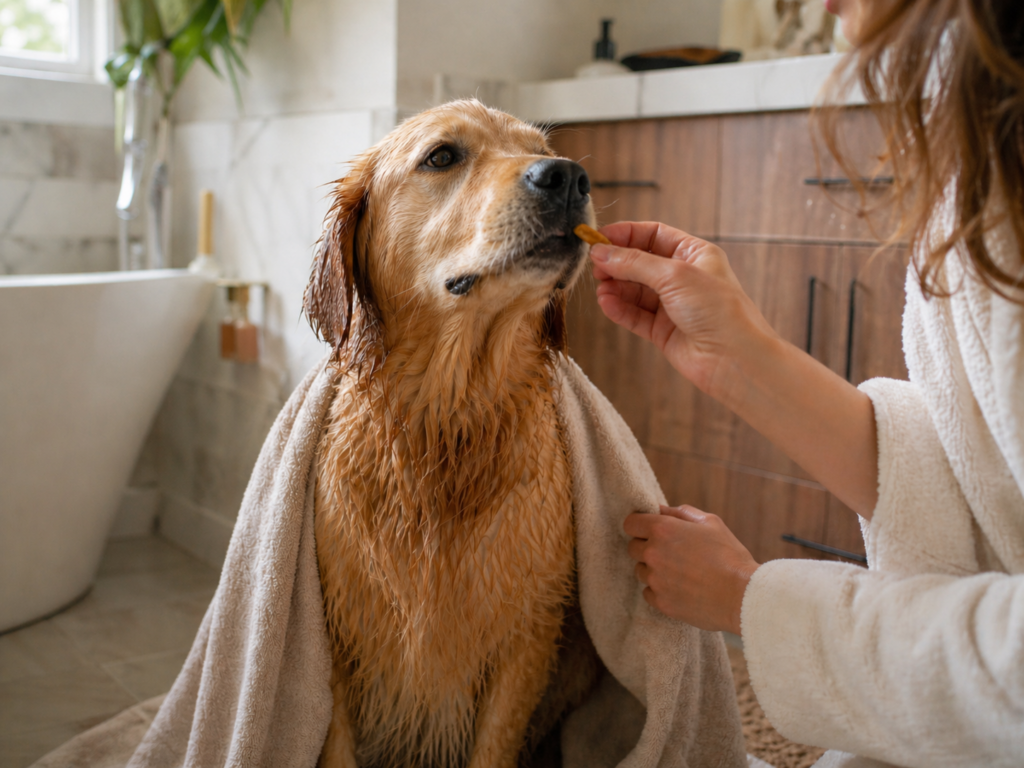
6. Dry and reward
Squeeze out water with towels. Use a cool or low dryer only if your dog accepts it, then reward and let the coat dry fully.
What changes for different coat types?
The basic bath method stays the same, but coat type changes how carefully you brush, rinse, and dry. If you are unsure what to use before the bath, start with this guide to choosing a dog brush for coat type.
01
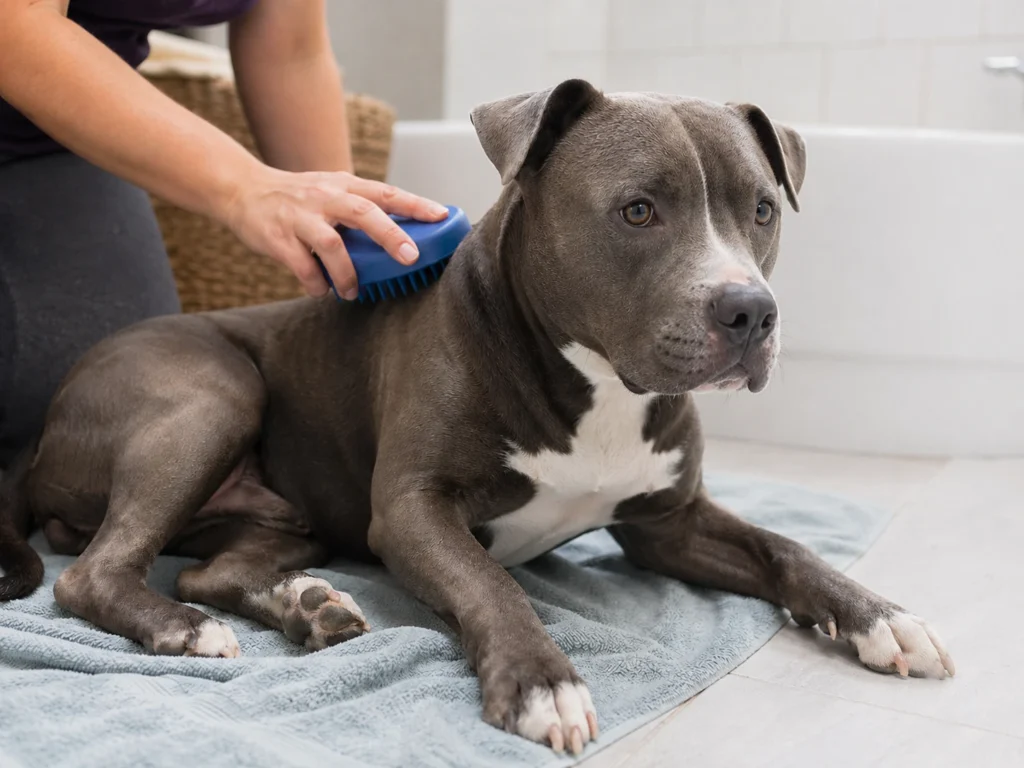
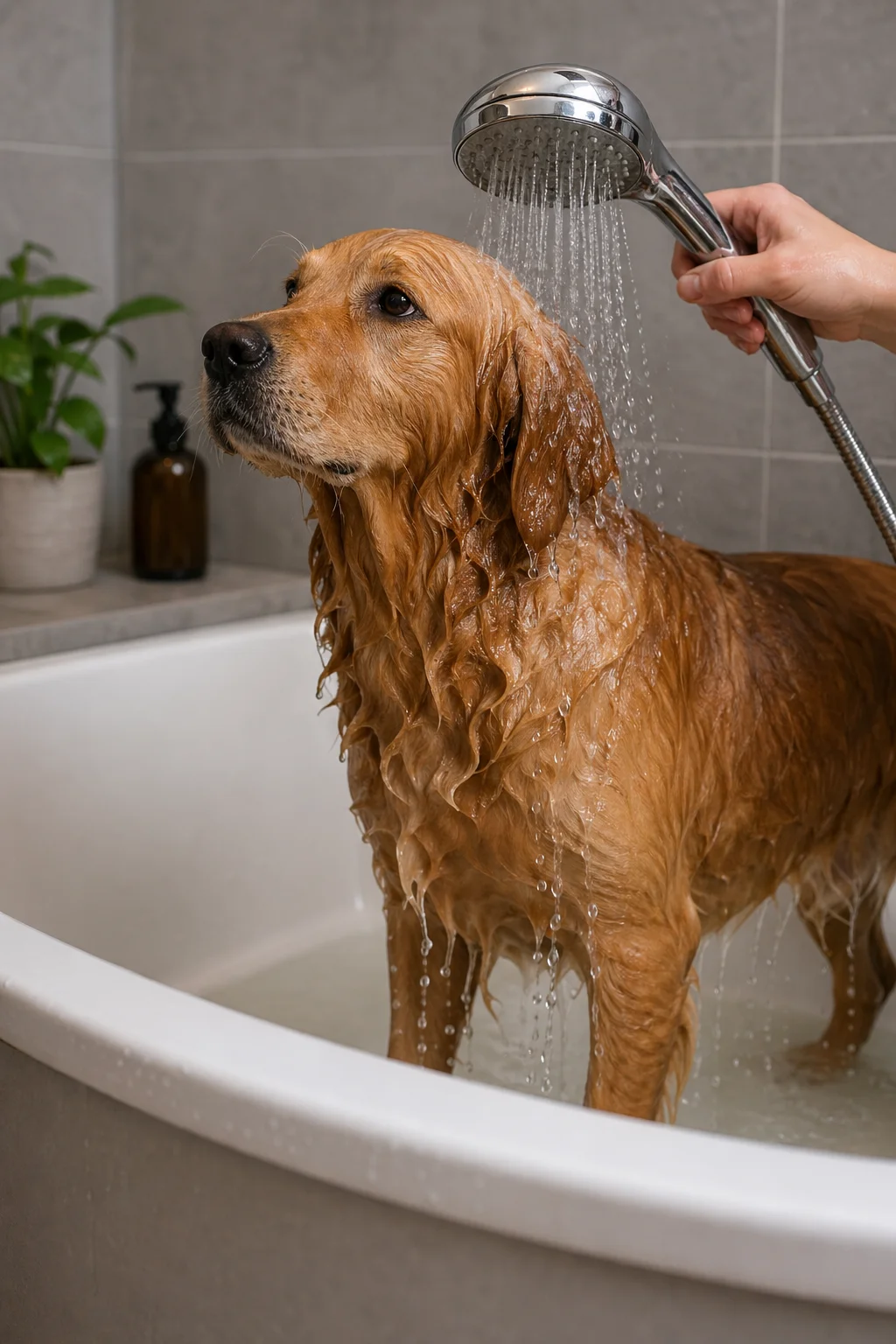
Short coats still need prep
Short-haired dogs can look easy, but shampoo still needs to reach the skin and rinse out cleanly. Use a light hand and avoid hard scrubbing.
-
Use a rubber curry brush or soft brush before the bath.
-
Use a small amount of dog shampoo and spread it evenly.
-
Rinse until the coat no longer feels slippery or sticky.
-
Towel dry well so your dog is not left chilled.
02
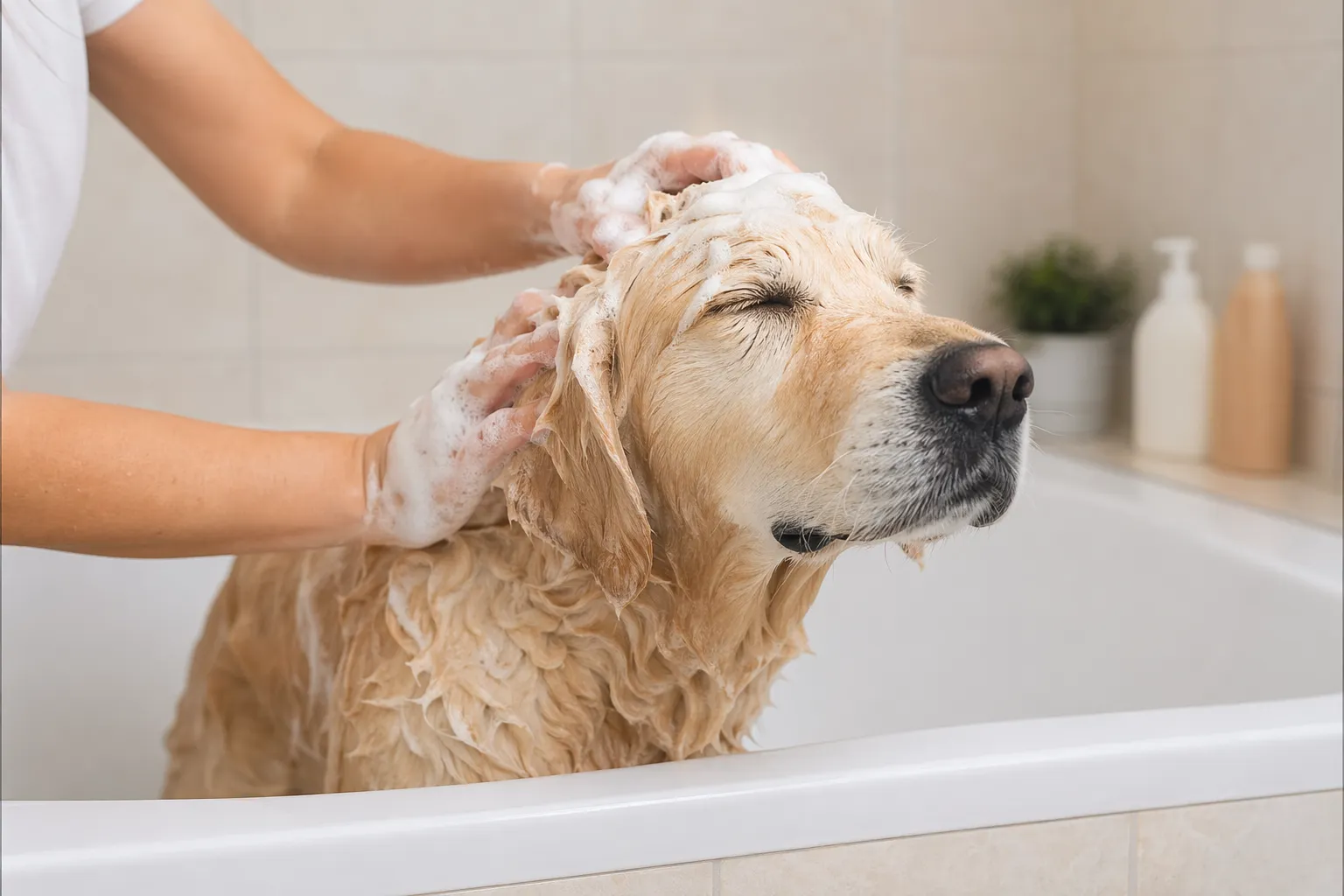
Long coats need brushing first
Long hair tangles more easily. Brush and separate the coat before the bath, then wash in the direction the hair grows.
-
Remove tangles before water reaches the coat.
-
Work shampoo down the coat, not in rough circles.
-
Rinse slowly, especially around the legs and belly.
-
Dry fully before allowing your dog onto cold floors or outdoors.
03
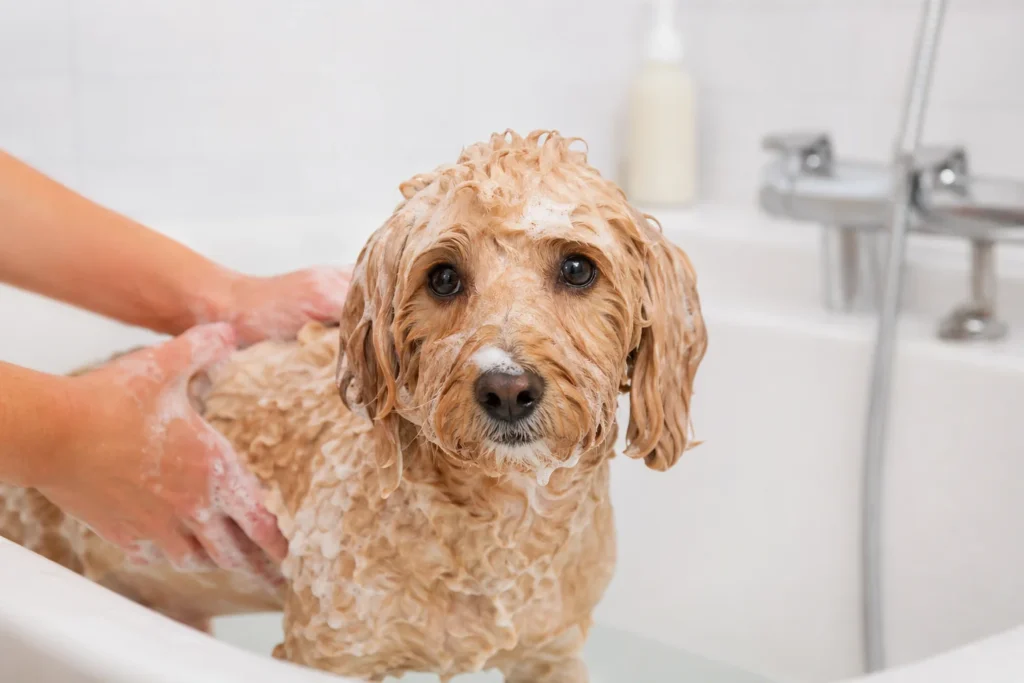
Double coats hold water
A dense undercoat can trap shampoo and moisture. Use patient rinsing and careful drying rather than rushing the finish.
-
Use fewer baths unless your dog is truly dirty or smelly.
-
Soak and rinse patiently so the undercoat is clean.
-
Towel dry in layers and avoid leaving the undercoat damp.
-
Do not shave a double coat as a bath shortcut.
04
Sensitive skin needs restraint
If your dog has itching, redness, dandruff, bald patches, or a history of skin trouble, do not guess with strong products. Ask your vet what shampoo is suitable.
-
Avoid scented or harsh products unless your vet recommends them.
-
Use a vet-approved or prescribed shampoo when needed.
-
Keep the bath short and stop if redness or itching worsens.
-
Do not use medicated shampoo without the right instructions.
Bath timing
How often should you bathe your dog?
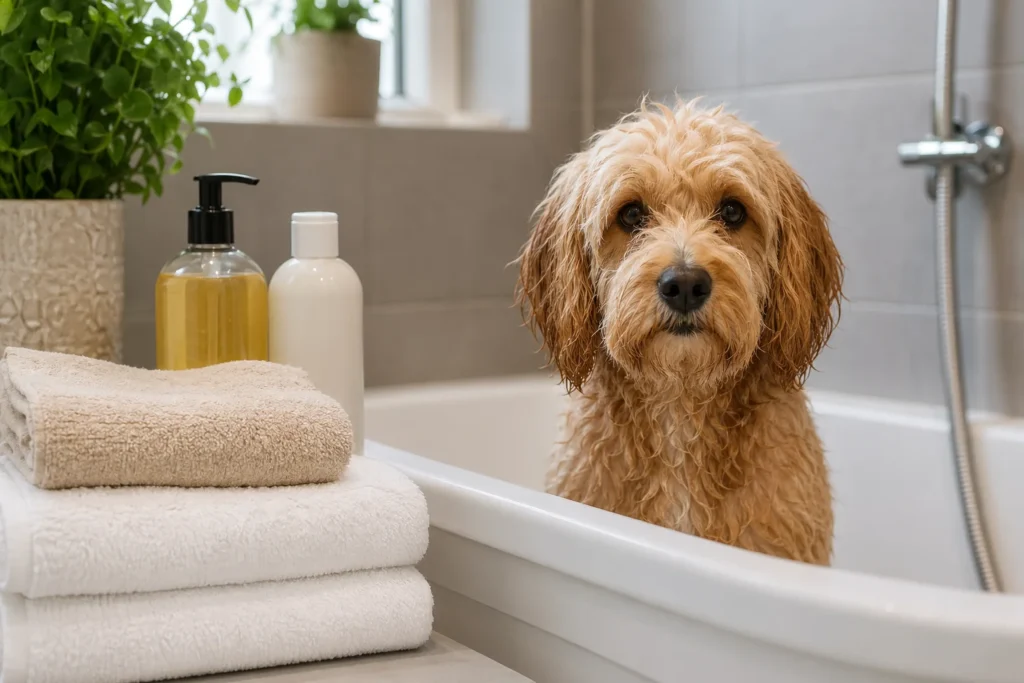
Most healthy dogs do not need a weekly bath. Bathe when your dog is dirty, smells bad, has rolled in something, or has a vet-directed skin-care routine.
For many dogs, every 4 to 8 weeks is a reasonable starting point, but coat type, skin condition, activity level, and weather matter more than the calendar. If your dog is muddy but does not smell, let the mud dry and brush it out, or rinse with warm water only. Too much shampoo can dry the coat and skin, so make each bath purposeful.
Stress control
How can you keep bath time calm?
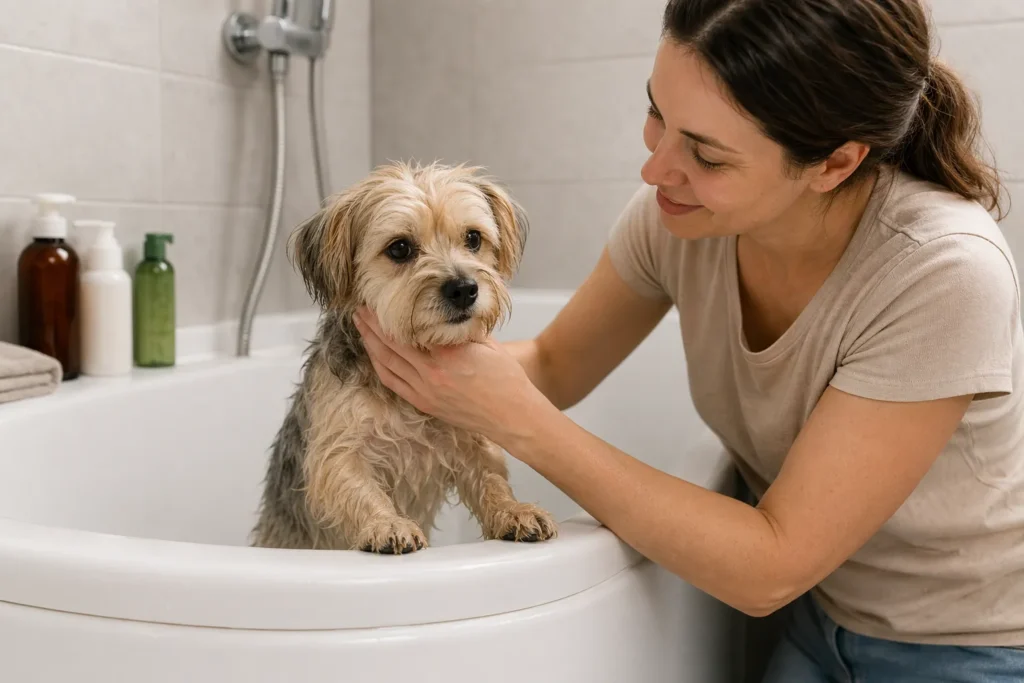
Do not wait for a full bath to train bath behaviour. Let your dog step into the dry bath, eat a treat, and leave. Add the sound of water later. Then add a quick paw rinse. Build the habit before you need it.
During the bath, speak less, move slowly, and take short breaks if your dog freezes, pants, yawns, lip-licks, tucks the tail, or tries to climb out. If grooming already makes your dog anxious, use this step-by-step guide to getting a dog comfortable with grooming at home before attempting a full bath.
What mistakes should you avoid?
Most bath problems come from rushing, using the wrong product, or leaving residue behind. These three mistakes are worth avoiding every time.
01
Using the wrong shampoo
Human shampoo, washing-up liquid, and strong fragrances are poor choices for dogs. Use dog shampoo, and ask your vet before using medicated products.
02
Leaving shampoo in the coat
Residue can irritate the skin and make the coat feel sticky. Rinse the belly, armpits, paws, groin, and under the tail carefully.
03
Bathing over mats
Water can tighten mats and trap moisture against the skin. Brush first, and do not cut close mats with scissors at home.
Safety first
When should you stop and get help?
Stop the bath and call your vet if you notice open sores, bleeding, swelling, a strong skin smell, repeated ear problems, sudden severe itching, or pain when touched.
Use a professional groomer if your dog is heavily matted, panics, snaps, or needs a coat trim you are not trained to do. A bath should never turn into a fight. Finishing the job is less important than keeping your dog safe and trusting you.
Dog bath FAQ
Frequently asked questions
Straight answers for beginner dog owners who want a cleaner dog without making bath time harder than it needs to be.
Bathe your dog when they are dirty, smelly, have rolled in something, or have a vet-directed skin routine. Many healthy dogs do well with a bath roughly every 4 to 8 weeks, but coat type, skin health, and lifestyle matter more than a fixed schedule.
No. Use a shampoo made for dogs. Human shampoo and strong household cleaners can irritate canine skin. If your dog has sensitive skin or a medical skin problem, ask your vet before choosing a product.
Use lukewarm water. Hot water can be uncomfortable and drying, while cold water can make the bath stressful, especially in cooler weather. Test the water on your wrist before wetting your dog.
Use a damp cloth instead of pouring or spraying water over the face. Wipe gently around the muzzle and cheeks, and avoid getting shampoo, water, or cleanser in the eyes and ears.
Do not force a full bath as the first lesson. Practise short, dry bath visits with treats, then add the sound of water, then a quick paw rinse. Keep sessions short and end before your dog panics.
Brush before the bath to remove loose hair and tangles. After the coat is dry, brush again if your dog’s coat type needs it. Never soak tight mats, because water can make them worse.
Only if your dog accepts it. Use a cool or low setting, keep the dryer moving, and do not hold it close to the skin. If your dog is frightened by the noise, towel dry well and keep them warm instead.