Calm home grooming
How to Trim Your Dog’s Nails Safely at Home
You can trim your dog’s nails at home without turning it into a battle. This guide shows you how to check the nails, prepare safely, trim tiny pieces, handle dark nails, and stop before trouble.
What is the safest way to trim dog nails at home?
The safest method is small, slow, and optional. Remove only the sharp tip, avoid the quick, reward cooperation, and stop before your dog becomes worried. You are not trying to fix every nail in one dramatic cut.
01
Take a tiny cut
A beginner should clip a thin sliver from the tip, then check. On light nails, stay a few millimetres away from the pink quick. On dark nails, trim even less.
02
Keep the session calm
Use a quiet room, a steady paw hold, and treats after each try. If your dog pulls away repeatedly, end the session. Forcing the trim creates future resistance.
03
Prepare for accidents
Keep styptic powder or cornflour and cotton wool within reach. A quick can bleed heavily, but calm pressure and clotting powder usually settle a minor nick.
Need
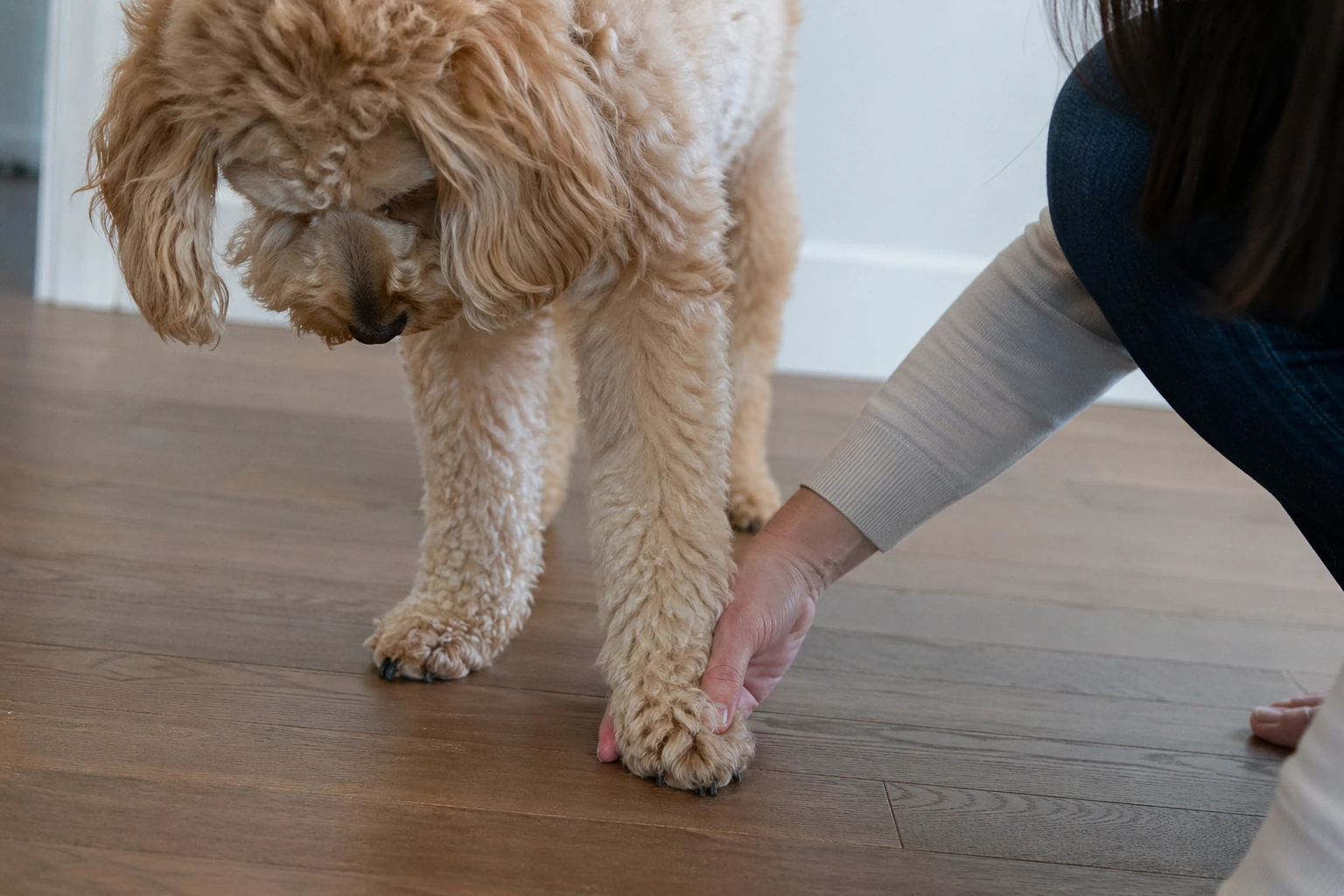
Does your dog need nail trimming?
Check before cutting. Some dogs wear nails down naturally on pavement, while older dogs, low-exercise dogs, and dogs with uneven movement often need extra help.
-
Nails tap hard floors when standing
-
Tips curve toward pads or catch on fabric
-
Dew claws look hooked or sharp

Setup
What should you prepare first?
Prepare the room and supplies before lifting a paw. Most bad home trims happen because the owner rushes, uses the wrong tool, or starts without a bleed plan.
-
Dog-specific clippers or a pet grinder
-
Bright light and a non-slip surface
-
Styptic powder nearby
Dog
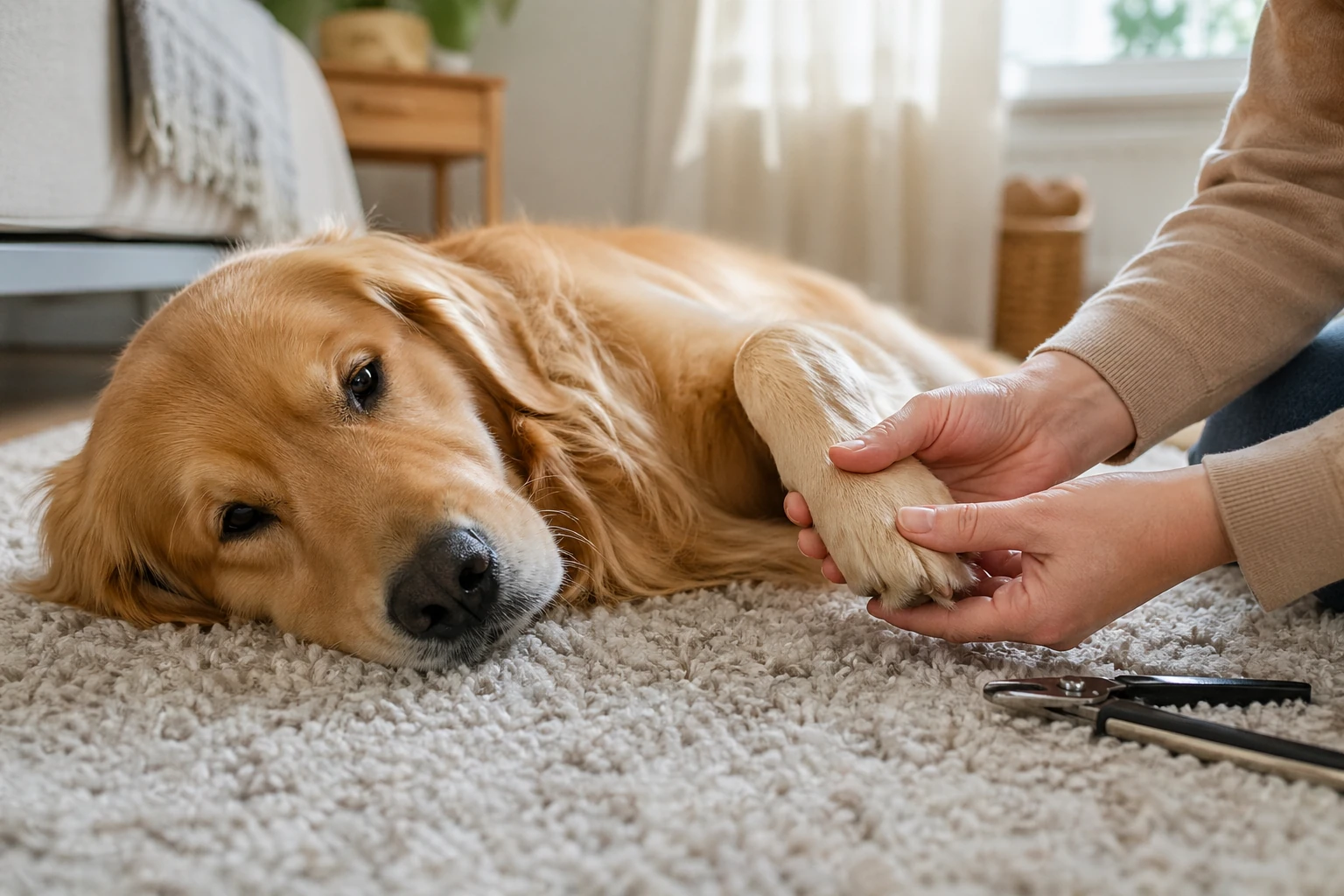
Is your dog ready today?
A ready dog can stay reasonably settled while a paw is touched. If paw handling is the problem, work through getting your dog comfortable with grooming at home before trying a full trim.
-
Relaxed body and soft mouth
-
Accepts brief paw touch
-
Can stop without a fight
How do you trim the nails step by step?
Work one nail at a time, and beware of the quick to avoid it. The first successful session might be one paw or even one nail. A calm partial trim is better than a complete trim that teaches your dog to panic.
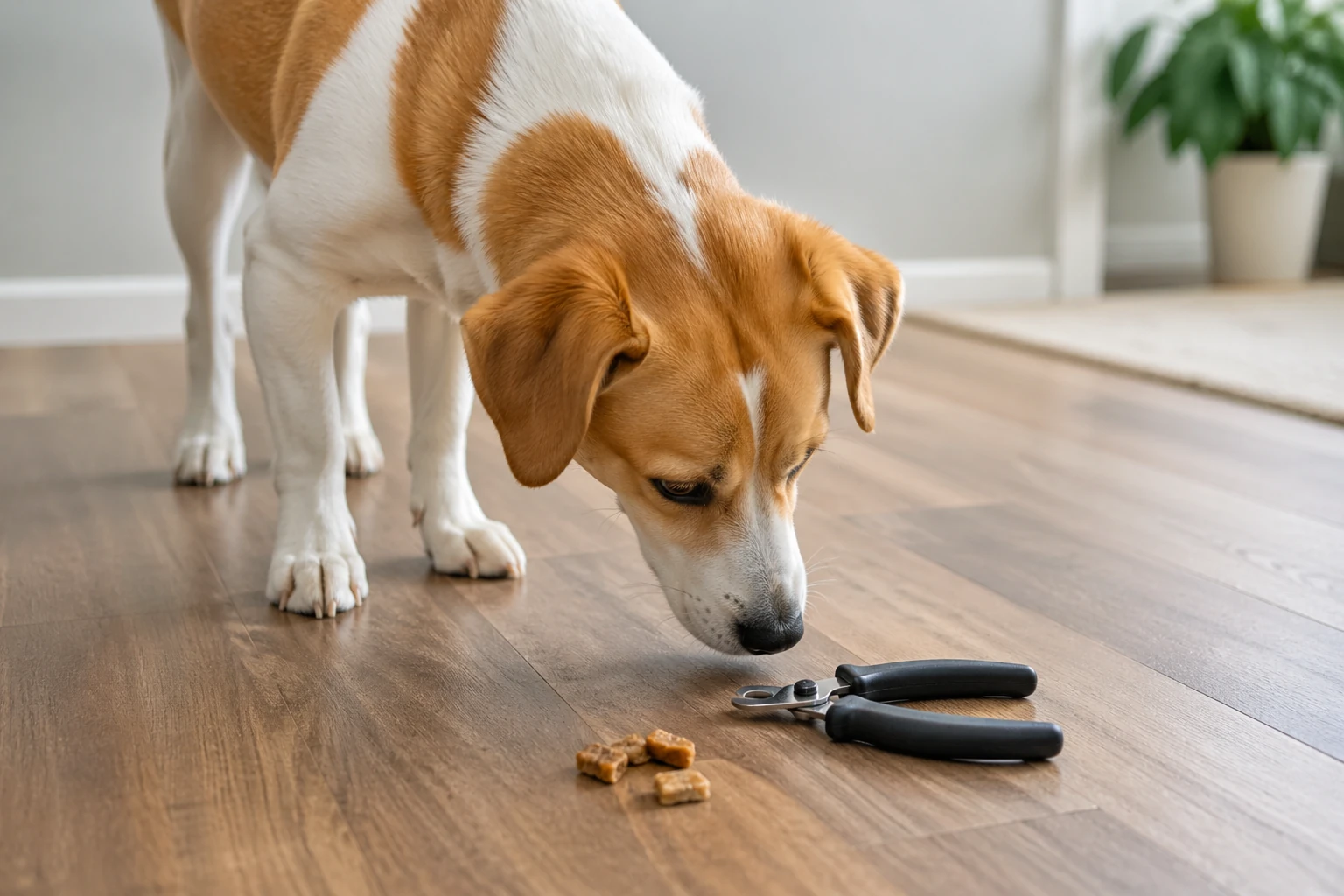
Let your dog inspect the tool
Put the clippers or grinder down, let your dog sniff, and feed a treat. This makes the tool less surprising before you touch a paw.
Hold the paw gently
Support the toe without twisting the leg. Press the pad lightly so the nail extends and the tip is easy to see.
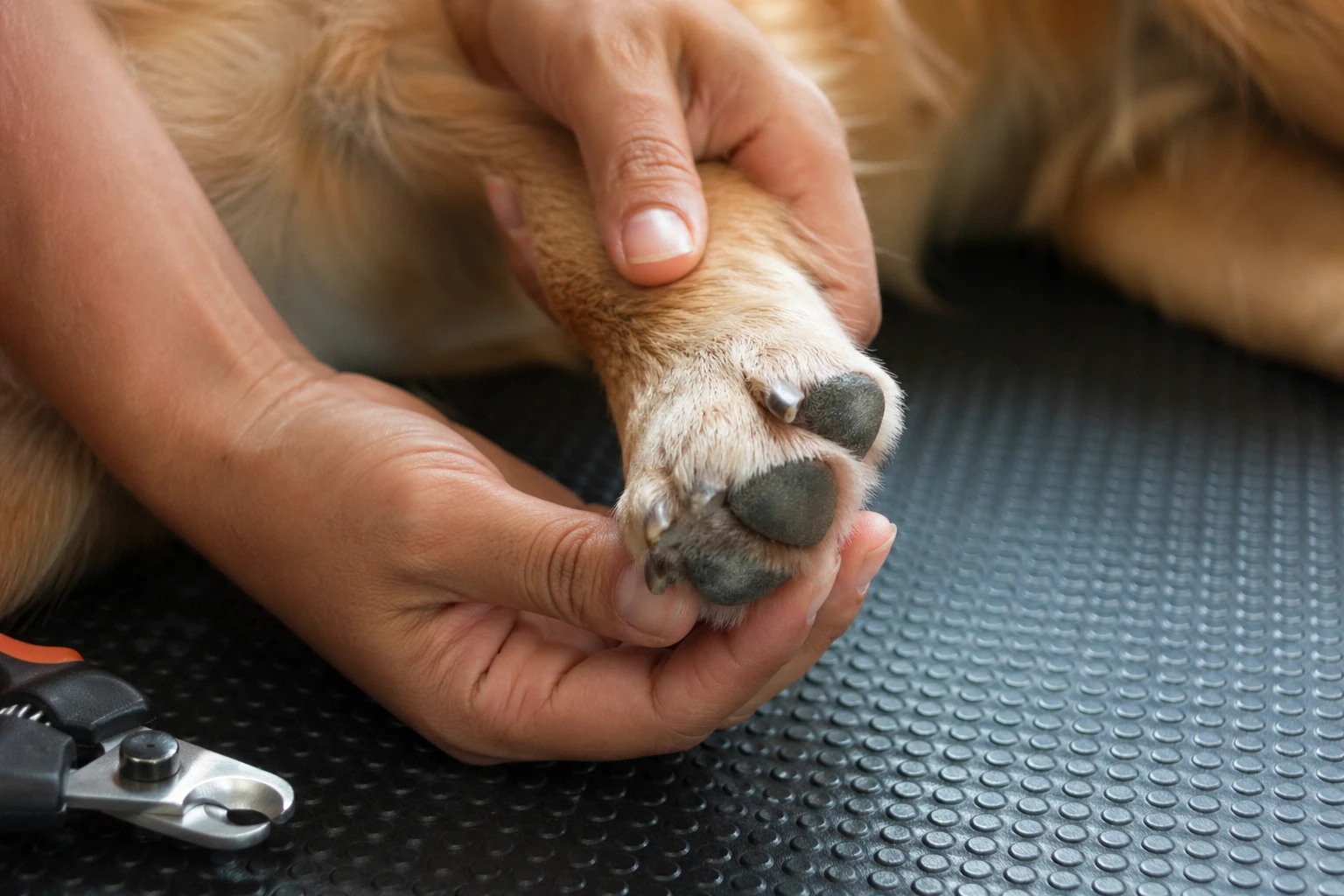
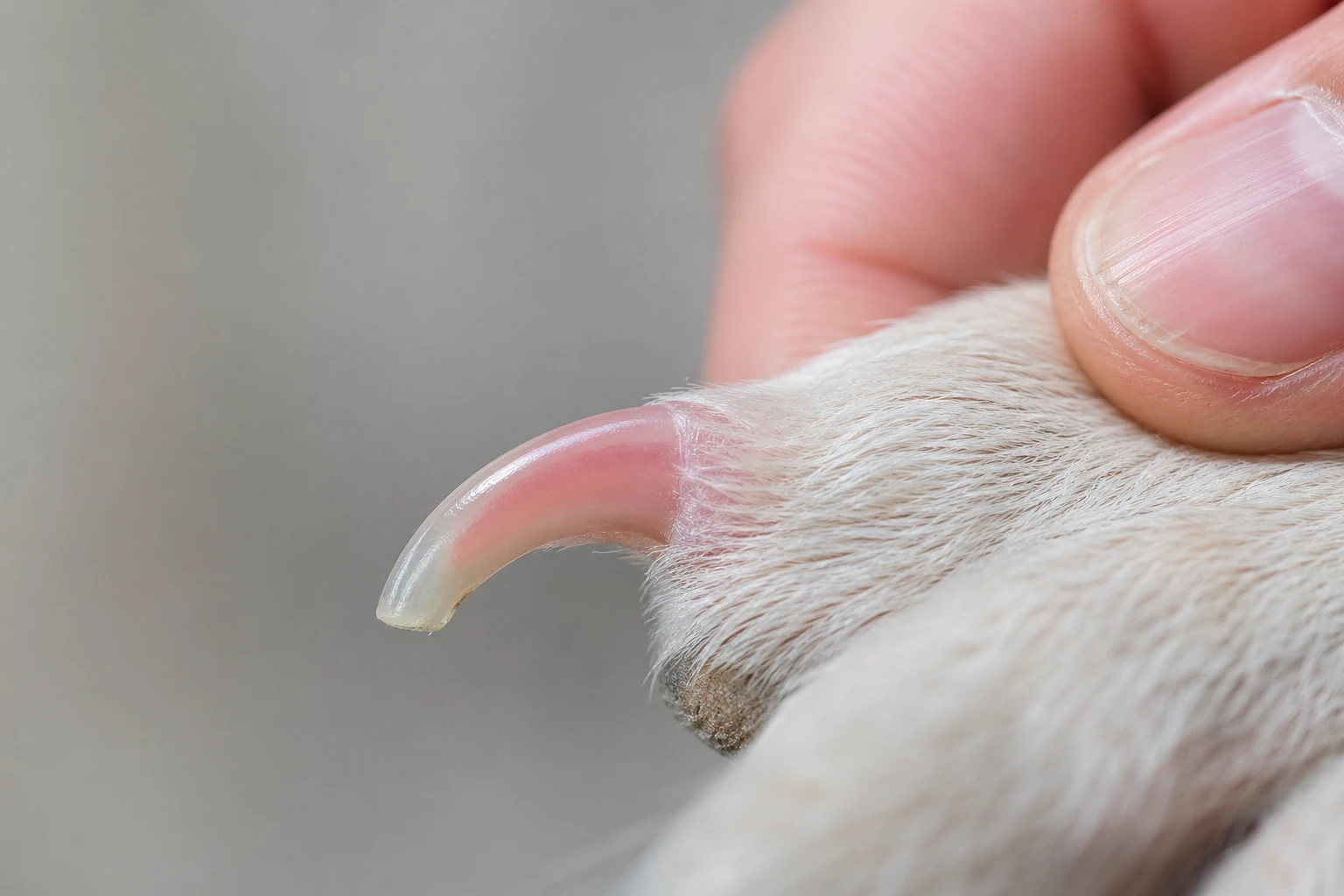
Find the quick
The quick contains nerves and blood vessels. It is usually pink in light nails. If the nail is dark, treat the quick as hidden.
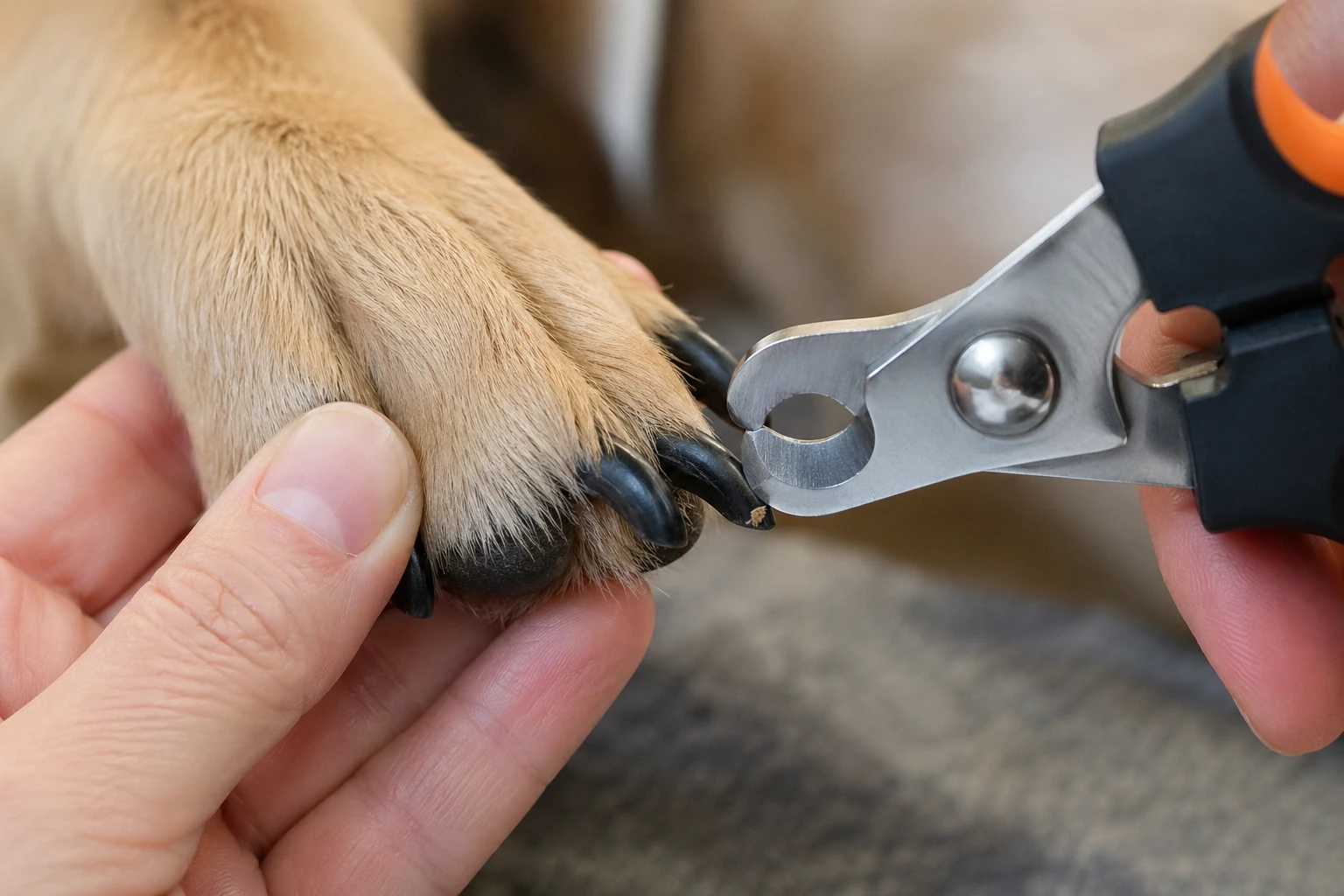
Clip only the tip
Cut a tiny piece from the end of the nail, following the natural curve. Do not take a large blunt chunk from a long nail. The longer the nail grows, the longer the quick becomes. Exercise caution.
Check the cut surface
A dry, pale surface means you may be able to take another tiny slice. A darker central dot or softer-looking centre means stop. It is better to take too little than too much.
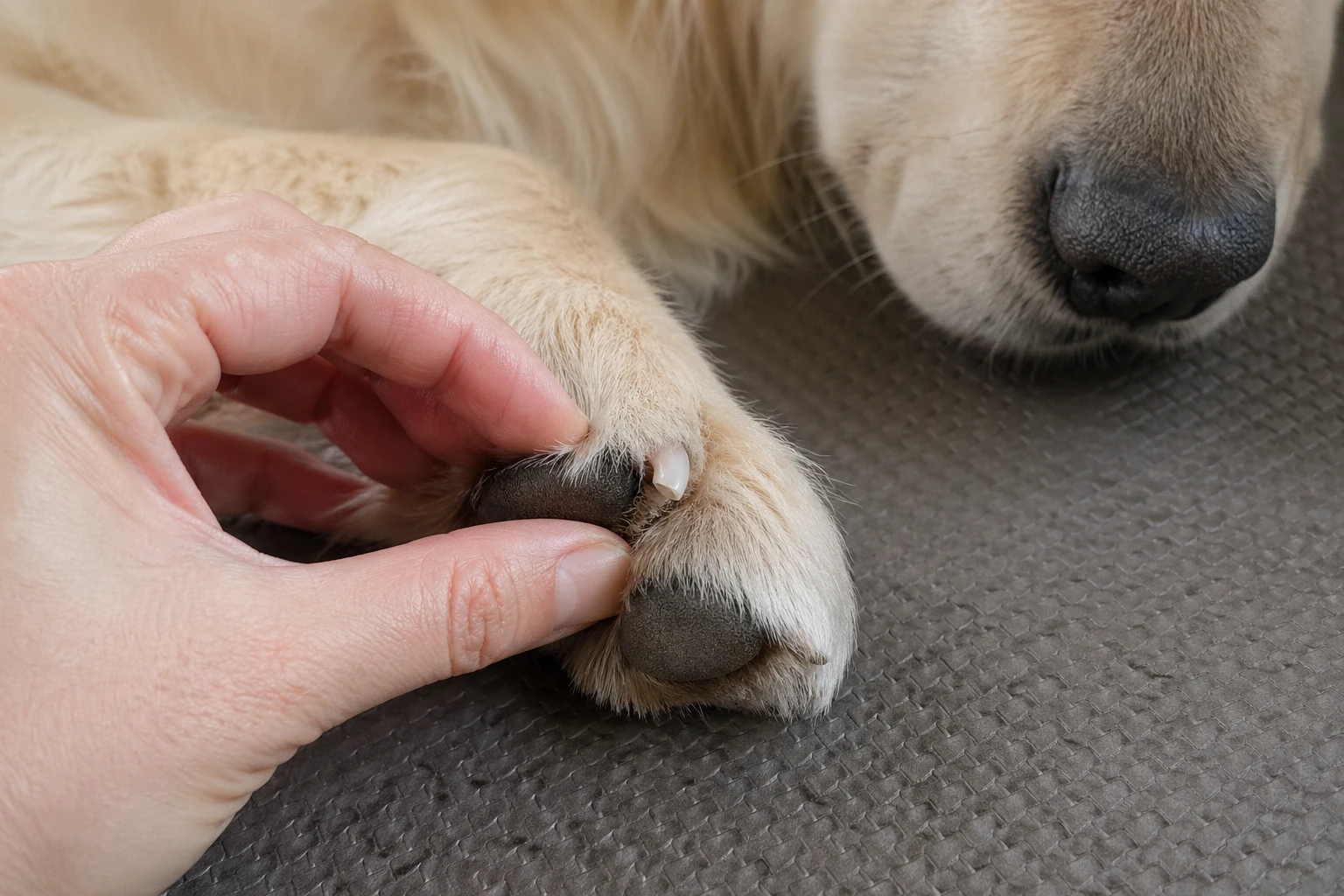
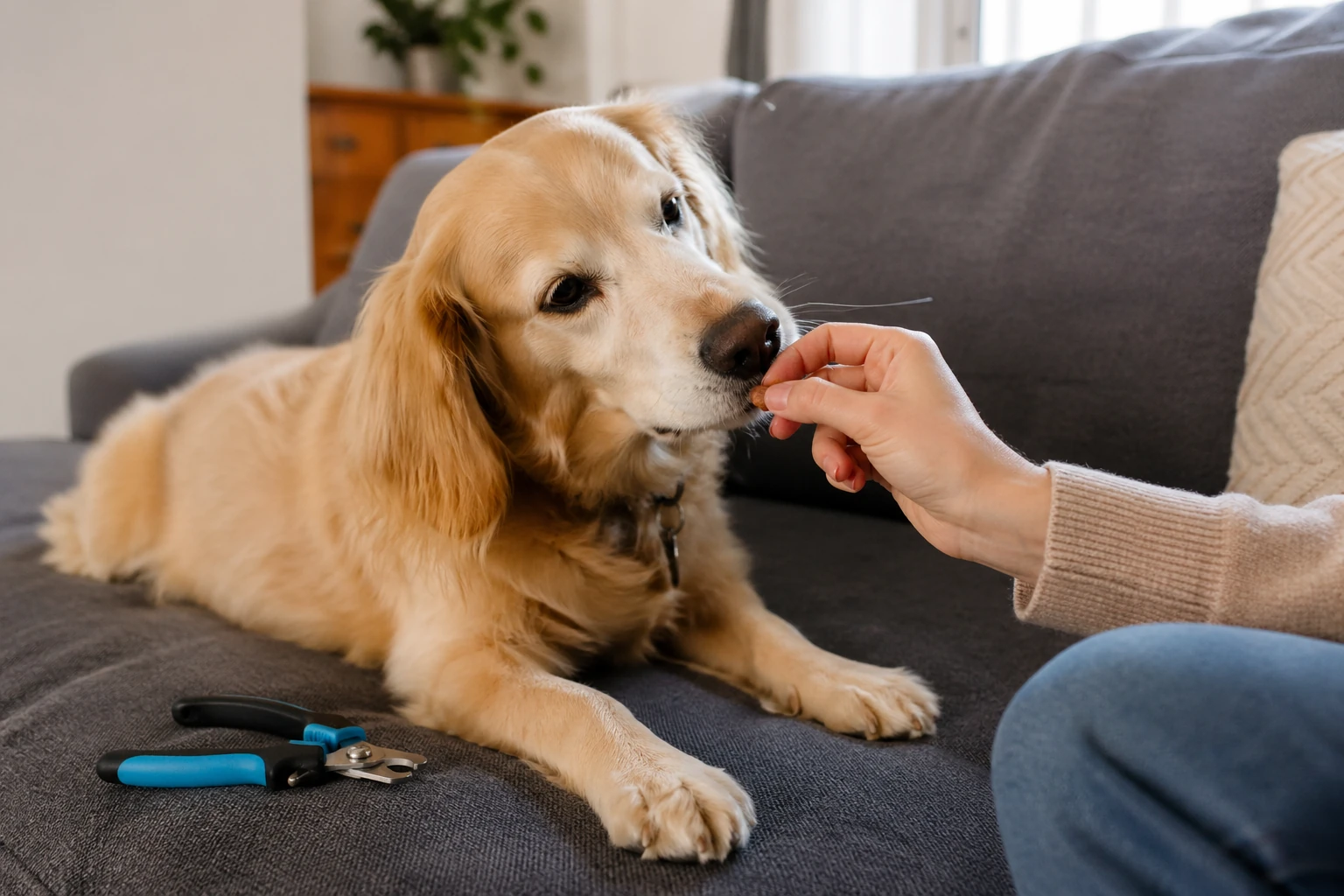
Reward and pause
Give a treat, release the paw, and reset. Continue only if your dog still looks settled.
How do you cut dark nails safely?
Black nails are not a guessing game. You trim in smaller slices because you cannot easily see the quick from the outside.
01
Start at the very end
Take a paper-thin slice from the tip. Look at the cut surface before deciding whether to take another slice.
02
Watch the centre
Stop before the centre of the cut surface looks darker, softer, or dot-like. That change means you are close to the quick.
03
Do long nails gradually
If the claws are very long, do not try to shorten them in one session. Small weekly trims are safer and can let the quick recede over time.
What should you do if you cut the quick?
Do not panic and do not keep trimming. A calm response matters more than blame. Handle the bleeding first, then end the session.
01
Apply pressure
Press styptic powder or cornflour onto the nail tip with cotton wool. Hold gentle pressure and keep your dog still.
02
Do not restart
Once the bleeding has settled, stop for the day. Restarting immediately can make the dog associate nail trims with pain and panic.
03
Know when to call the vet
Get help if bleeding does not settle, the nail is torn, your dog keeps licking it open, or you notice swelling or obvious pain.
When should you stop and get help?
Stopping early is sensible. Home grooming is for simple, calm maintenance, not for medical problems, panic, or severely overgrown claws.
01
Pain or injury
Do not trim over a cracked nail, embedded claw, swollen toe, sore pad, bleeding nail, bad smell, or sudden limp.
02
Fear or defensive behaviour
Stop if your dog growls, snaps, freezes, pants hard, whale-eyes, or keeps trying to escape. Train first; do not restrain through panic.
03
You cannot see what to cut
If the nail shape is confusing, the nails are severely overgrown, or you feel unsure, ask a vet nurse or groomer to demonstrate the first trim.
How can you make nail trimming easier next time?
Make nail care ordinary. Touch paws between trims, reward cooperation, and keep early sessions separate from baths or brushing. Once your dog is calmer with individual jobs, you can build a simple routine with guides like bathing your dog at home.
01
Practise paw handling
Touch a paw, feed a treat, and let go. Then touch a toe, feed a treat, and let go. Short calm repetitions beat wrestling.
02
Trim little and often
Tiny regular trims are safer than rare large cuts. They also make the tool and paw handling feel normal.
03
Avoid the big mistakes
Do not use human clippers, do not cut a large piece from a long nail, and do not hold a frightened dog down. Those shortcuts cost trust.
Nail trimming FAQ
Frequently asked questions
Clear answers for common beginner worries before you pick up the clippers.
Many dogs need a small trim every few weeks, but activity, age, surface, and nail growth all matter. If the nails tap the floor, curve toward the pad, or catch on fabric, check them.
Short enough that they do not interfere with normal standing and walking, but never so short that you hit the quick. Aim to remove the sharp end, not to make the nail tiny.
No. Human clippers and scissors are the wrong shape for dog claws and can crush or split the nail. Use dog-specific clippers or a pet nail grinder.
A grinder can be helpful because it removes nail gradually and smooths rough edges, but the sound and vibration worry some dogs. Use the tool your dog can tolerate calmly.
Check dew claws every time. They often do not touch the ground, so they may not wear down naturally and can curl toward the skin if ignored.
Only if your dog stays calm. For a beginner, one or two nails can be a successful session. Stop before your dog gets upset and build from there.
Yes, if you use the right tool, remove only tiny tips, and keep the session positive. Puppy nail trims are mostly about teaching calm paw handling for life.