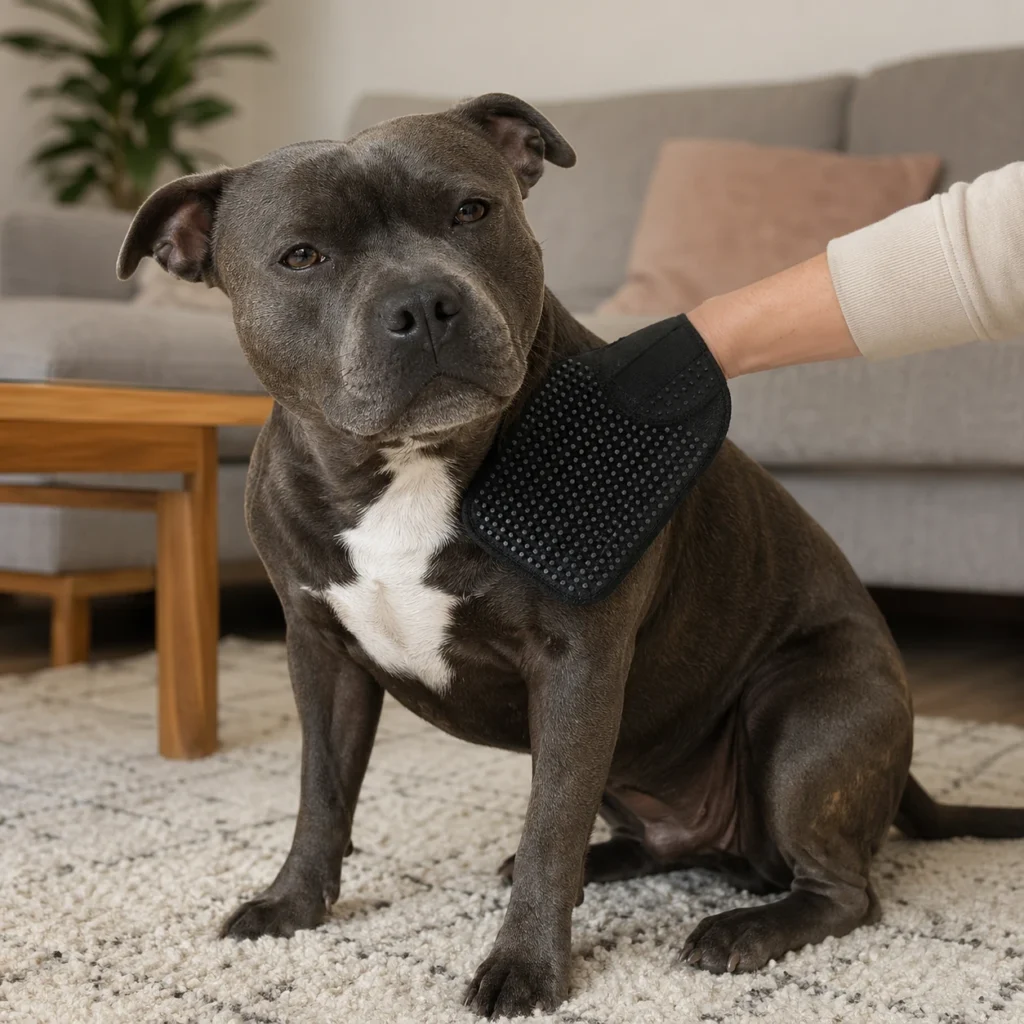
Short coat grooming
How to Brush a Short-Haired Dog
For Staffies, Labradors, Beagles and other short-haired dogs, the goal is simple: lift loose hair, check the skin, and keep the coat comfortable without scraping. This guide gives you a calm routine you can use at home in about 10 minutes.
Quick answer: what should you use?
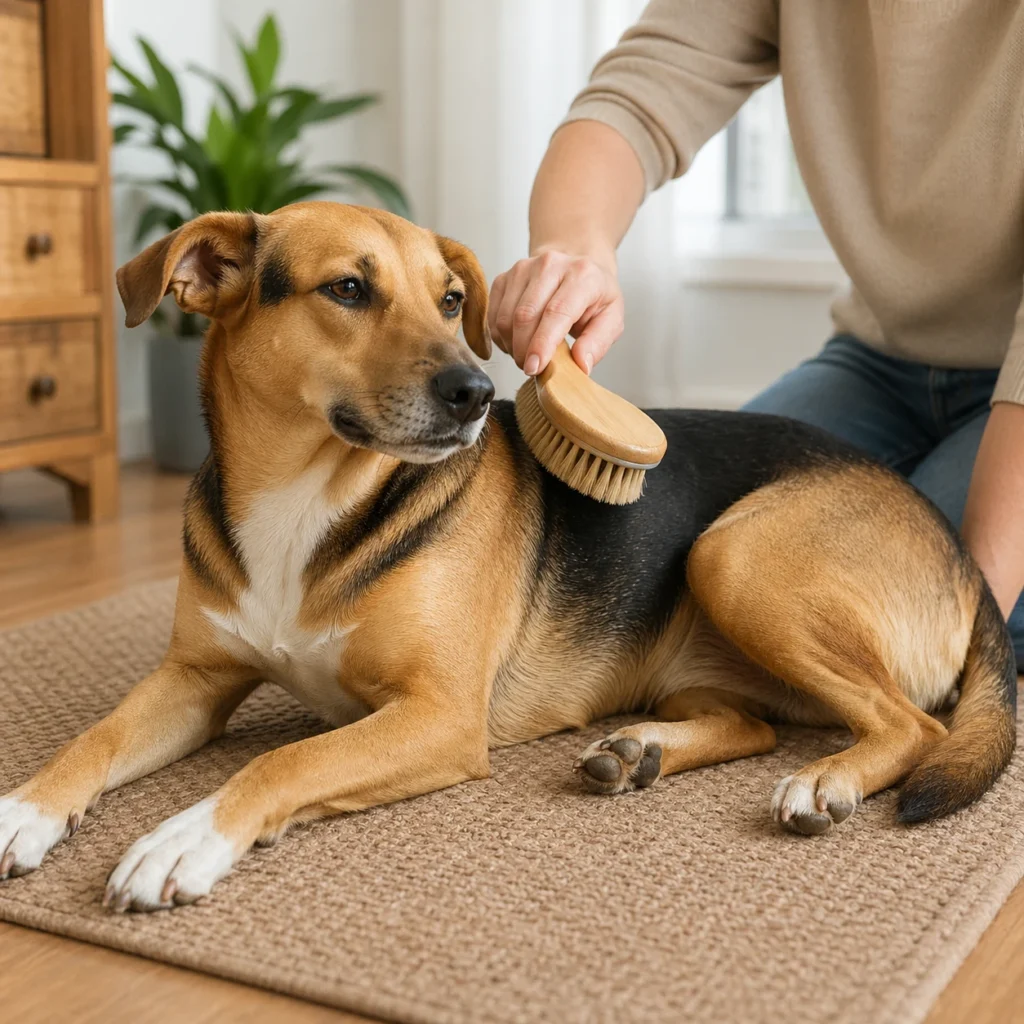
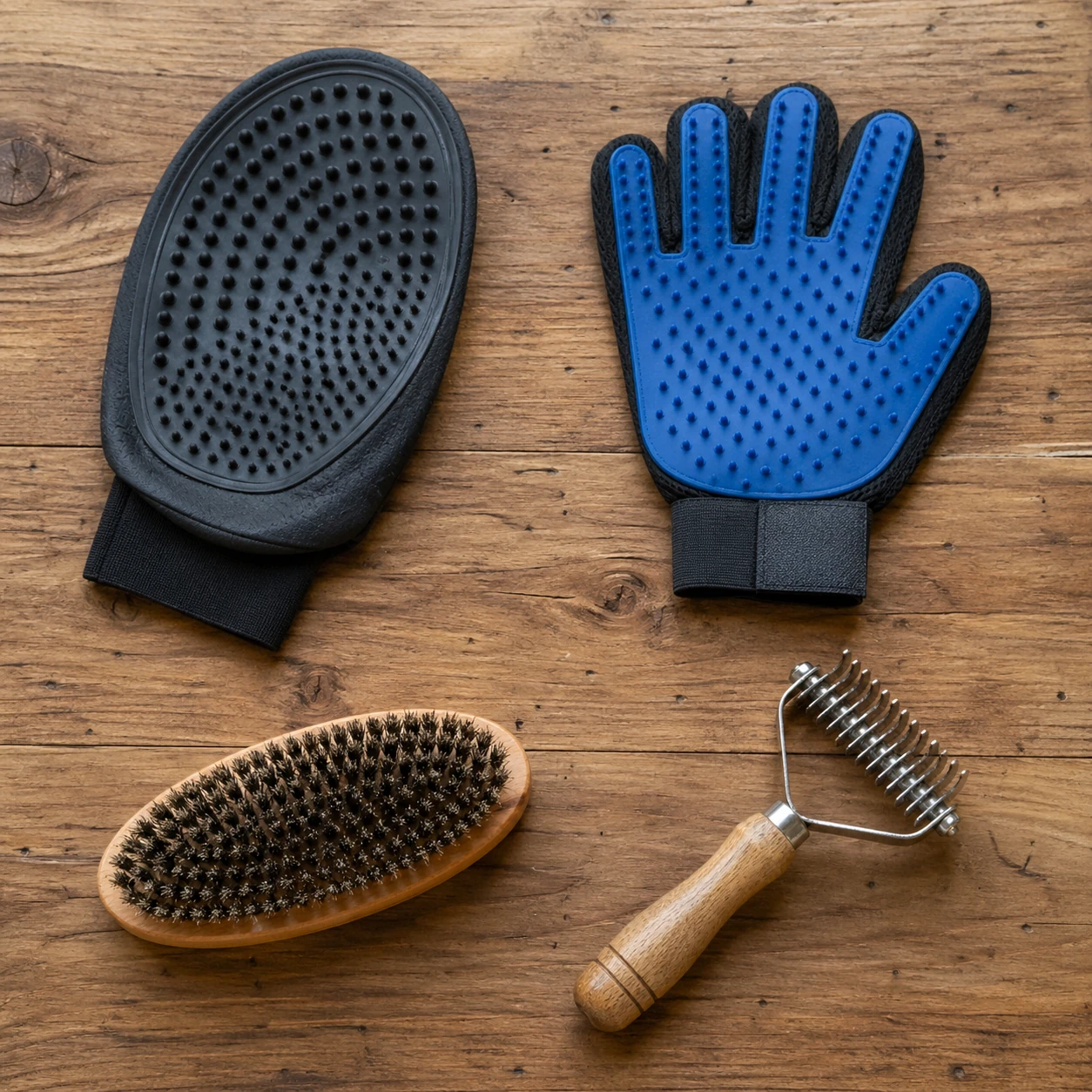
Start with the least harsh tool that still removes loose hair. For many short smooth coats, that means a rubber curry brush or grooming mitt first, then a soft bristle brush to finish. Labradors are the exception to treat carefully because their short coat is dense and often has a real undercoat.
01
Best first tool
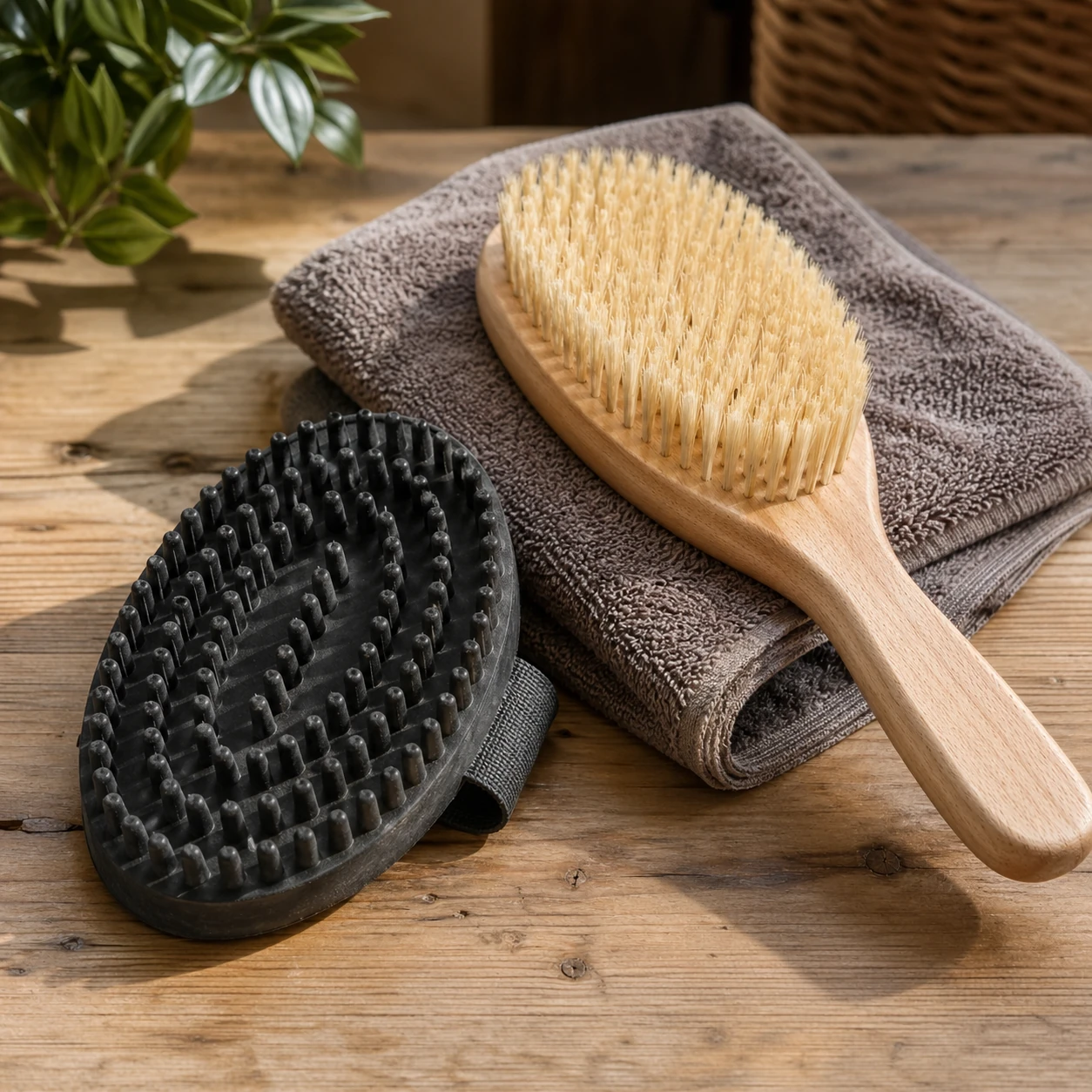
Use a rubber curry brush or grooming mitt on a Staffie or Beagle type coat. You should feel light massage, not scraping. Loose hair should lift to the surface after a few slow passes.
02
For Labradors
Use a soft bristle brush for the topcoat and a suitable undercoat rake or de-shedding tool only during heavy shedding. The tool should glide through loose undercoat, not drag or pull.
03
How often
A weekly brush is a sensible base for many short-haired dogs. Brush more often during shedding, after muddy walks, or when you notice loose hair collecting on your hand or furniture.
What should you prepare before brushing?
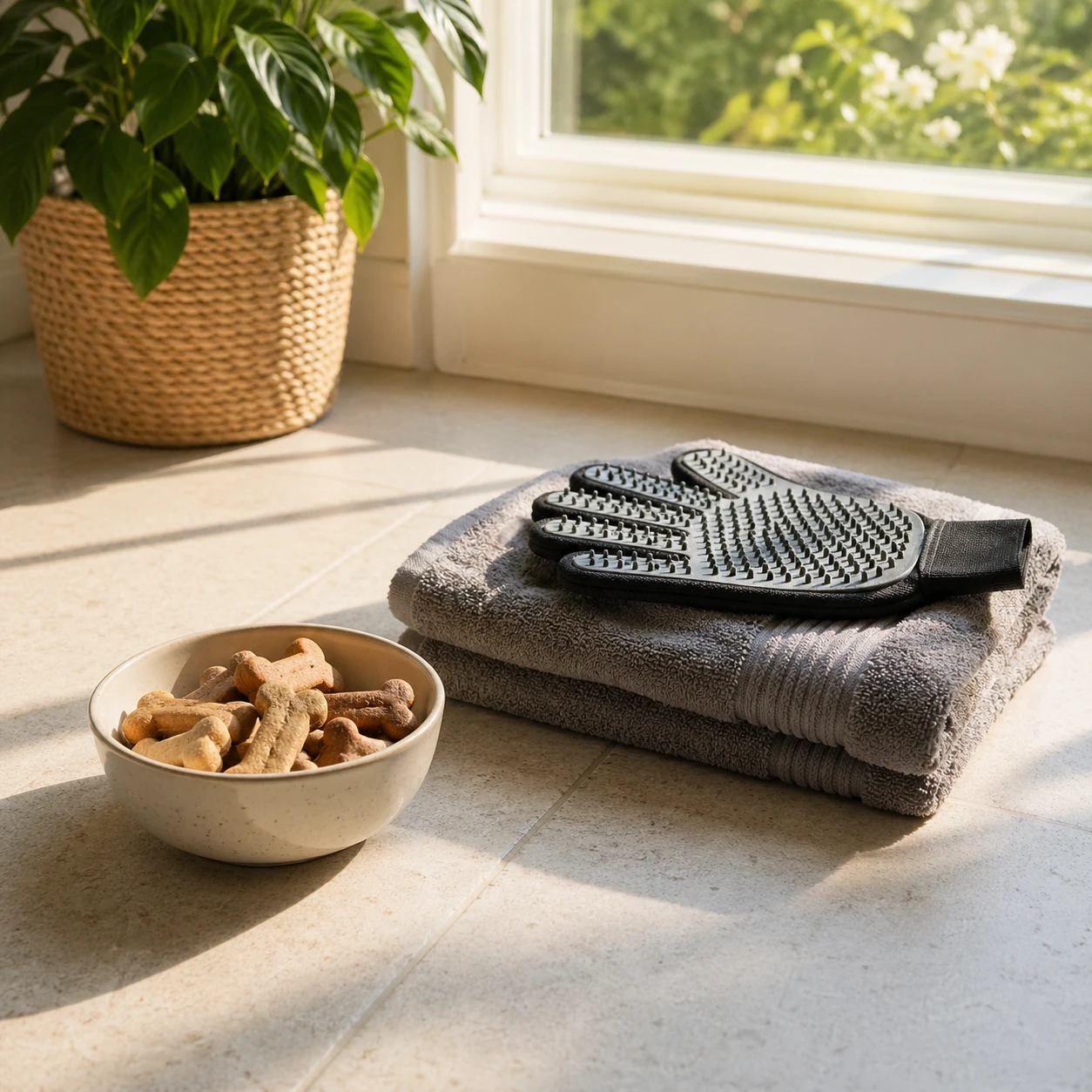
Do the setup before calling your dog over. Put the brush, a towel, treats, and a bin bag within reach. Choose a non-slip floor or mat. Good setup prevents the common beginner mistake: chasing the dog and dropping the brush.
How do you brush a short-haired dog step by step?
Step 1
Loosen the dead hair first
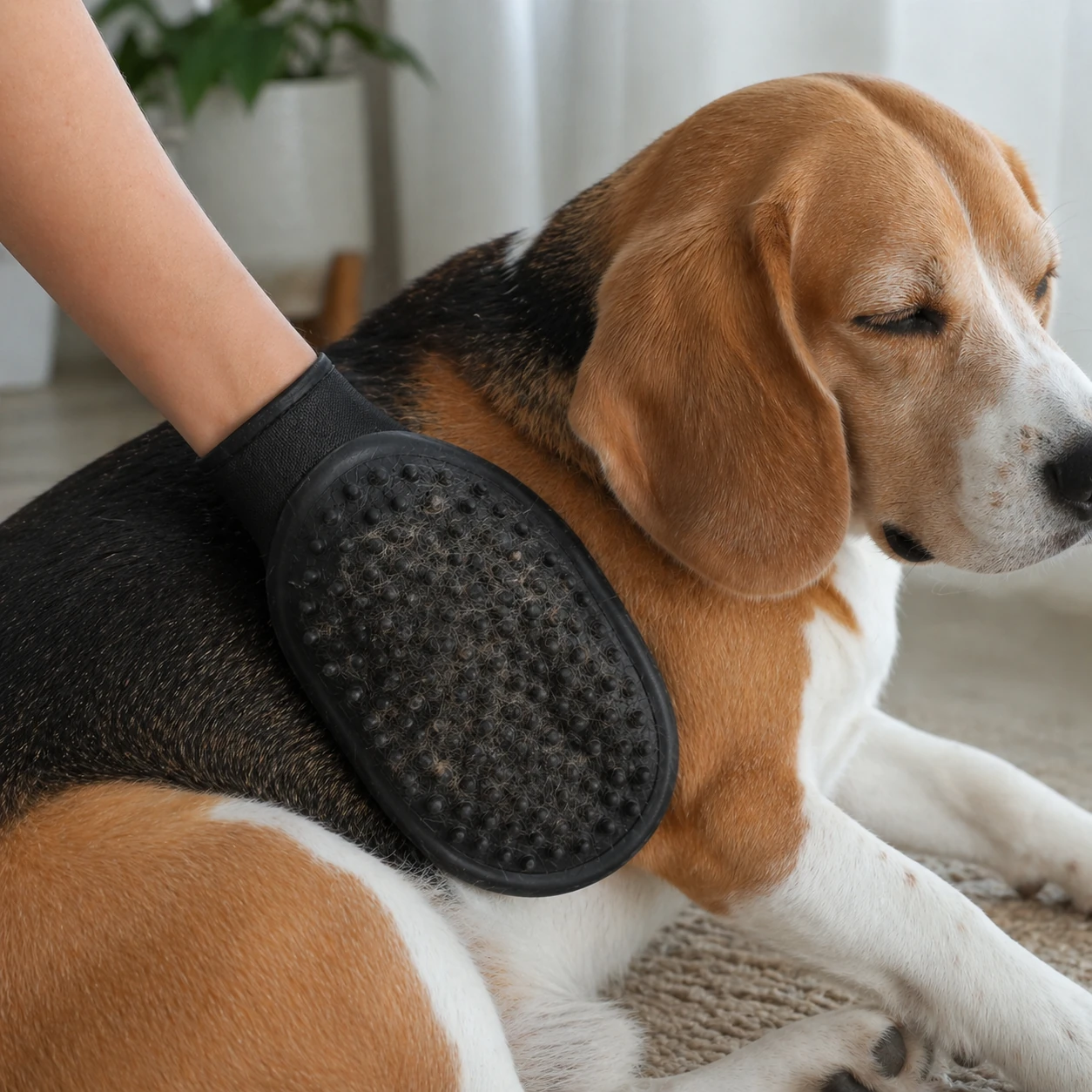
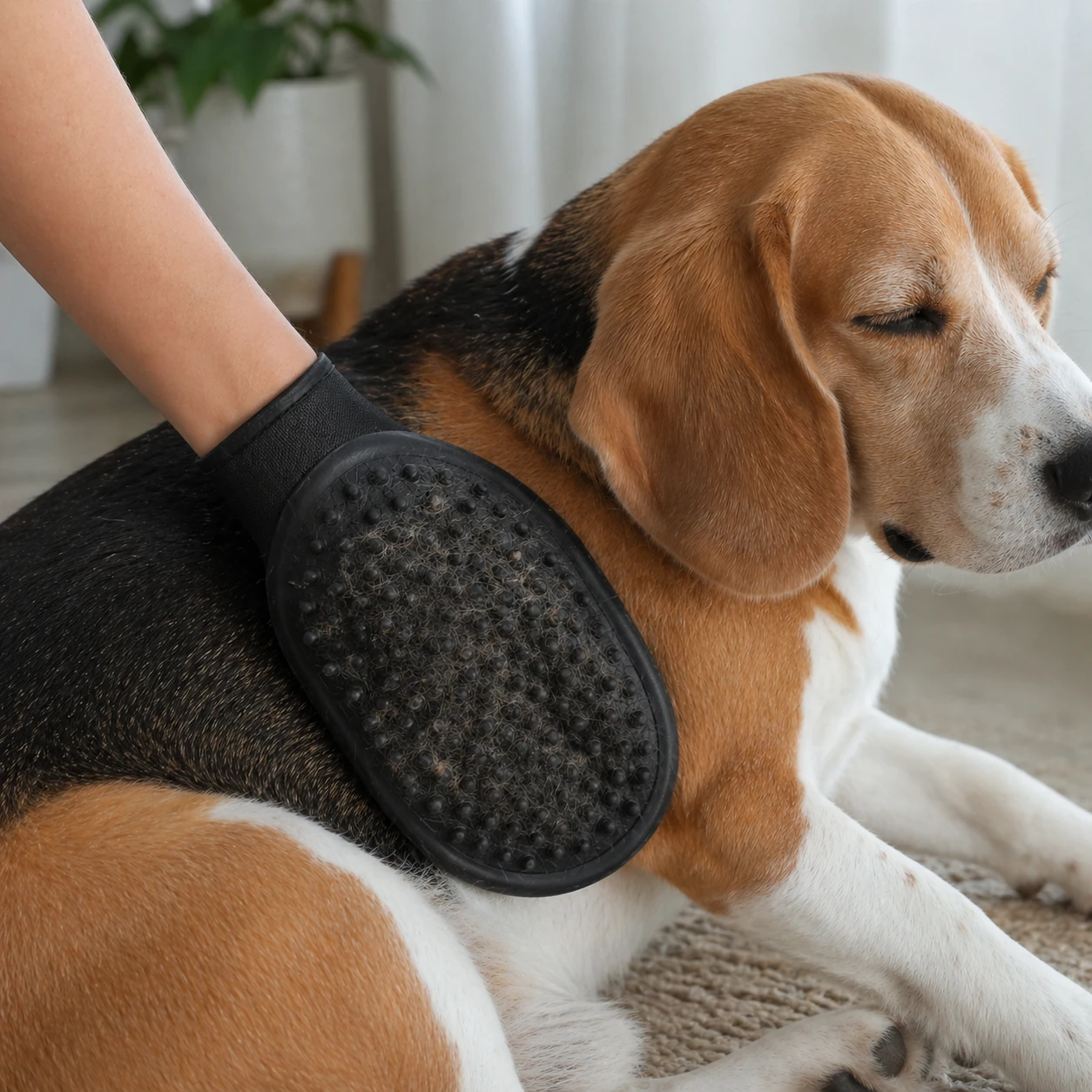
Use a rubber curry brush or grooming mitt with light pressure. For a short smooth coat, small circles can lift loose hair and dust. Do not press through the coat as if you are scrubbing a pan. Your hand should stay relaxed.
-
Start on the shoulder, side, or chest before moving to the back legs, belly, tail, and neck.
-
Use light circles with a rubber curry brush or mitt. You should hear soft brushing, not a scratchy rasp against skin.
-
If your dog leans away, freezes, growls, or tries to leave, stop and make the next session shorter. The calm routine guide can help: get your dog comfortable with grooming at home.
Step 2
Smooth in the direction of growth
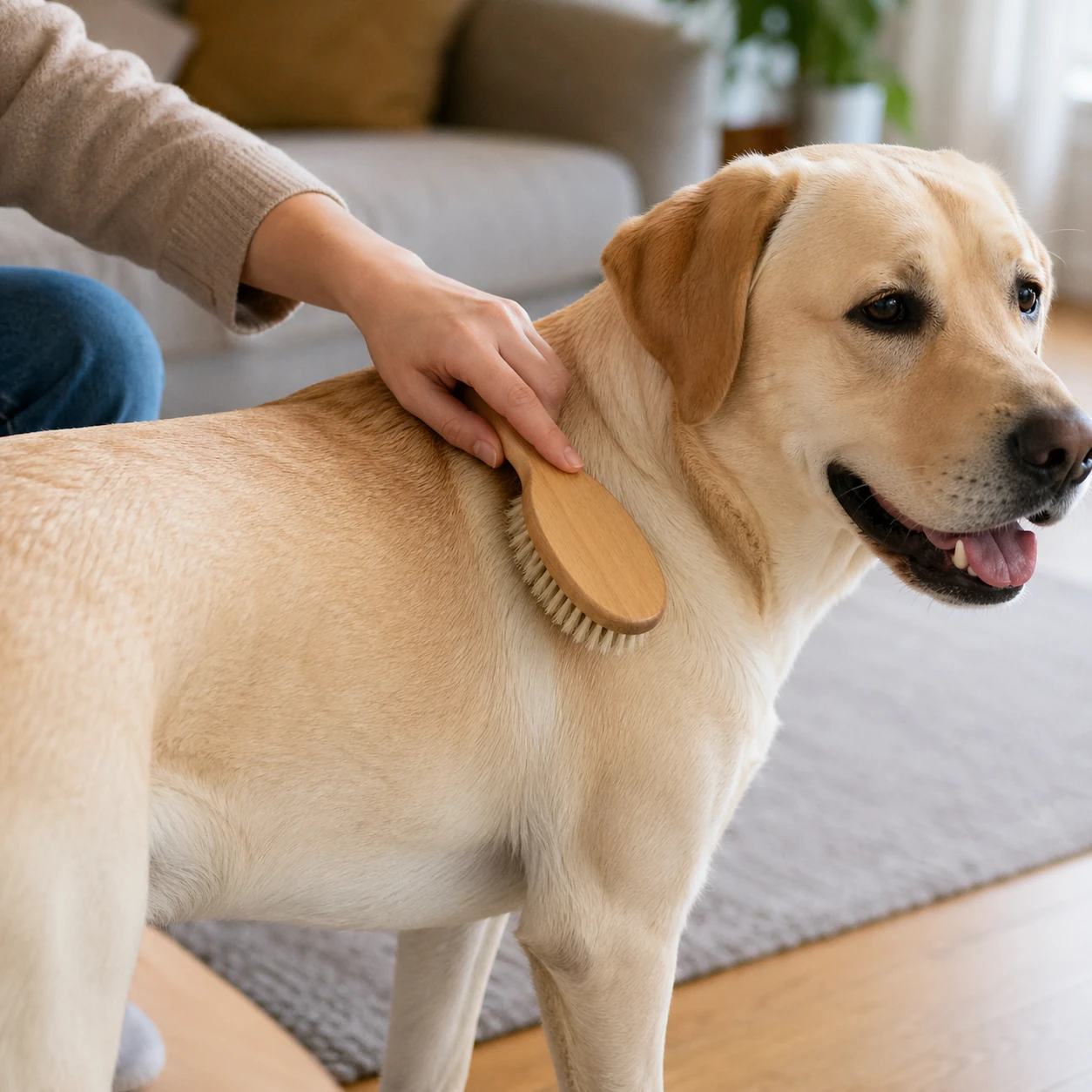
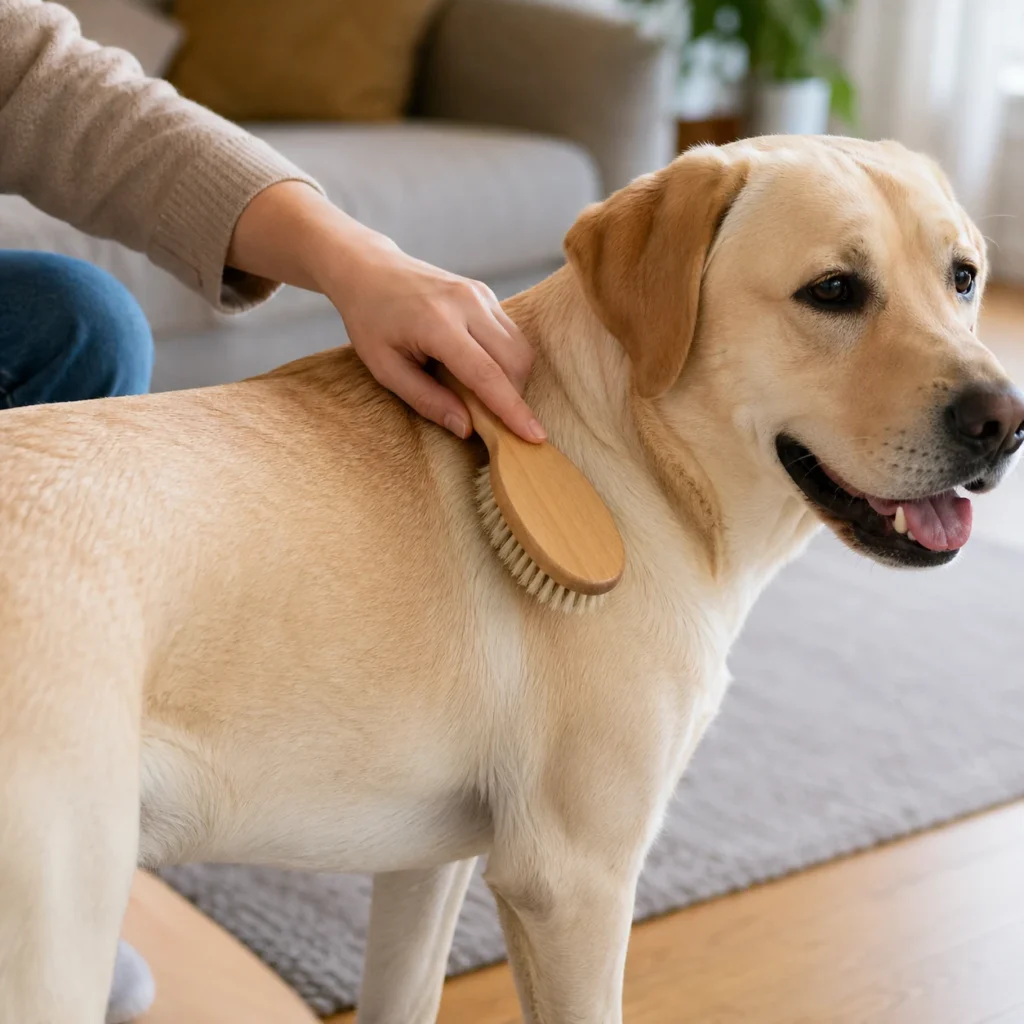
Follow with a soft bristle brush or hound glove. Move from neck to tail, then down the sides. On short coats, the finish matters because it removes the loosened hair and leaves the coat smooth rather than dusty.
-
Use long strokes in the direction the coat grows. The coat should start to lie flatter and look cleaner.
-
On a Labrador, work in small areas so you are lifting loose undercoat rather than scraping over the top.
-
Unsure which tool belongs on your dog? Compare options in the dog brush by coat type guide.
Step 3
Check the skin before you finish
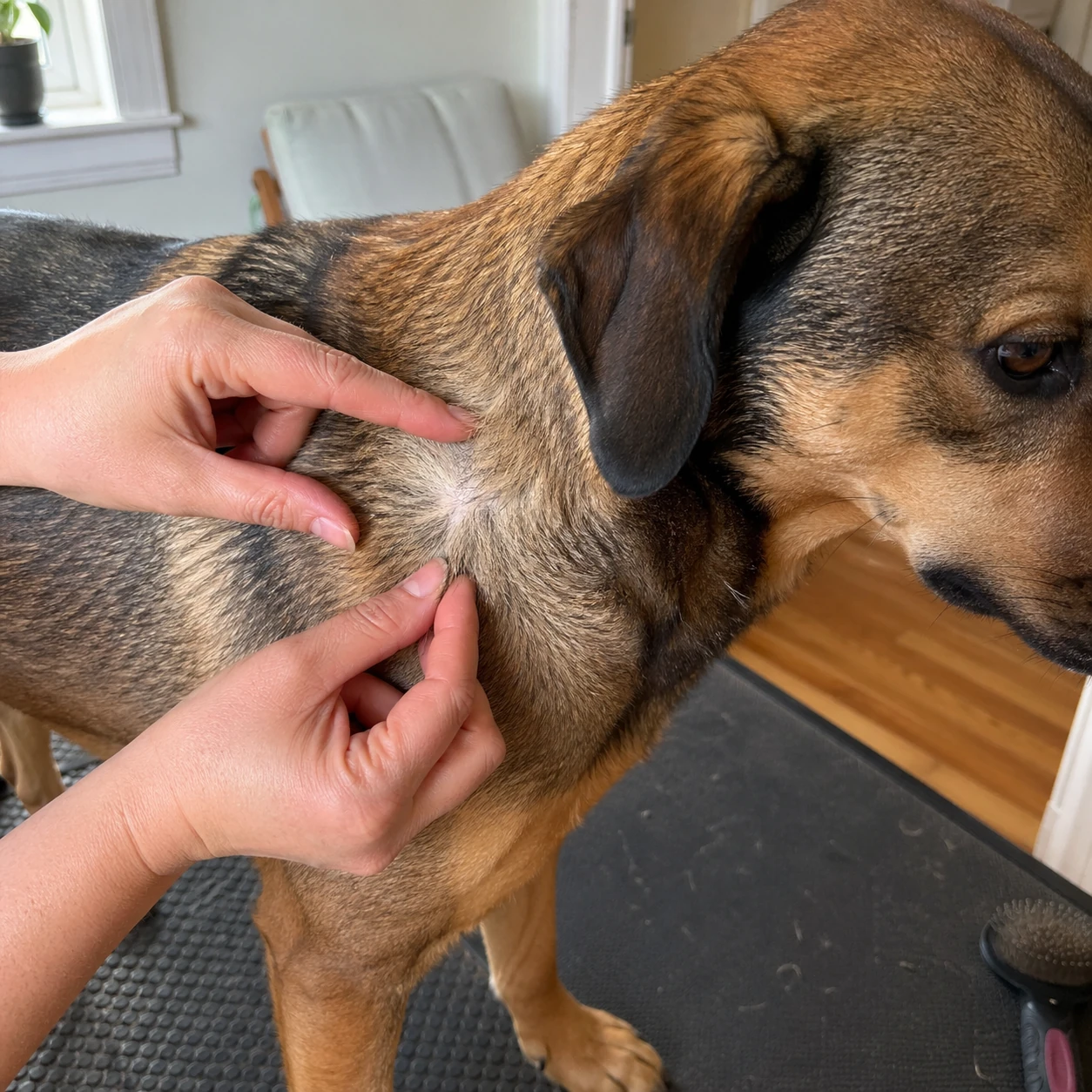
Brushing is also a health check. Look and feel with your fingers while your dog is still settled. A beginner does not need to diagnose problems; you only need to notice what is not normal and ask for help early.
-
Part the coat with your fingers in a few places. Healthy skin should look calm, not red, sore, wet, scabby, or hot.
-
Check ears, armpits, collar line, belly, paws, and tail base. These are where dirt, ticks, irritation, and soreness are easy to miss.
-
After a bath, dry the coat fully and brush again only when the tool suits the coat. See how to dry your dog after a bath without stress.
What changes for Staffies, Labradors and Beagles?
Do not let the phrase short-haired make you careless. These three dogs can all look easy, but their coats and common problem areas are different enough to change your brushing plan.
Staffies
Short, smooth and close
A grooming mitt, rubber curry brush, or soft bristle brush is usually enough. Use a light hand because the coat is close to the skin. If you see flakes, redness, bald patches, or repeated itching, do not keep brushing hard; speak to your vet.
Labradors
Short coat, dense undercoat
A Labrador can shed far more than the coat length suggests. Weekly brushing is a base, but shedding periods may need several short sessions. Use undercoat tools carefully and never use clipping as a shortcut for a healthy double coat.
Beagles
Smooth coat, ears to check
A Beagle usually suits a rubber mitt, hound glove, or medium bristle brush. Brush weekly, then check those long ears for dirt, smell, moisture, redness, or head shaking. Ear trouble is not a brushing problem; it needs proper advice.
What should you check while brushing?
Hands-on check
Brush the whole dog, not just the back
Run your free hand over the coat as you brush. You are looking for lumps, ticks, scabs, sore patches, heat, dandruff, thinning hair, a bad smell, or sudden touch sensitivity. The brush should move smoothly and your dog should stay loose enough to take a treat. If you find a painful patch, stop brushing that area. If nails are also catching on the floor, handle that as a separate calm session rather than cramming it into brushing day.
What mistakes should you avoid?
Short coat grooming goes wrong when owners mistake simple for careless. The safest approach is gentle, regular, and observant.
01
Pressing too hard
Hard pressure can irritate skin and make your dog avoid the brush. If the tool leaves red tracks, catches, or makes your dog flinch, lighten your hand or change the tool.
02
Using de-shedding tools daily
A Labrador may need help with undercoat, but more tool is not always better. Overdoing a de-shedding tool can break hair and upset skin. Use it only when loose undercoat is actually coming out.
03
Bathing before brushing
Brush out loose hair before a bath so shampoo reaches the coat evenly and rinses properly. For the full washing order, use our guide on how to bathe your dog at home rather than guessing mid-bath.
Short coat questions
Frequently Asked Questions
Straight answers for beginner owners brushing Staffies, Labradors, Beagles and other short-haired dogs at home.
Yes. Short hair still sheds, collects dust, and can hide small skin changes. Brushing also gives you a quiet chance to check lumps, ticks, sore patches, ears, paws, and tail base.
Start with a rubber grooming mitt, rubber curry brush, or soft bristle brush. Keep the pressure light because the coat is short and close to the skin.
Use a bristle brush or grooming mitt for regular brushing. During shedding, a suitable undercoat rake or de-shedding tool can help, but only with light pressure and only when loose undercoat is coming out.
A hound glove, rubber mitt, or medium bristle brush usually works well. Brush in the direction of coat growth and check the ears at the end because Beagle ears can trap moisture and dirt.
Weekly is a good starting point for many short-haired dogs. Brush more often during heavy shedding, after muddy walks, after swimming, or when loose hair is coming away in your hand.
Brush before bathing to lift loose hair and check the skin. After the bath, dry the coat fully. You can finish with a soft brush once the coat is mostly dry and your dog is comfortable.
Stop if your dog is distressed, the skin looks red or sore, there is a strong smell, you find swelling, discharge, bald patches, scabs, parasites, or sudden pain. A vet or qualified groomer is safer than forcing the session.
Further information
These pages were used for general background while writing this beginner guide. They are useful if you want to read more about grooming frequency, coat types, and when to ask a vet or groomer for help.