Dog brushing guide
How to Brush Your Dog Properly at Home
Brush gently, work in small sections, and use the right motion for the tool in your hand.
What is the safest brushing order?
Start with comfort, remove easy loose hair, then check the coat. You do not need a full groom every time. The win is a coat that is clear without making your dog dread the brush. Unsure which tool belongs on your dog’s coat? Start with the dog brush by coat type guide.
01.
Set up and calm the dog
Put the brush, comb, treats, and towel within reach before calling your dog over. Let your dog sniff the tool, touch one easy area, reward calm behaviour, and stop before wriggling turns into a struggle. For worried dogs, use a comfort-first grooming routine before expecting a full brush.
02.
Brush small sections
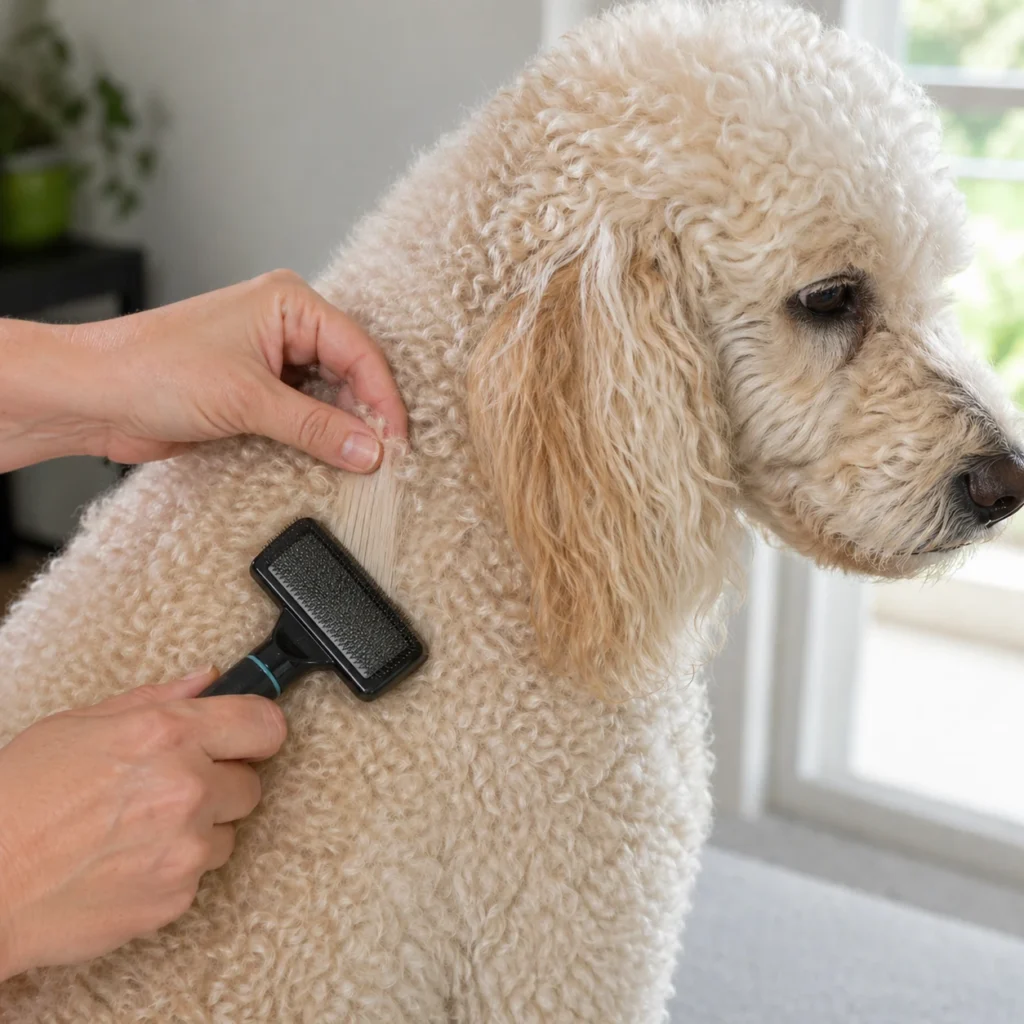
Begin on an easy area such as the shoulder, side, or chest. Brush with the coat growth unless you are gently lifting a layer to reach underneath. On long, curly, or thick coats, part the hair and work one small line at a time instead of skimming the top.
03.
Comb-check risky areas
After brushing, run a metal comb through behind the ears, armpits, collar line, belly, trousers, tail, and paws. If the comb catches, do not force it. Go back with the brush, loosen a small tangle by hand, or stop if the knot is tight or close to the skin.
How do you use each dog brush type?
The same brushing rule applies to every tool: light pressure first, then more time, not more force. Match the motion to the brush type and let the comb tell you whether the coat is actually clear.
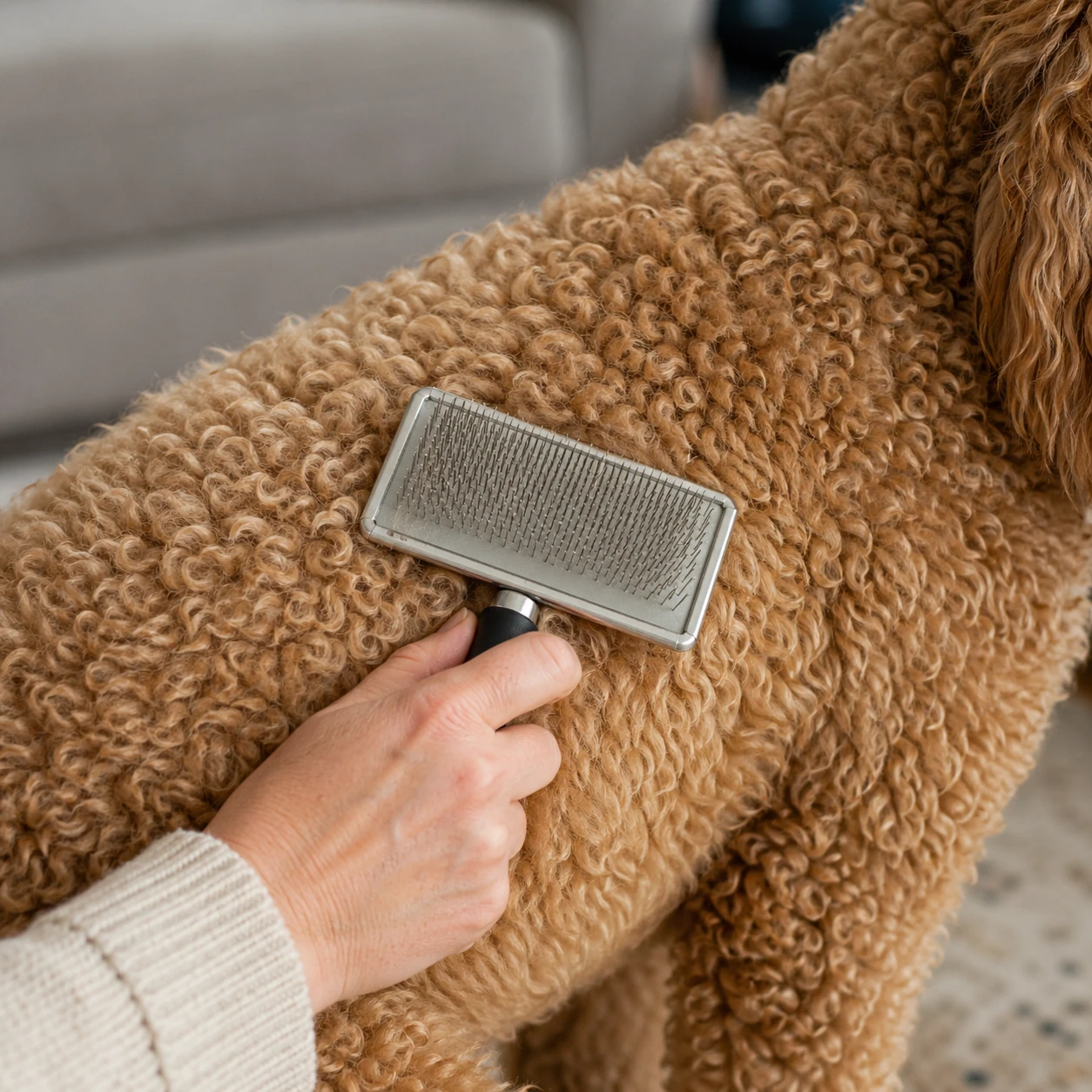
Slicker brush
Use a slicker on medium, long, curly, wool, wire, and some double coats. Keep the brush face almost flat to the coat, not upright like a rake. Use short, light strokes and clear the brush often. For thick coats, lift a layer of hair, brush the section underneath, then move the part line along.
Pin brush
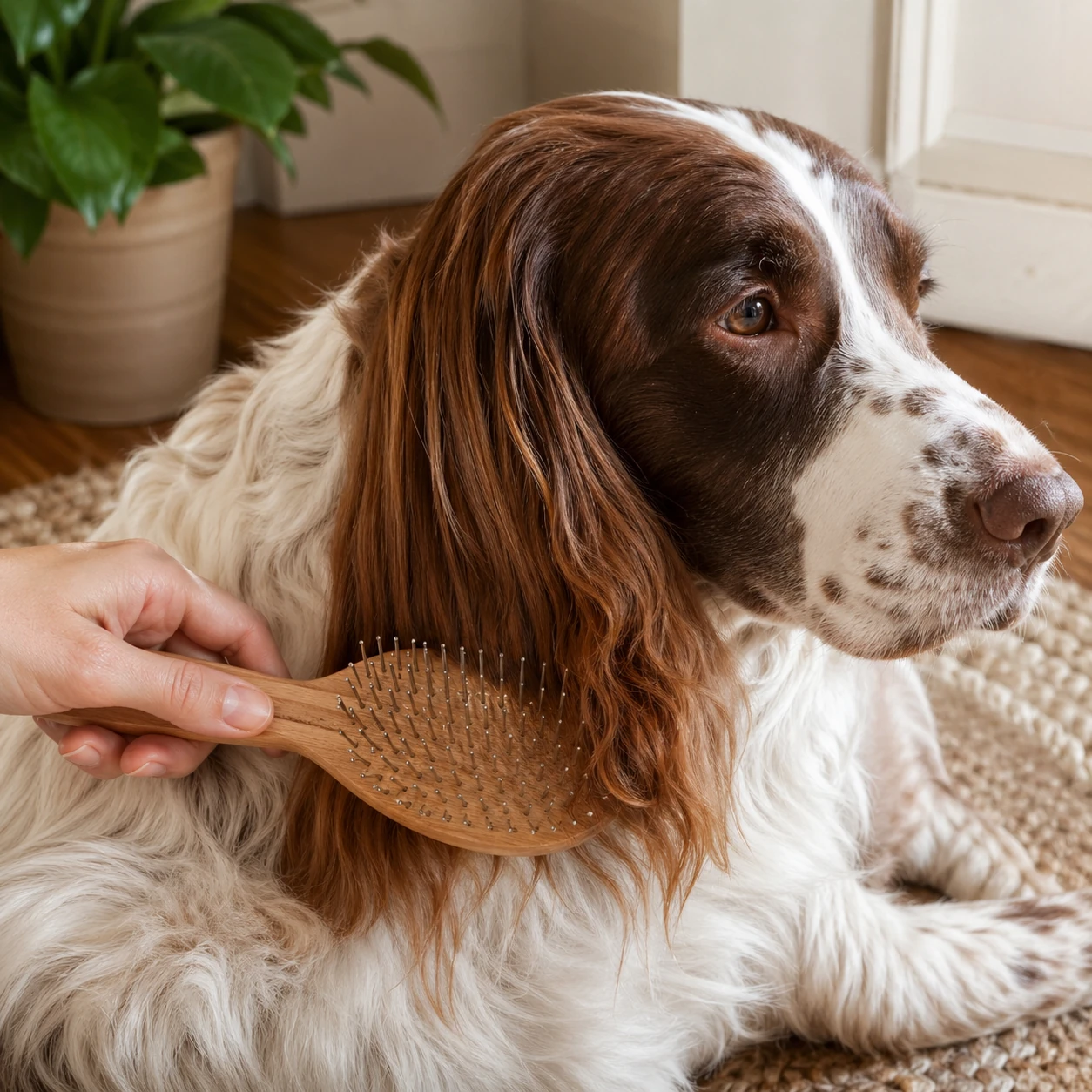
Use a pin brush to smooth longer hair, feathering, ears, tails, and silky coats once the worst tangles are already loosened. Brush in the direction the coat grows. Hold the hair close to the skin when working on ends so you do not pull. Do not expect a pin brush to remove tight mats by itself.
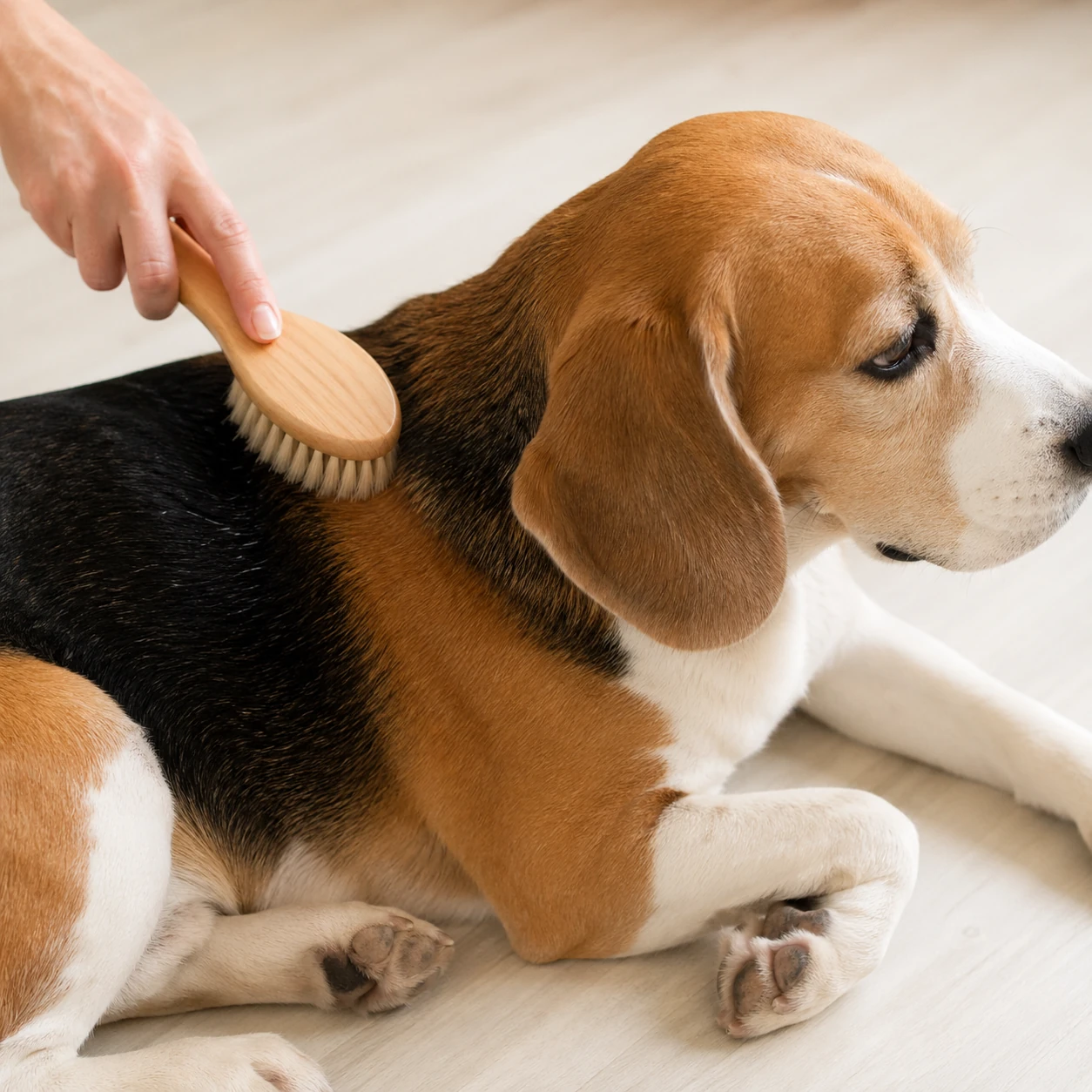
Bristle brush
Use a bristle brush as a finishing brush on short smooth coats or after a rubber curry brush. Stroke from head toward tail with gentle, even pressure. It lifts dust, loose surface hair, and shine, but it will not reach a thick undercoat or clear knots hidden near the skin.
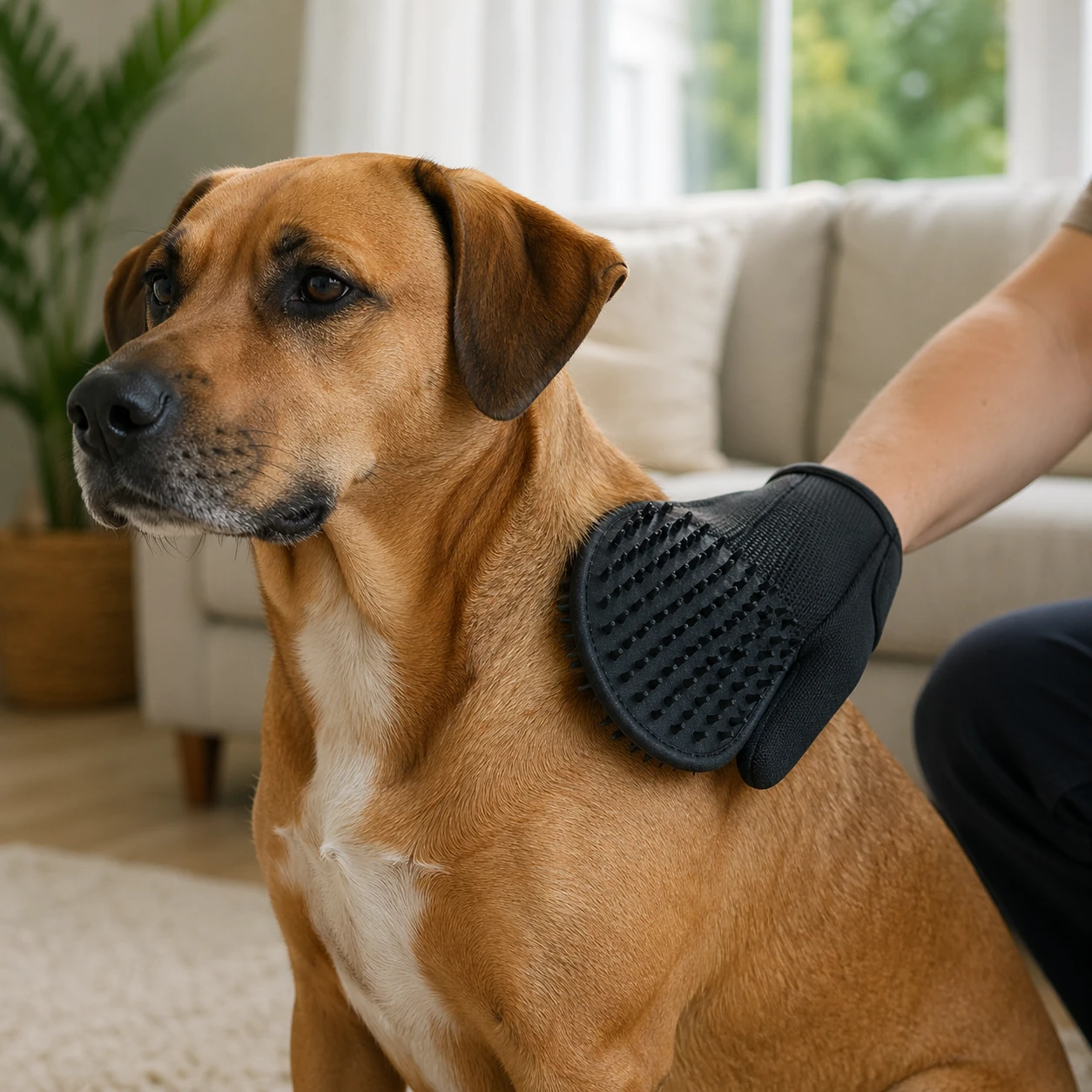
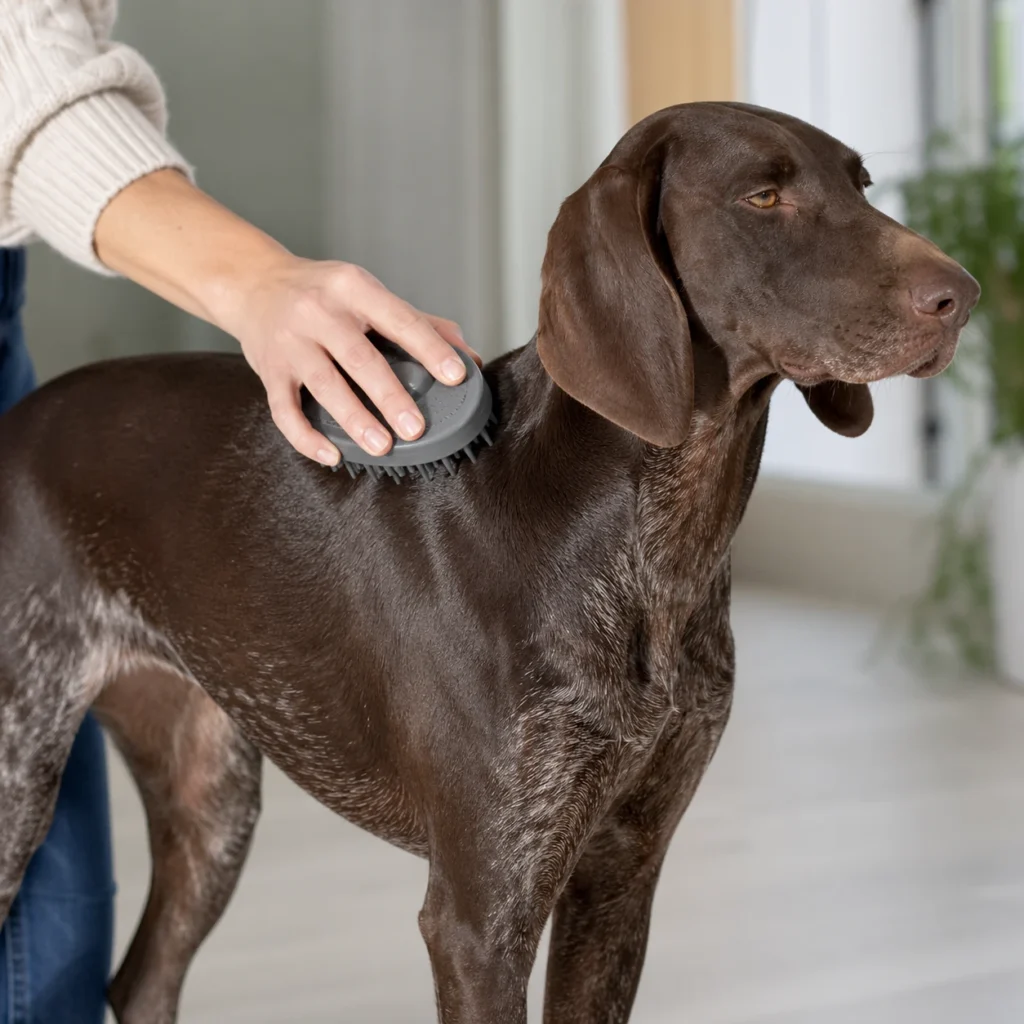
Rubber curry brush or grooming mitt
Use a rubber curry brush or grooming mitt on short smooth coats. Work in small circular or oval motions to loosen dead hair, then wipe or bristle-brush the coat in the direction of growth. Do not drag rubber tools through long or curly tangles; they can grab the hair and make the dog brace.
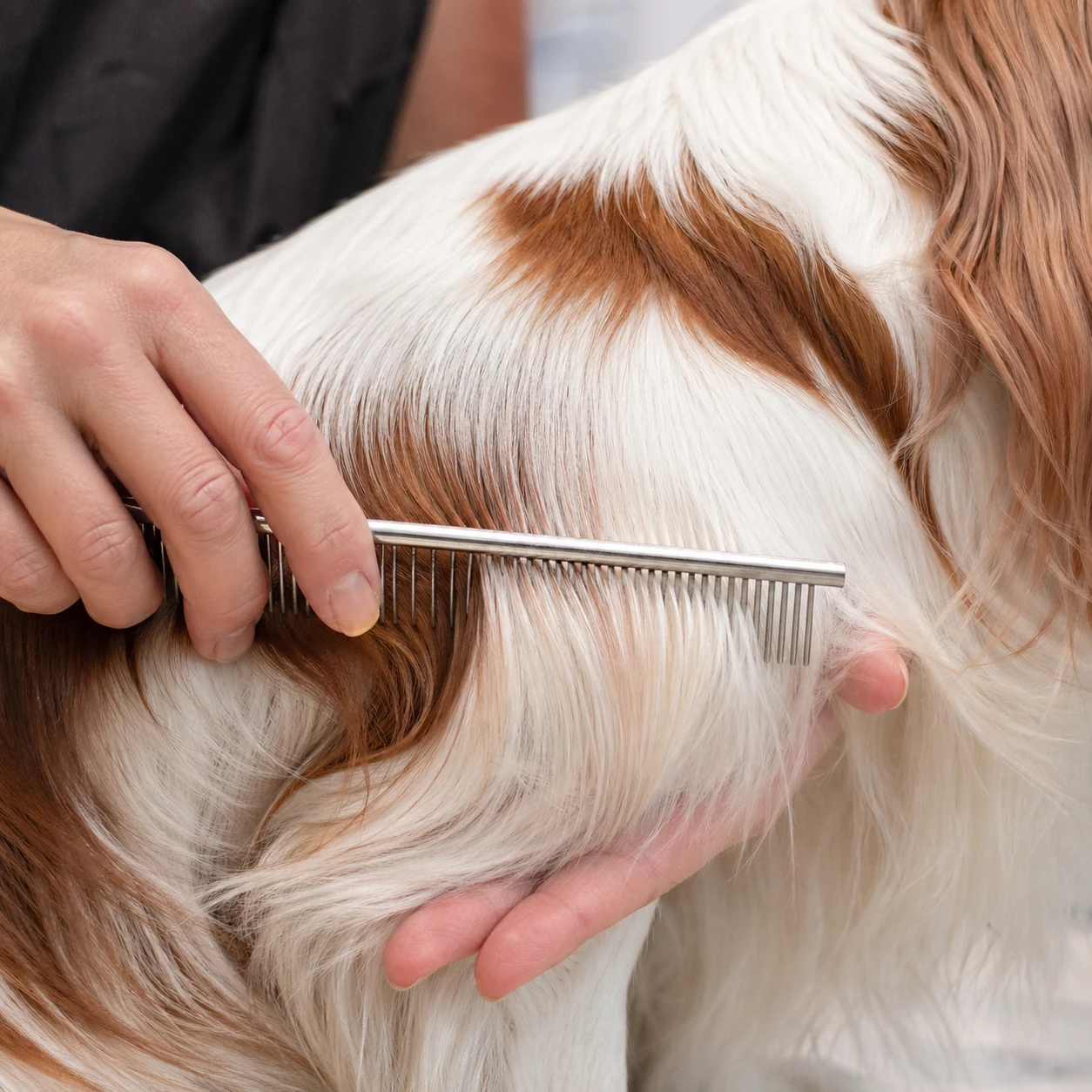
Metal comb
Use a metal comb after brushing, not as a punishment tool. Start with the wider teeth. Comb small sections from the ends inward, then through to the skin only when the section is easy. The comb is your truth test: if it cannot pass through, the coat is not fully brushed.
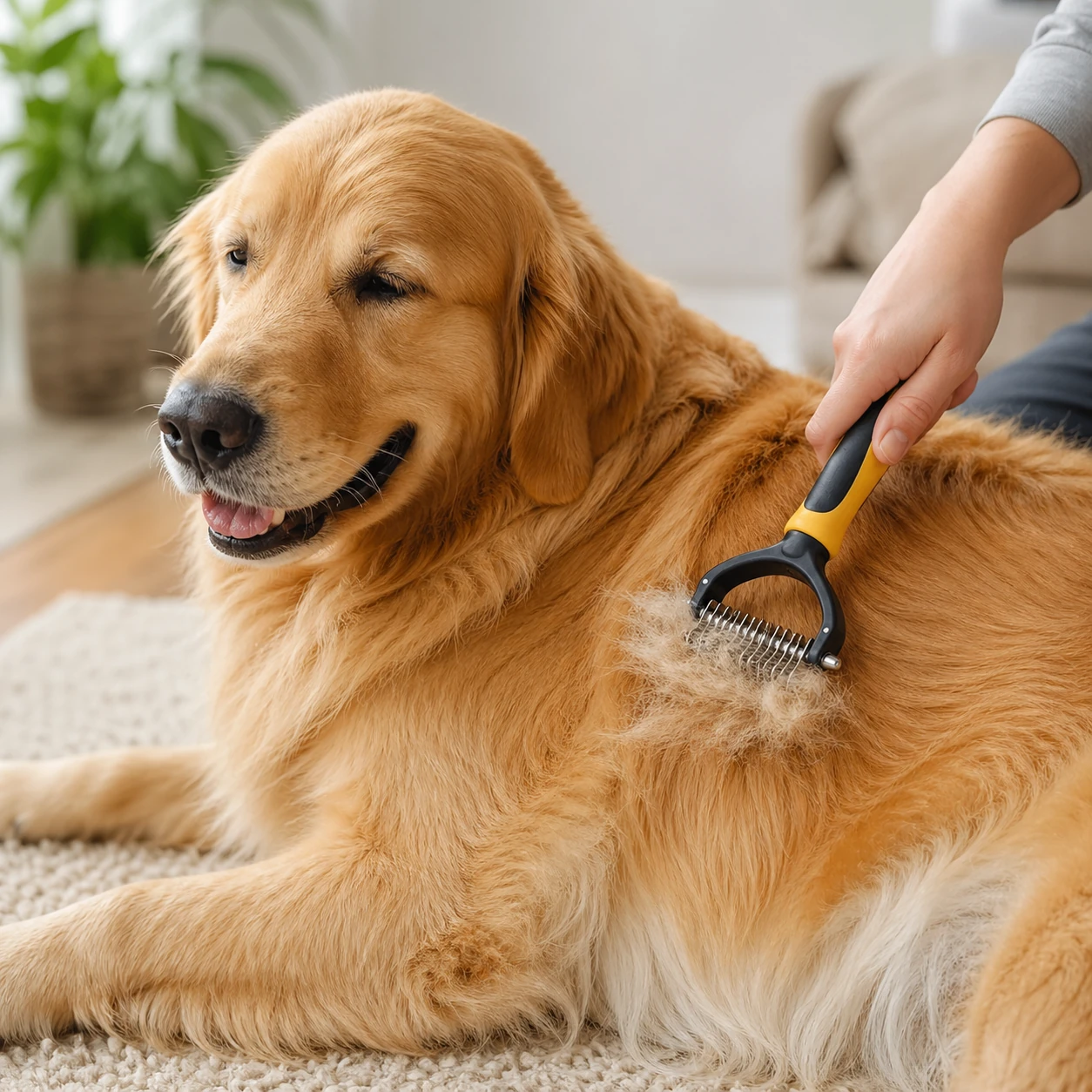
Undercoat rake and de-shedding tool
Use an undercoat rake on double coats when loose undercoat is shedding. Choose teeth long enough to reach the undercoat without digging into skin. Pull with the coat growth in short passes. Use de-shedding tools carefully and briefly; overuse can break topcoat or irritate skin.
How should you brush your dog’s coat type?
The brush type matters, but the coat type decides how you use it. Short coats need surface hair lifted. Long and curly coats need sectioning. Double coats need undercoat removed without damaging the topcoat.
COAT 01
Short, smooth coats
Use a rubber curry brush or grooming mitt first, then finish with a soft bristle brush. Work gently over the shoulders, back, ribs, and thighs. Short-haired dogs still shed and still need skin checks, but most do not need hard metal tools for normal weekly brushing.
-
Part the coat so you can see whether the tool is reaching below the surface.
-
Use light pressure and small sections rather than long, forceful passes.
-
Check behind ears, armpits, collar line, belly, tail, and back legs.
-
If the comb catches hard, stop and loosen the tangle before brushing again.
COAT 02
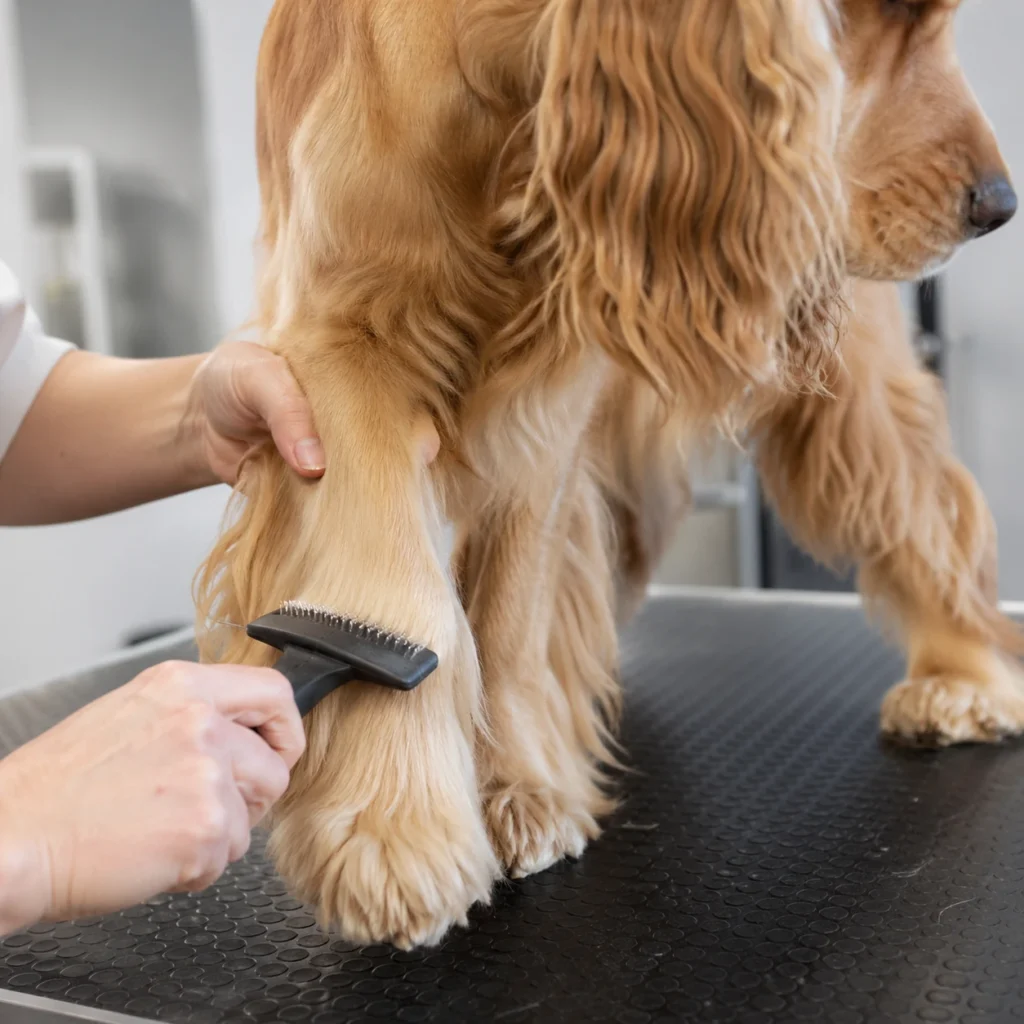
Medium, silky, long, or feathered coats
Mist the coat very lightly only if it is static or flyaway, then brush in layers. Use a pin brush to smooth and a soft slicker for tangles. Hold feathering near the skin while brushing the ends. Finish with a comb behind ears, under legs, around the tail, and along the belly.
-
Part the coat so you can see whether the tool is reaching below the surface.
-
Use light pressure and small sections rather than long, forceful passes.
-
Check behind ears, armpits, collar line, belly, tail, and back legs.
-
If the comb catches hard, stop and loosen the tangle before brushing again.
COAT 03
Curly, wool, and poodle-type coats
Curly coats can look fluffy while knots sit close to the skin. Use a soft slicker in tiny sections, then comb the same section before moving on. Brush after rain, harness wear, jumpers, or bathing because friction and moisture can create hidden tangles fast.
-
Part the coat so you can see whether the tool is reaching below the surface.
-
Use light pressure and small sections rather than long, forceful passes.
-
Check behind ears, armpits, collar line, belly, tail, and back legs.
-
If the comb catches hard, stop and loosen the tangle before brushing again.
COAT 04
Double, wire, or rough coats
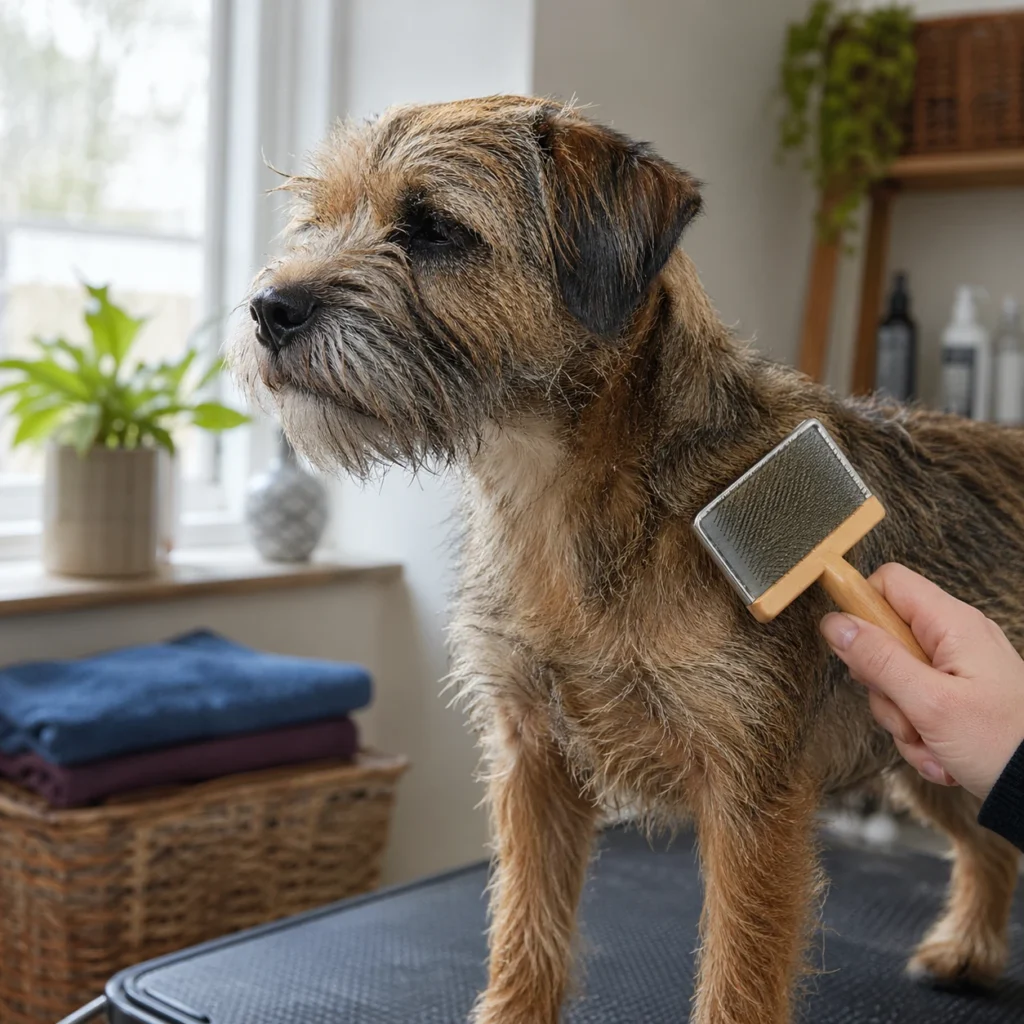
For double coats, use an undercoat rake during shedding, then tidy the topcoat with a slicker or pin brush. For wire or rough coats, use a slicker and comb for dirt, beard, legs, and belly. Some wire coats need hand-stripping or clipping from a groomer; home brushing is maintenance, not a replacement for specialist coat work.
-
Part the coat so you can see whether the tool is reaching below the surface.
-
Use light pressure and small sections rather than long, forceful passes.
-
Check behind ears, armpits, collar line, belly, tail, and back legs.
-
If the comb catches hard, stop and loosen the tangle before brushing again.
What mistakes should you avoid, and when should you stop?
Most brushing problems come from force, wrong tools, or trying to finish after the dog has already had enough. These are the mistakes that turn a simple brush into a skin problem or a training problem.
01.
Scraping the skin
Do not press harder to make a slicker, rake, or de-shedding tool work. If you need force, the tool is wrong, the coat is too tangled, or the section is too big. Light pressure protects the skin and teaches your dog that brushing is safe.
02.
Bathing before tangles are out
Water can tighten knots. Brush and comb before a bath, then dry the coat fully before brushing again if your dog has a long, curly, double, or tangle-prone coat. Use the home bath guide and the low-stress drying guide for the steps after brushing.
03.
Fighting tight mats or fear
Do not cut tight mats with scissors, and do not pin your dog down to finish. Tight mats, sore skin, sudden touch sensitivity, growling, snapping, or a dog who cannot recover calmly need a groomer or vet rather than more brushing at home.
Brushing questions
Frequently Asked Questions
Straight answers for beginner dog owners who want a cleaner coat, a calmer dog, and fewer grooming battles at home.
Use coat type as the starting point. Short smooth coats may only need a quick weekly brush. Medium coats often need a few brushes a week. Long, curly, wool, feathered, and tangle-prone coats may need daily attention in high-friction areas. Double coats need extra brushing during heavy shedding.
Brush before the bath. Water can tighten tangles and make mats harder to remove. After bathing, dry the coat fully, then brush and comb again if the coat is long, curly, double, wool, or easily tangled.
Test the tool on the inside of your forearm. It should feel like firm grooming, not scratching. On your dog, watch for flinching, skin twitching, moving away, lip licking, turning to look at the brush, or suddenly sitting down. Those signs mean lighten the pressure or stop.
No. Slickers are useful on many medium, long, curly, wool, wire, and some double coats, but they are not the first choice for many very short smooth coats. Short coats usually do better with a rubber curry brush, grooming mitt, or soft bristle brush.
Do not drag the comb through. Hold the coat near the skin, loosen only a small easy tangle with your fingers or a slicker, and try again from the ends. If the knot is tight, close to the skin, painful, damp, or large, stop and book a groomer or speak to your vet.
Check behind the ears, under the armpits, around the collar or harness line, under the belly, between back legs, around the tail, and around paws. These areas rub when your dog walks, lies down, wears gear, or gets wet.
Not for a nervous dog. Brushing and nail trimming are separate skills. During brushing you can gently handle paws and check nail length, but keep nail work short and calm. When you are ready, use the safe nail trimming guide rather than rushing both jobs at once.