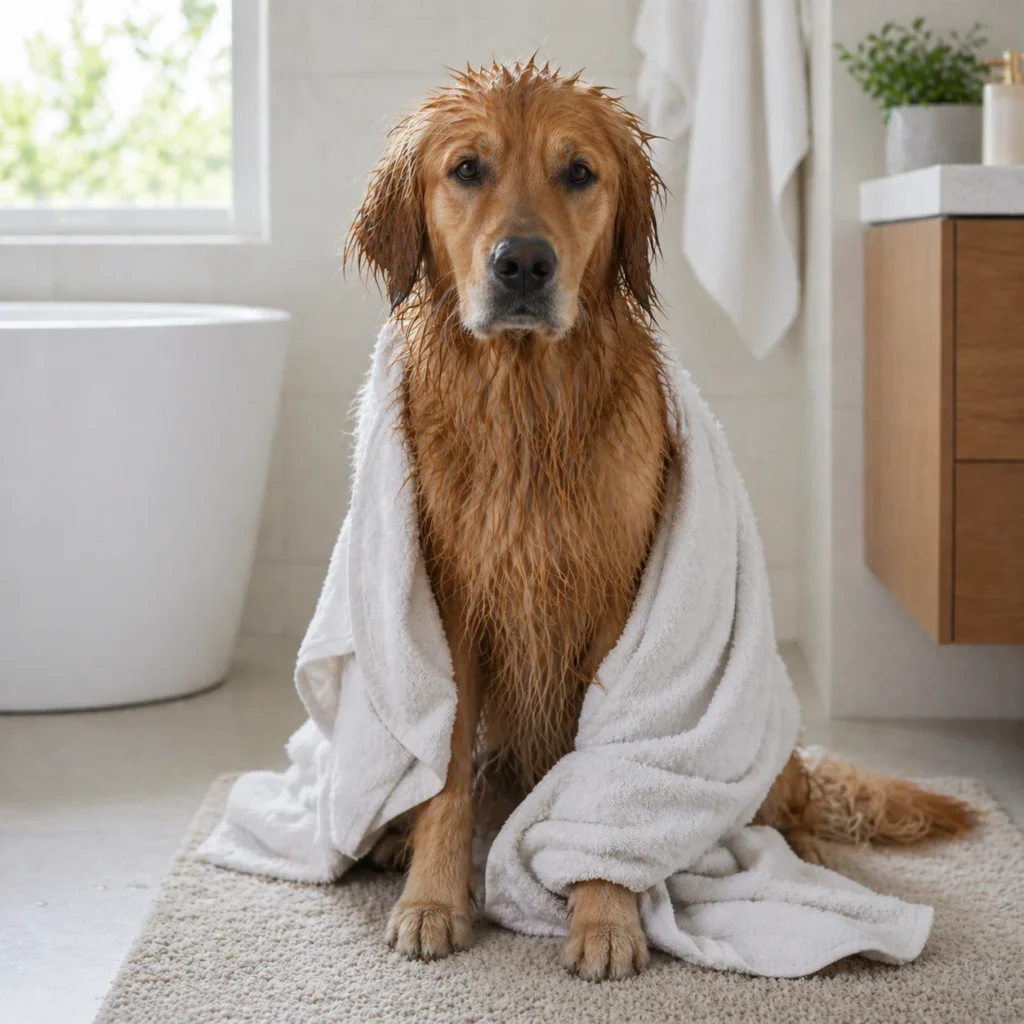
Calm home grooming
How to Dry Your Dog After a Bath Without Stress
Drying should not turn into a chase, a wrestling match, or a knot-making session. This guide gives you the calm order to follow, then shows exactly how to use each brush type while the coat dries.
Start here
What is the calm drying order?
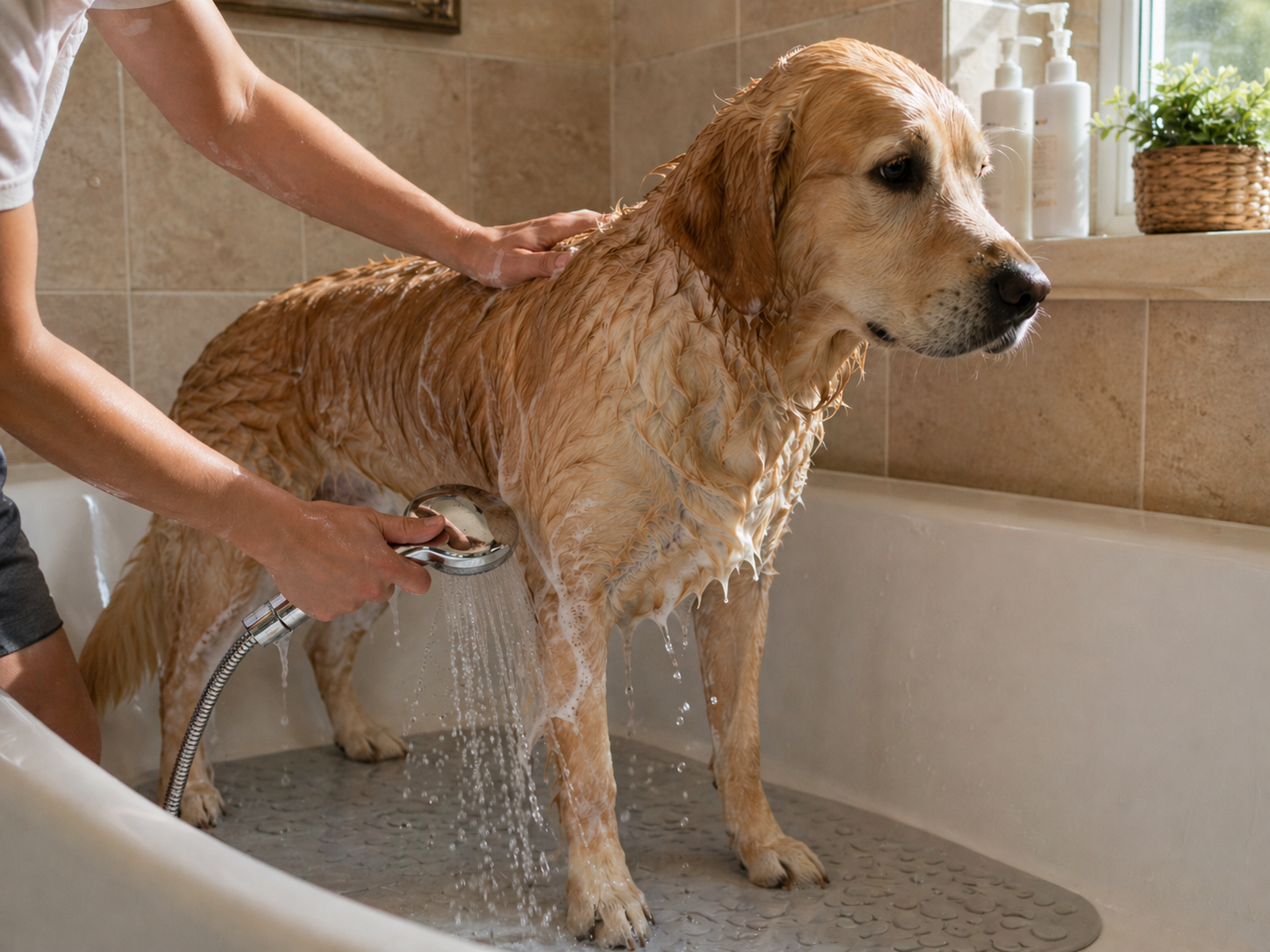
Use this order: remove tangles before the bath, rinse well, press water out with towels, let your dog shake safely, then dry the coat in sections. Brush while drying only when the tool suits the coat. A soaked coat is fragile and slippery; a mostly dry coat is easier to check without pulling. If the bath routine itself is still messy, read how to bathe your dog at home. If you are unsure which tool belongs on the coat, start with choose the right dog brush for your dog’s coat type.
How do you keep drying low stress?
Most stress comes from surprise, heat, noise, slipping, or pulling. Remove those problems before you start and your dog has a better chance of staying calm.
01.
Set up before the bath ends
Put towels, treats, a non-slip mat, and the brush you need within reach. Keep the room warm and shut doors before your dog leaves the bath area. A wet dog that escapes and rolls on carpet is harder to dry calmly.
02.
Press with towels, do not scrub
Wrap the towel over the back and press into the coat. Squeeze long ears, legs, tail, and belly gently instead of rubbing back and forth. Rough towel work can twist longer hair into tangles and make sensitive dogs resist.
03.
Introduce the dryer as training
Start the dryer away from your dog on a cool or low warm setting. Reward calm behaviour, keep air away from the face and ears, and take breaks. For nervous dogs, spend a few short sessions on help your dog get comfortable with grooming at home before you expect a full dry.
How do you use each brush type after a bath?
The brush is not just for making the coat neat. Used correctly, it separates hair so air can move through the coat. Used harshly, it causes pulling, scraping, and more stress.
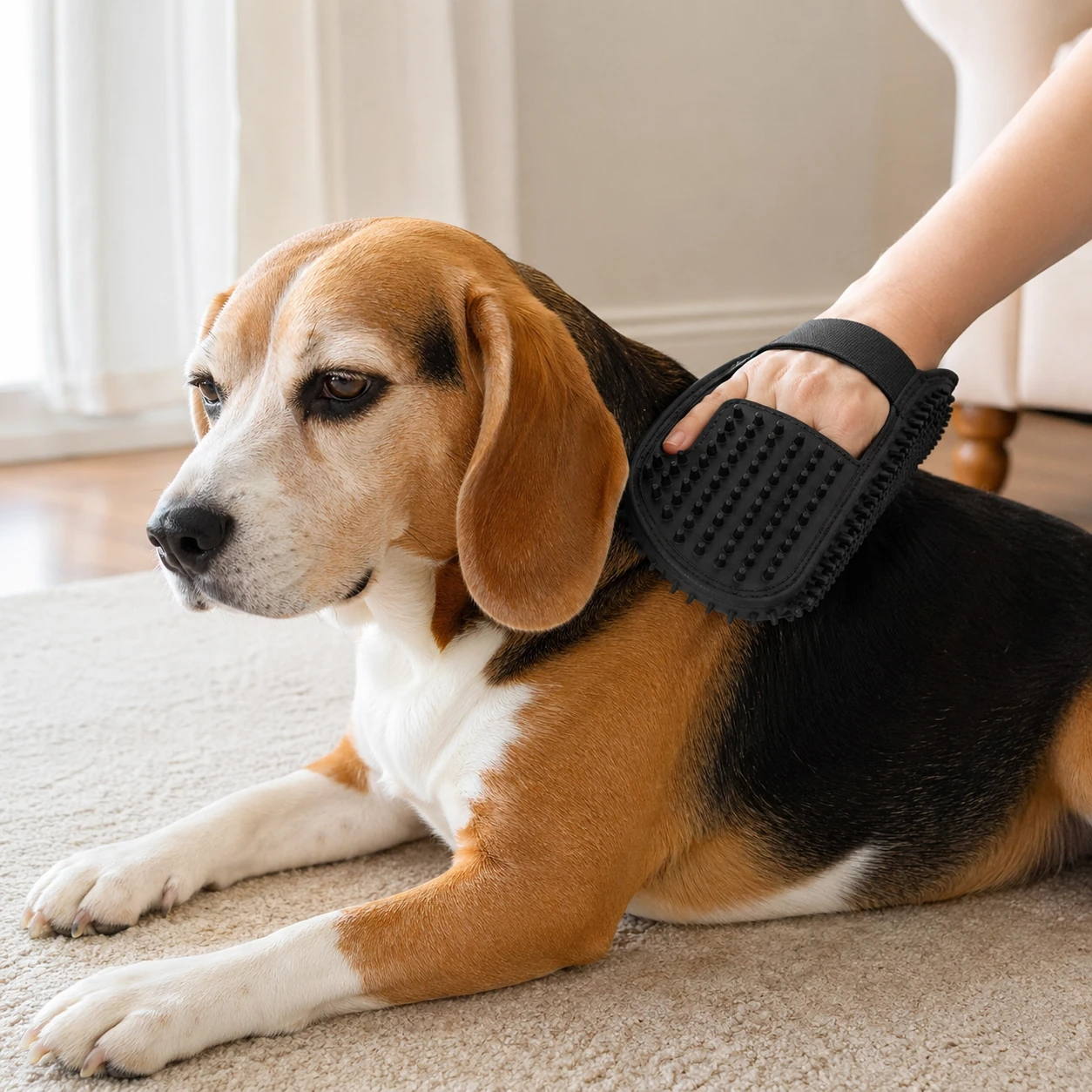
Rubber curry or grooming mitt
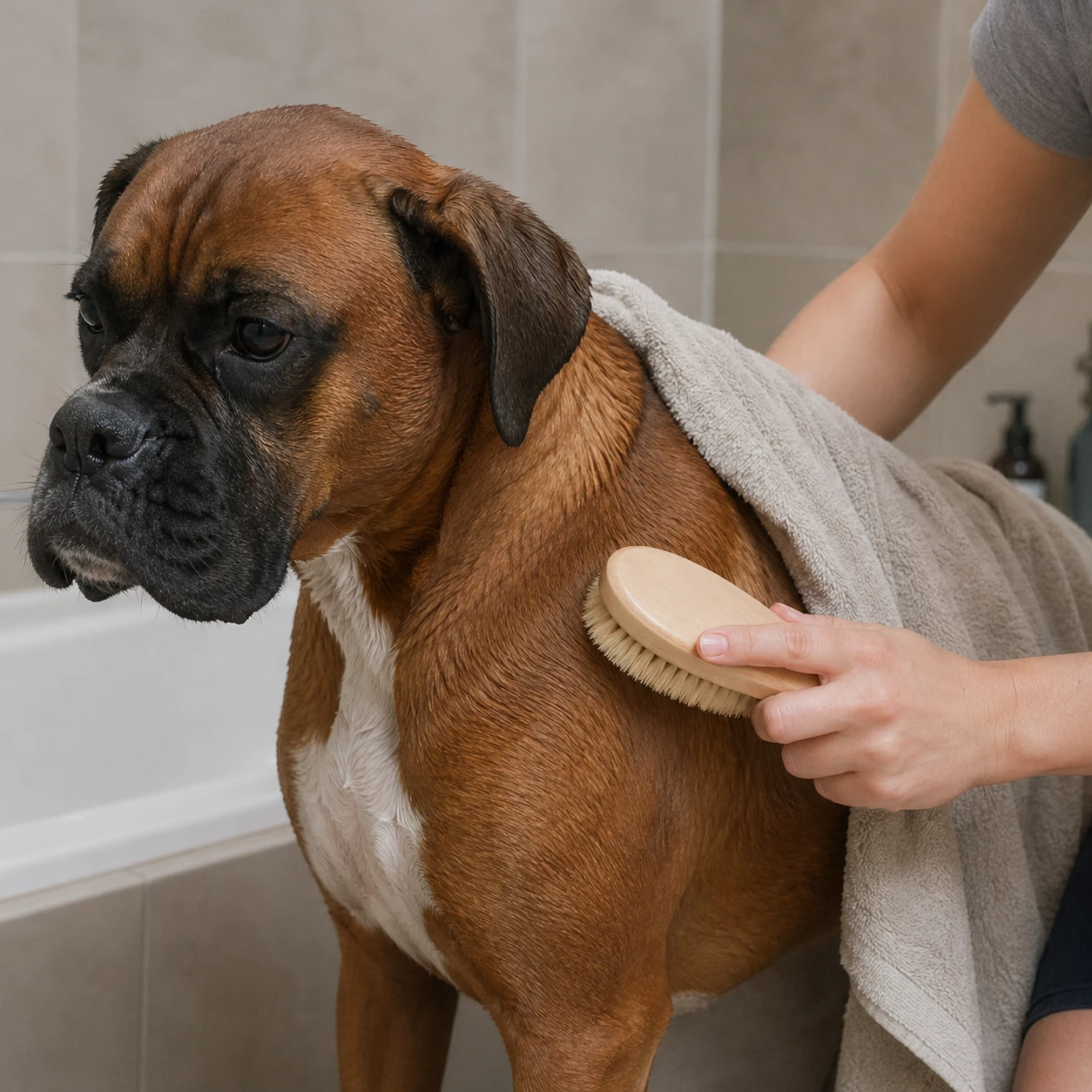
Best for short smooth coats. Use it after towel drying, while the coat is damp or dry. Work in small circles or short strokes with light pressure, then wipe away loose hair. Do not use it to scrub long, silky, curly, or tangled coats.
Bristle brush
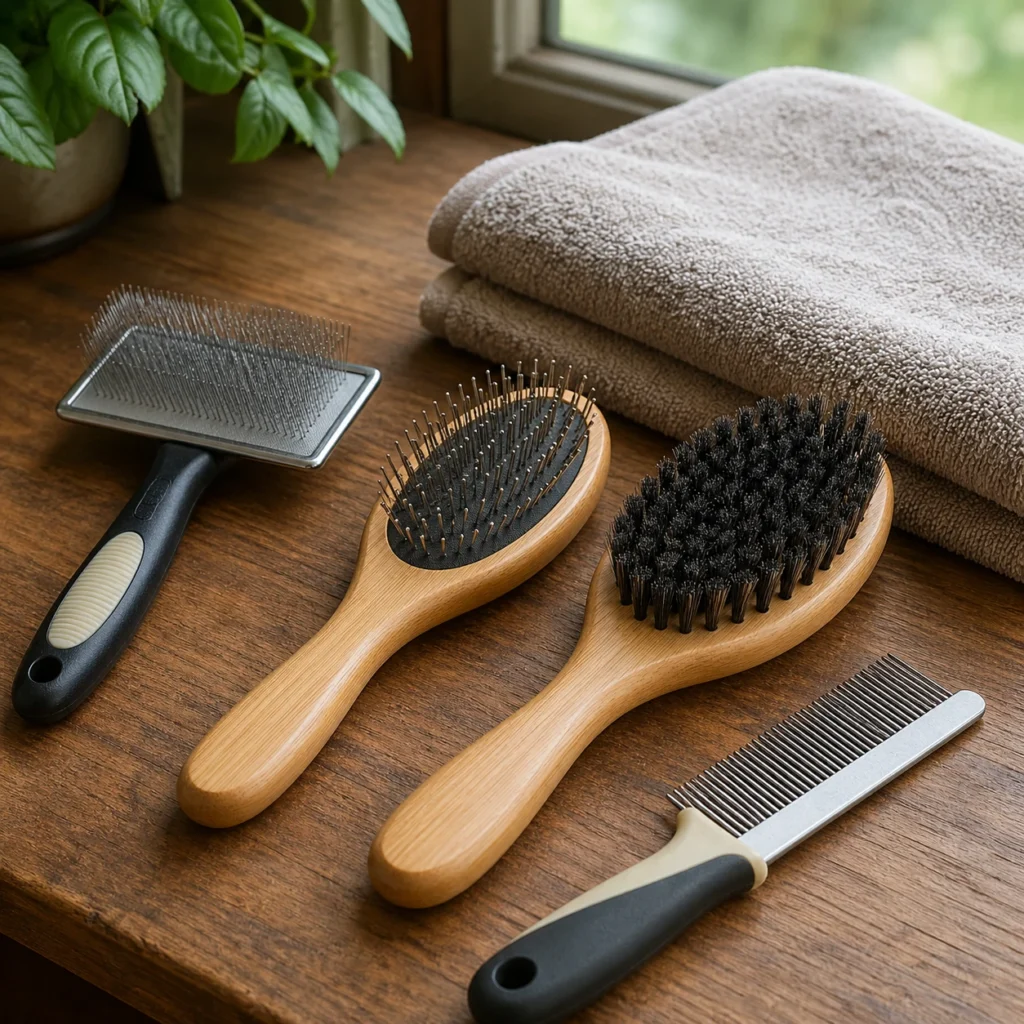
Best as a finishing brush on short or smooth coats. Once most water is gone, use long strokes in the direction the coat grows. It lifts dust and loose hair but does not reach deep undercoat or remove knots.
Slicker brush
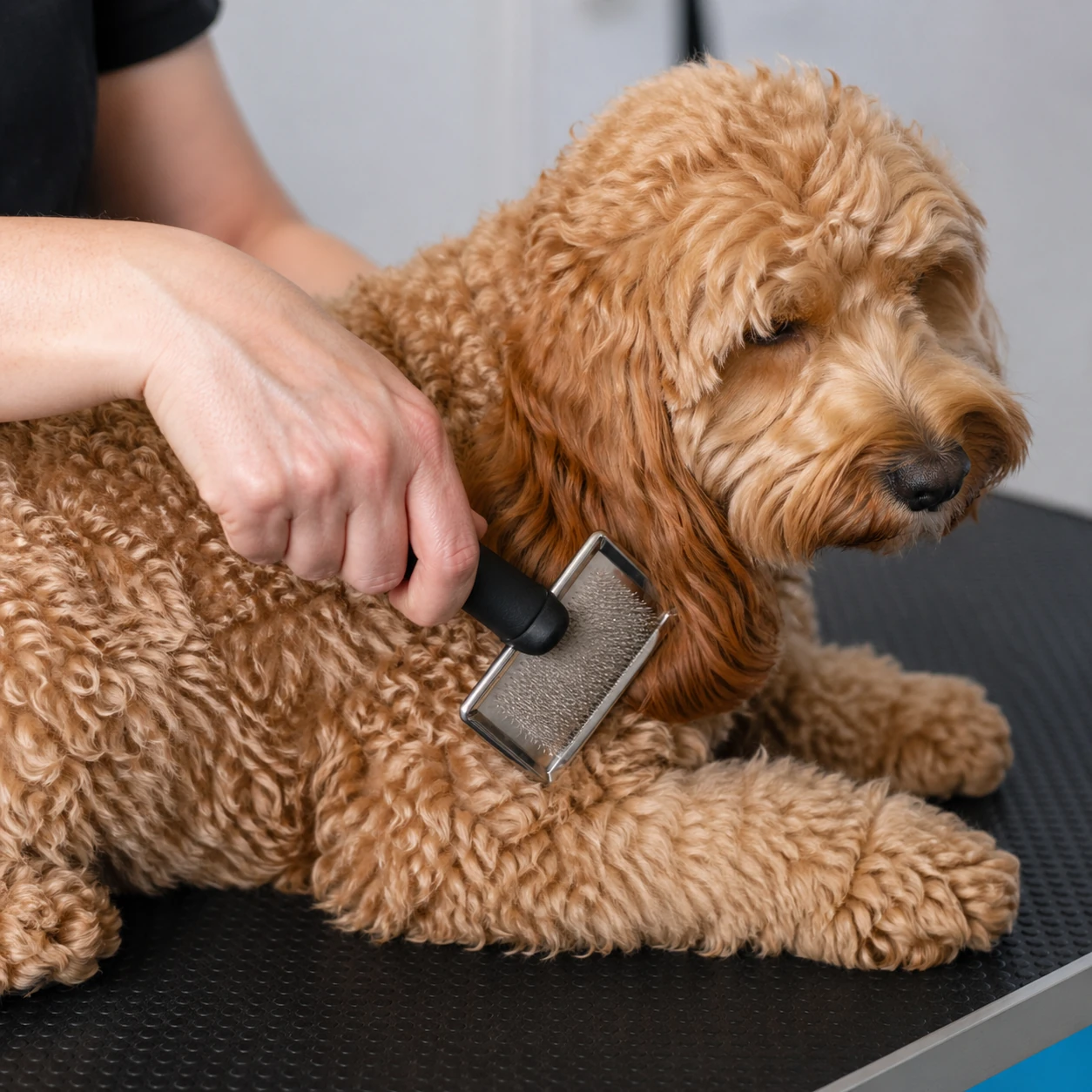
Best for medium, long, curly, and wire coats when used gently. Work one small section at a time with light wrist strokes. Keep the pins moving and do not scrape the same patch. If it catches, stop and separate the tangle with your fingers first.
Pin brush
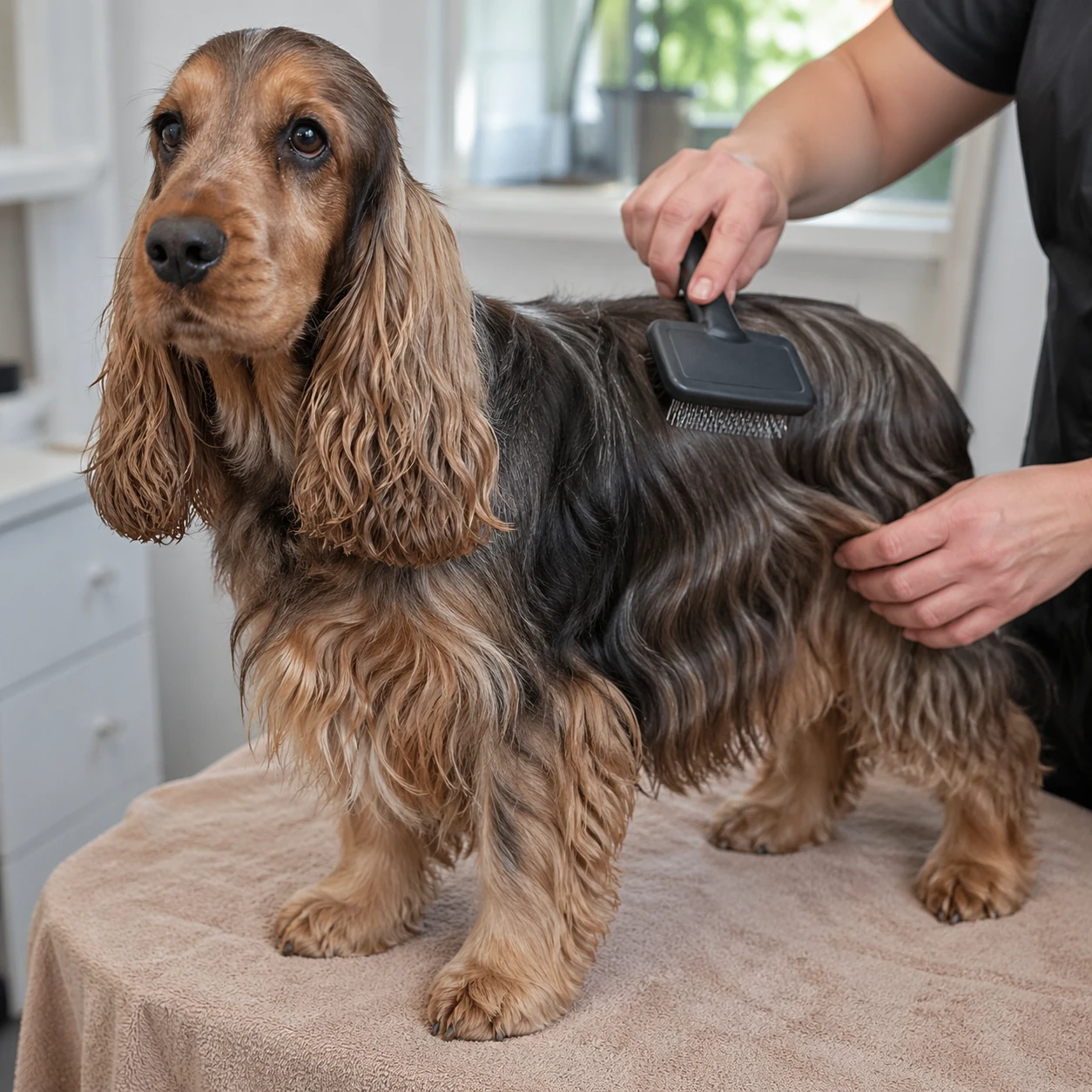
Best for smoothing longer hair as it dries. Lift the coat in layers and brush from ends toward the body, then with the growth of the coat. A pin brush should glide; it is not the tool for forcing through a knot.
Metal comb
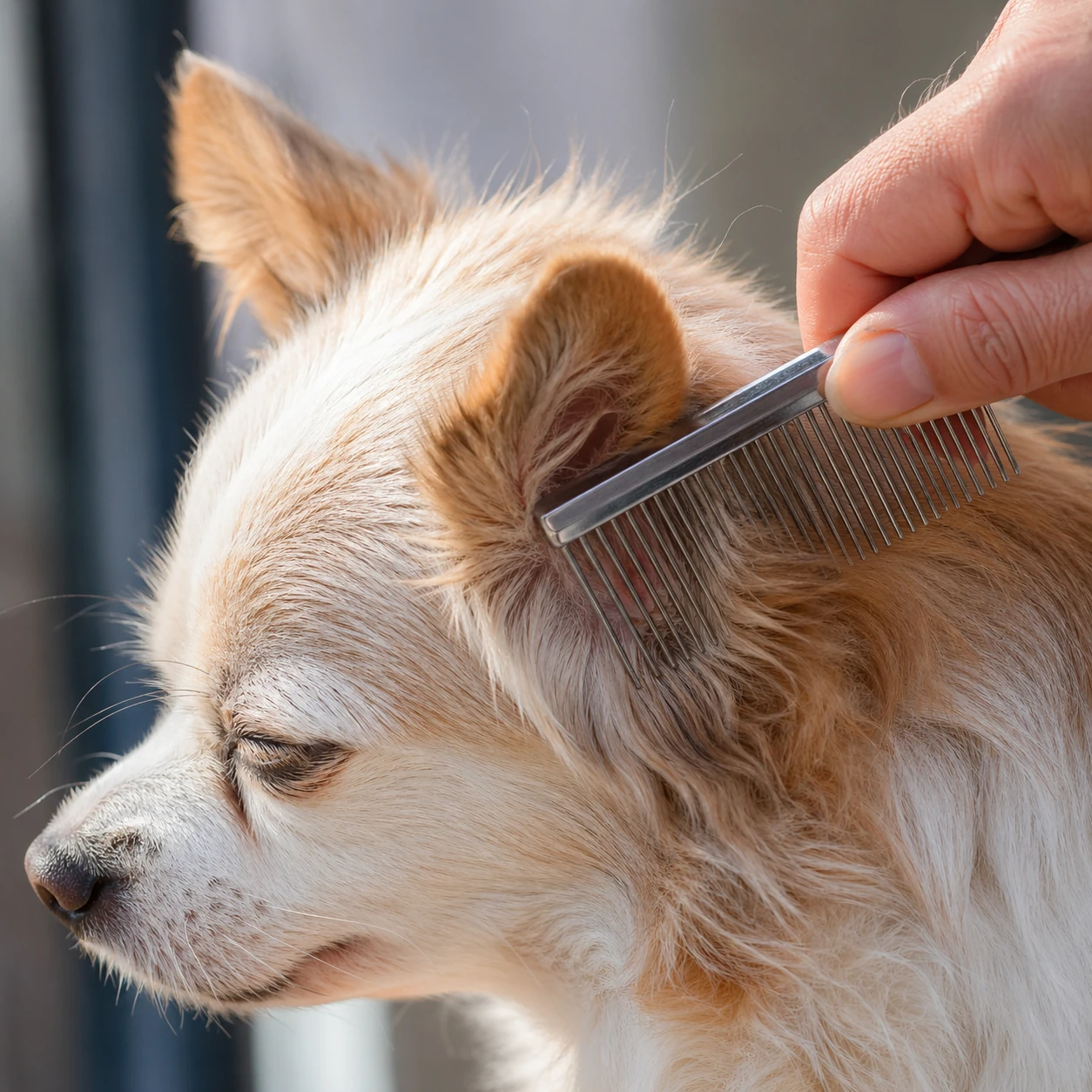
Best as the honesty check after brushing. Use the wide teeth first, then the finer teeth if suitable. Comb behind ears, under armpits, around the collar, legs, tail, and beard. If the comb stops, the coat is not clear yet.
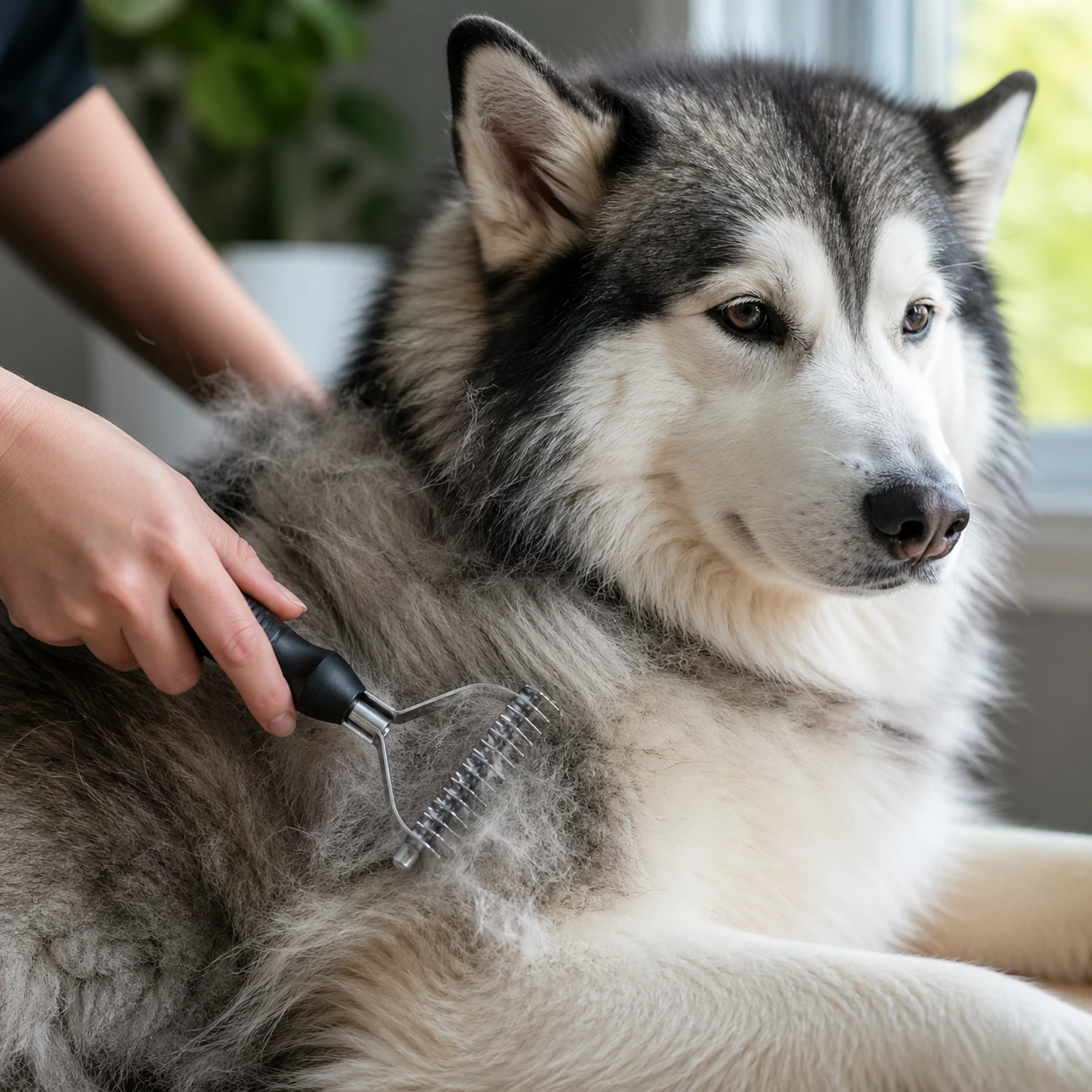
Undercoat rake or de-shedding tool
Best for double coats and heavy shedders, not for every dog (beware!). Use an undercoat rake in short gentle strokes once the coat is mostly dry. Use a de-shedding tool sparingly on a dry, untangled coat, flat to the hair, without repeated scraping.
Which drying method fits your dog?
The right method depends on coat length, undercoat, and tangle risk. Short coats need less tool work. Thick, curly, and long coats need more section drying and checking.
Short coats
Towel plus rubber tool
For staffie, beagle, boxer, and similar smooth coats, towel press first, then use a rubber curry brush or grooming mitt. Finish with a bristle brush when dry. Air drying can be fine in a warm room if the skin and coat dry quickly.
Long or curly coats
Towel, dryer, slicker, comb
For spaniel ears, poodle mixes, long feathers, and curly coats, press with towels, then dry in small sections. Use a slicker lightly while the dryer separates the coat, then prove the work with a metal comb.
Double coats
Towel, dryer, undercoat check
For retrievers, shepherds, huskies, spitz types, and similar double coats, get the coat fully dry near the skin. Then use an undercoat rake gently to remove loosened hair. Do not dig at damp packed undercoat.
What mistakes make drying stressful?
A bad drying session usually has one of three causes: too much force, too much heat, or the wrong tool at the wrong time.
Mistake 1
Brushing soaked knots
Wet tangles can tighten and pull. If you find a knot after the bath, hold the hair close to the skin, separate only what loosens easily, and stop if the dog flinches or the comb will not move. Tight mats need a groomer.
Mistake 2
Using heat to hurry
Hot air feels worse to a dog than most owners expect. Keep the dryer moving, use cool or low warm air, and check the airflow on your own wrist. Never blast the face, ears, genitals, or sore skin.
Mistake 3
Doing every job at once
A bath, full dry, hard brush-out, ear work, and nail trim in one session can be too much for a beginner dog. Split jobs across the week.
Drying questions
Frequently Asked Questions
Straight answers for common problems after a bath, especially if your dog is new to home grooming.
Only lightly, and only with the right tool. For long, curly, or silky coats, you may use a slicker or pin brush gently while blow drying in sections. Do not drag through wet knots. For short smooth coats, towel dry first, then use a rubber curry brush, grooming mitt, or bristle brush once the coat is damp rather than dripping.
Sometimes. Short smooth coats can often air dry in a warm, draught-free room after a good towel dry. Long, curly, thick, or double coats usually need more help because trapped moisture can leave the coat clumpy and uncomfortable. If the coat stays damp near the skin, use section drying and brush checks.
Do not pin the dog down and force it. Start with towel drying and separate dryer training. Let the dog see the dryer switched off, reward calm behaviour, turn it on at a distance, then gradually reduce distance over several short sessions. Use cool or low warm air and keep the nozzle away from the face and ears.
Use a rubber curry brush or grooming mitt first to lift loose hair, then finish with a soft bristle brush. Keep pressure light. Short coats still need brushing, but they usually do not need slickers, long pin brushes, or heavy de-shedding tools unless the coat type genuinely calls for them.
Use a soft slicker brush in small sections, then check each section with a metal comb. Curly coats can look fluffy while knots sit close to the skin. The comb is the test. If it cannot pass from near the skin to the end of the hair without catching, that section is not fully brushed.
Do not use a de-shedding tool on a wet, tangled, or resistant coat. It can pull and break hair. An undercoat rake is safer when the double coat is mostly dry and separated, but it still needs short gentle strokes. If the rake does not glide, stop and dry or separate the coat more before trying again.
Do not cut tight mats with scissors and do not rip through them. Hold the coat close to the skin and loosen only small, easy tangles. If the mat is tight, close to the skin, painful, large, or spread across several areas, book a professional groomer or ask your vet for advice.