Summer walk checks
Grass Seeds and Dogs: What to Check After Summer Walks
After walks through long or dry grass, your job is not a full groom. It is a calm five-minute check: find loose seeds, brush with the right tool, inspect the risky areas, and call a vet if anything looks stuck, swollen, or painful. For tool choice, start with the dog brush by coat type guide.
What should you check first after a summer walk?
Grass seeds are easiest to deal with before they pierce skin or disappear into thick coat. Use this simple order before your dog settles on the sofa.
01.
Look before brushing
Run your hands over the coat first. Check feet, ears, belly, armpits, collar line, tail, and any long feathering. Pick off loose seeds you can see.
02.
Brush with the right tool
Use the gentlest brush that reaches your dog’s coat. Work in small sections, keep pressure light, and let the tool lift loose debris instead of dragging hard.
03.
Decide if it is a vet job
Stop if a seed is embedded, your dog limps, shakes their head, paws at an eye, sneezes violently, or shows swelling, redness, discharge, or pain.
Which brush technique should you use for each tool?
The brush is for finding and lifting loose seeds. It is not for forcing out painful knots or digging into skin. Match the tool to the coat and use short, calm passes.
01.
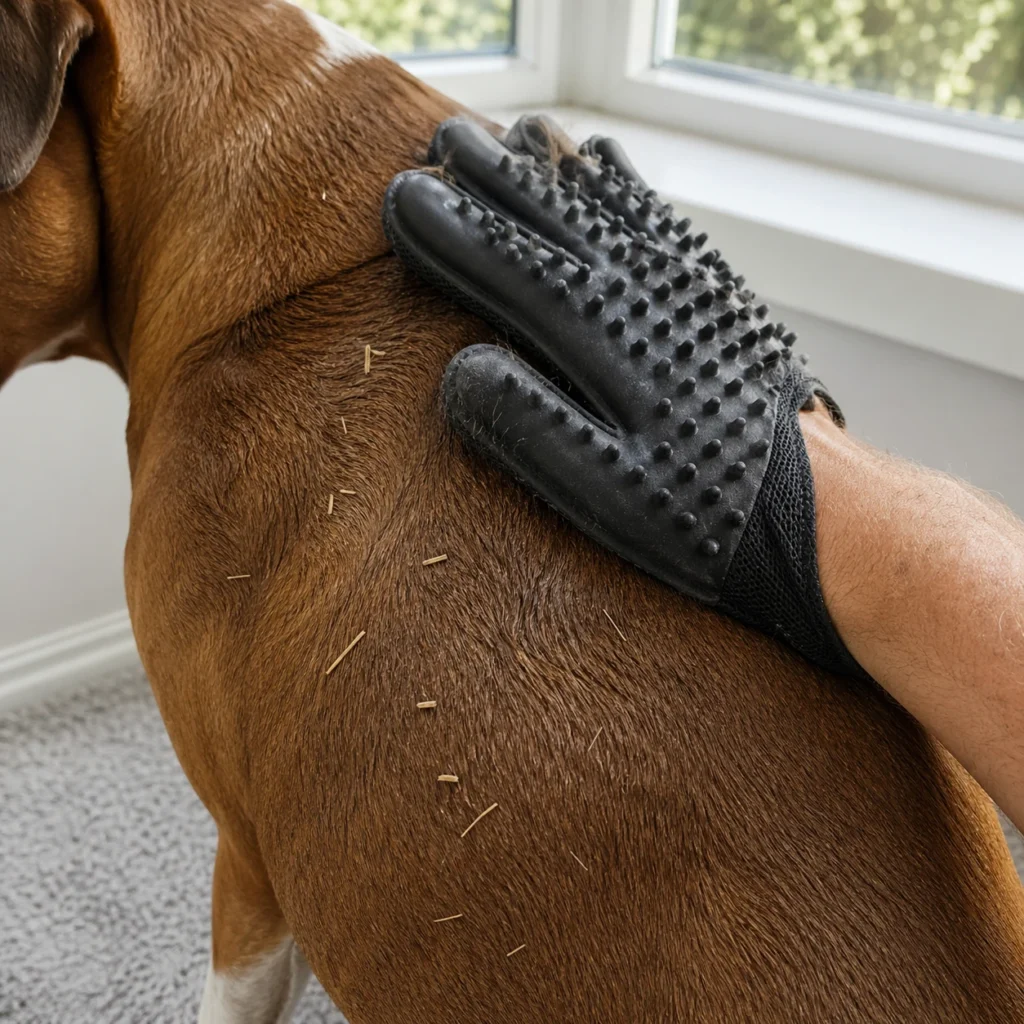
Rubber curry, grooming mitt, and bristle brush
Use these on short smooth coats after you have removed any obvious seeds by hand. A rubber curry brush or mitt loosens dust and loose hair; a bristle brush finishes by smoothing the coat and carrying away small bits of debris.
-
Use a rubber curry brush or mitt in small circles on the chest, back, sides, and legs; reduce pressure on thin or bony areas.
-
Switch to short strokes in the direction the coat grows if your dog has sensitive skin or very short hair.
-
Finish with a soft bristle brush in long strokes with the coat to lift dust, seed fragments, and loose hair.
-
Do not use rubber tools to scrub long, curly, tangled, or seed-packed hair because you can twist debris deeper.
02.
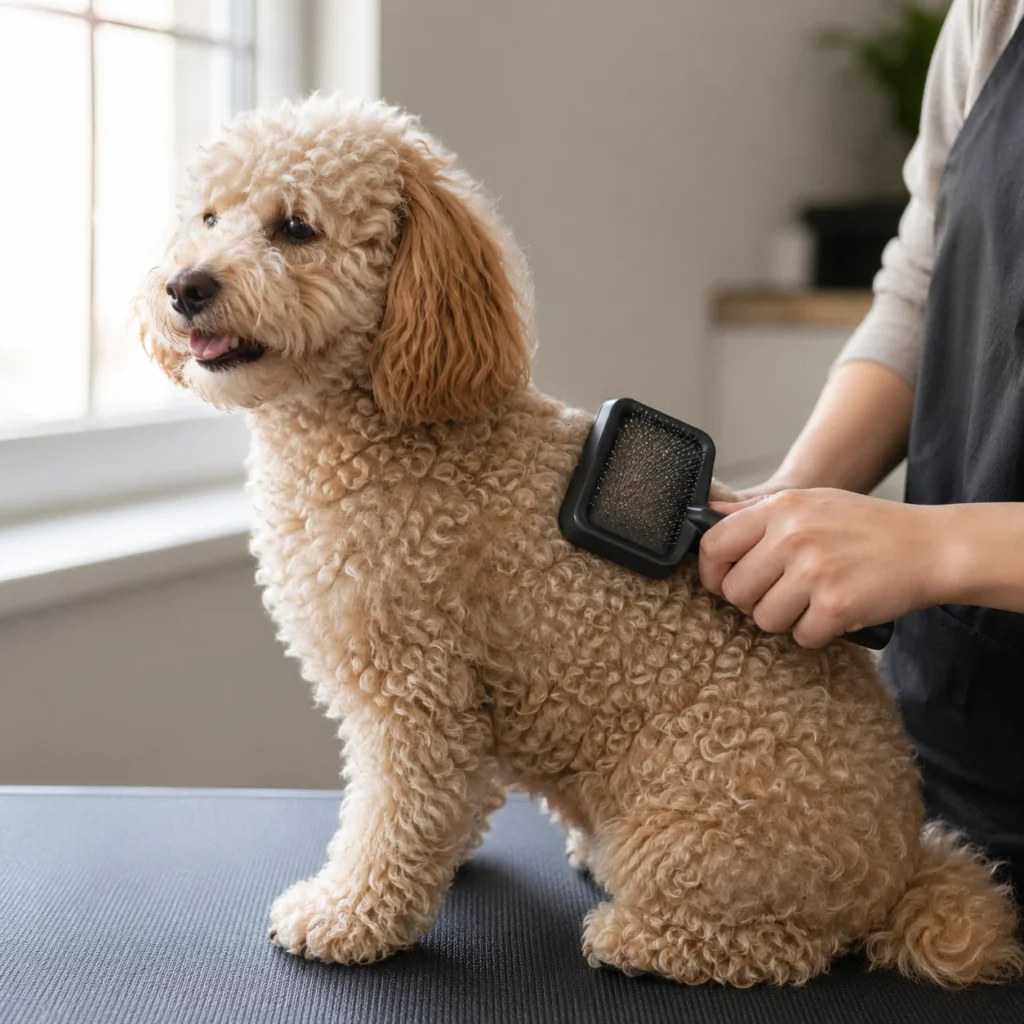
Slicker brush
A slicker is useful for medium, long, curly, and wire coats, but only with light pressure. Think small wrist strokes, not scraping. It should lift hair and debris, not scratch the skin.
-
Part the coat and brush one small section at a time, starting where the coat is easiest and your dog is most relaxed.
-
Use light flicking strokes and keep the slicker moving. Do not scrub the same patch or press the pins into the skin.
-
If the slicker catches, stop. Separate the hair with your fingers and check for a seed before brushing again.
-
After the slicker, use a metal comb. If the comb cannot pass through, the section needs more gentle work or professional help.
03.
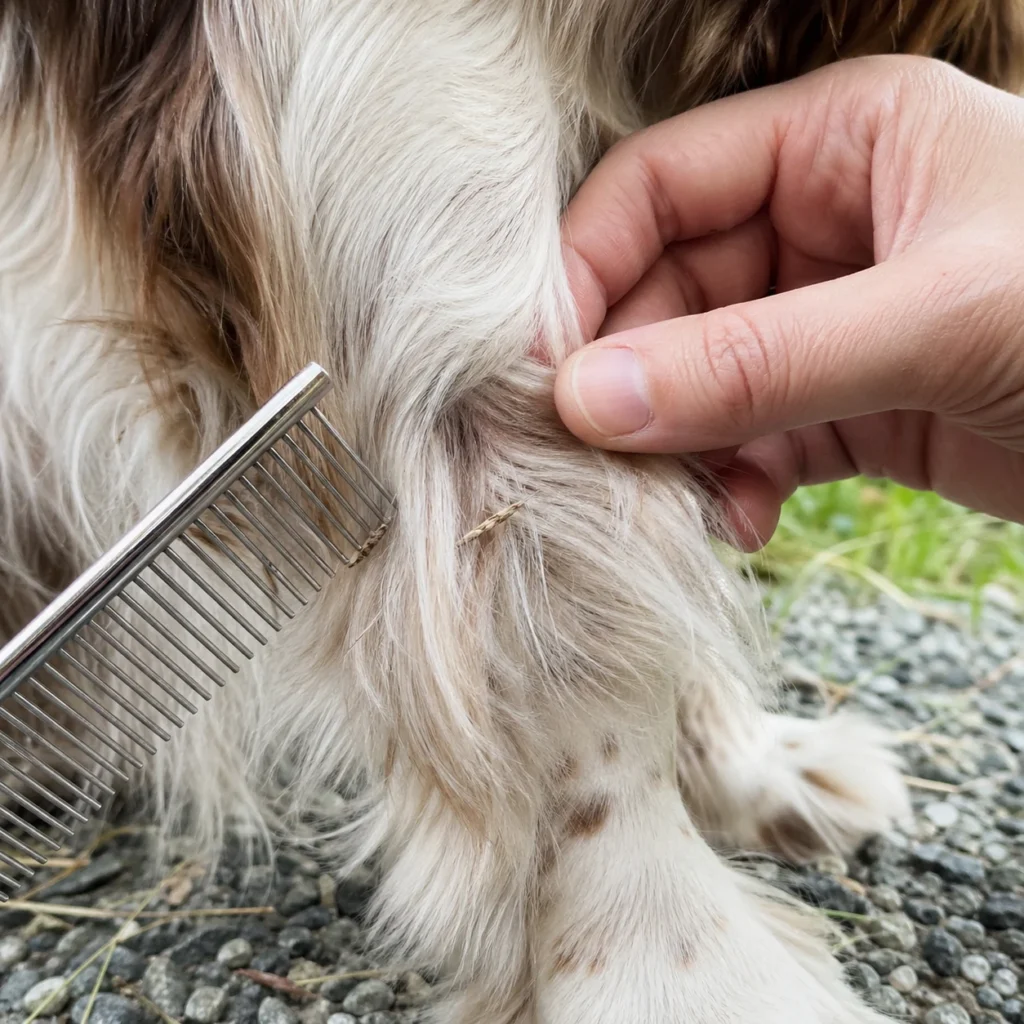
Pin brush and metal comb
A pin brush smooths longer hair and feathering. A metal comb is the honesty check. If the comb stops, the coat is not clear yet, and a hidden seed, knot, or packed area may still be there.
-
Use the pin brush with the hair growth first, then lift longer hair in layers so you can see what is underneath.
-
Hold long hair near the skin when brushing a tangle so you are not pulling directly on your dog.
-
Comb with the wide teeth first, then finer teeth if suitable. Check behind ears, legs, tail, beard, and collar line.
-
Never force a comb through a hard snag. Look, separate gently, and stop if the area is painful.
04.
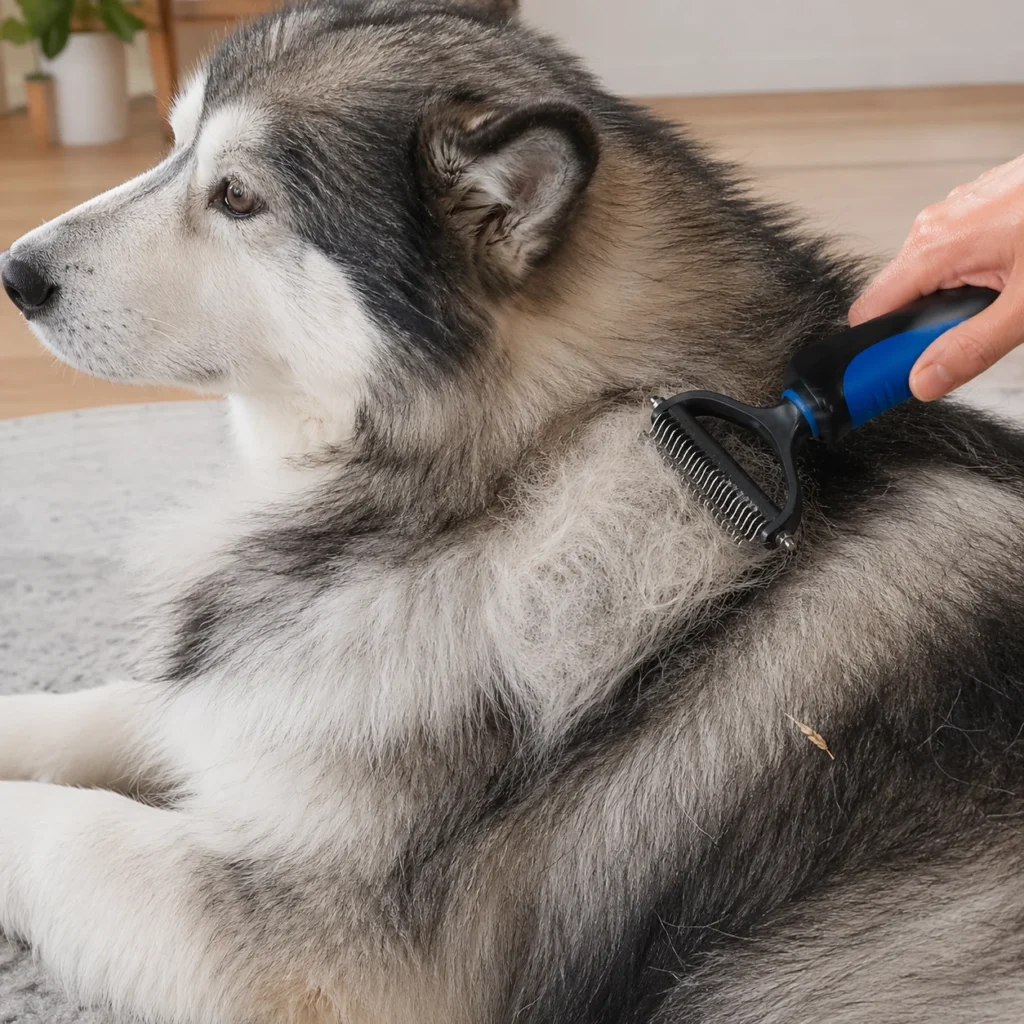
Undercoat rake and de-shedding tool
Use undercoat tools only on suitable double coats or heavy shedders. They can help lift loose undercoat where seeds hide, but they can also damage coat or irritate skin when used too hard or too often.
-
Use an undercoat rake in short strokes with the coat, not against it, and make sure the pins are long enough to reach the loose undercoat.
-
Use a de-shedding tool only on a dry, untangled coat, keeping it flat to the hair instead of scraping downward.
-
Do not rake over sore skin, wet packed coat, thin hair, or areas where your dog flinches.
-
A de-shedding tool is not an everyday brush. Use it sparingly and choose a softer tool if the coat is not a true shedding double coat.
Where should you look for hidden grass seeds?
Do not only brush the top of the back. Grass seeds often sit where hair changes direction, skin folds, or movement presses coat together.
01.
Paws and between toes
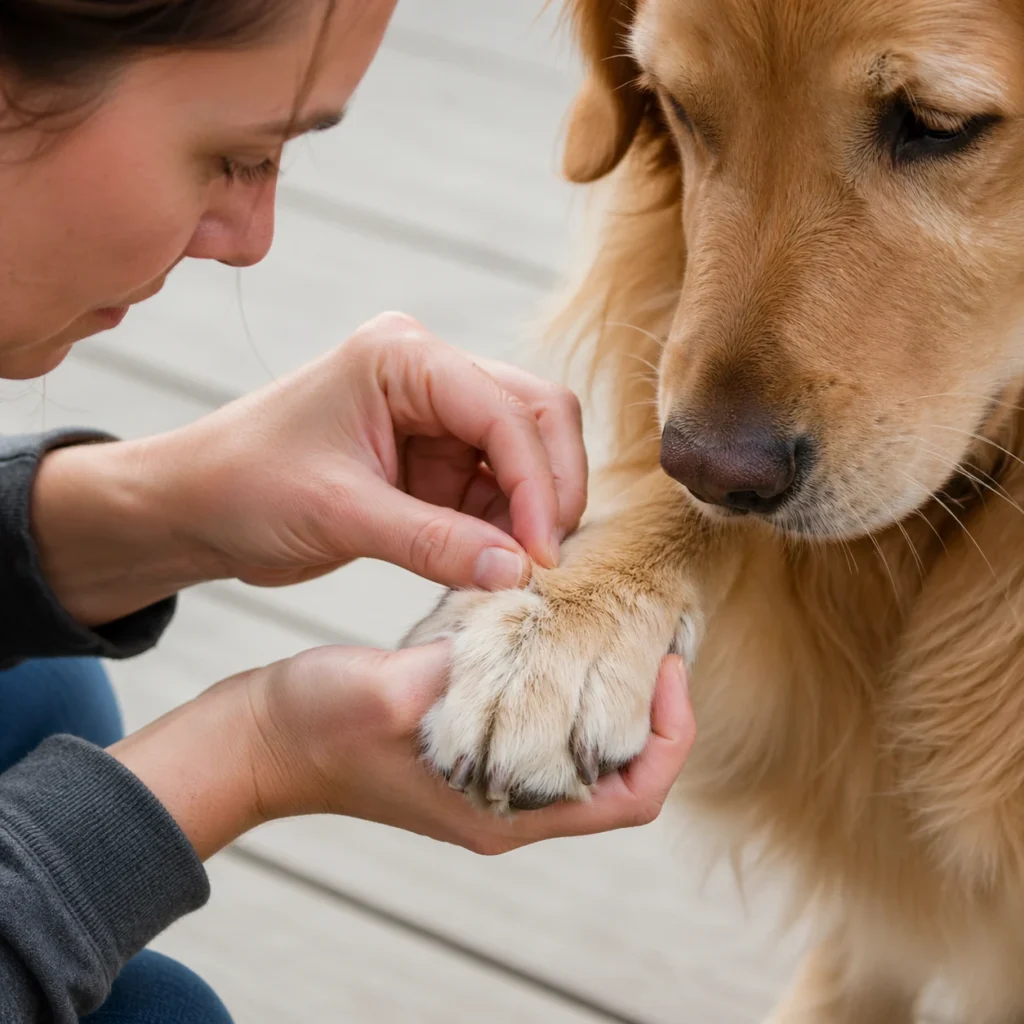
Lift each paw. Look between the toes, behind the pads, around dew claws, and through any long hair on the feet. A fine comb can help only if the skin is calm and the seed is loose.
02.
Ears, face, and eyes
Check ear edges, under ear flaps, eyebrows, muzzle hair, and the outer eye area. Do not poke inside the ear, nose, or eye. Sudden head shaking or a sore eye needs a vet.
03.
Armpits, belly, tail, and collar line
These areas rub during walking and can trap seeds against the skin. Part the coat with your fingers, then brush lightly and follow with a comb where the coat type allows.
Safety first
When should you stop and call a vet?
Call your vet if a grass seed is stuck in the skin, eye, ear, nose, paw, or genitals, or if your dog shows pain, swelling, discharge, limping, violent sneezing, repeated head shaking, constant licking, a closed or weepy eye, or a wound that will not settle. Do not dig with tweezers in sensitive areas and do not keep brushing a painful spot. Home grooming is for loose seeds in the coat; embedded seeds need proper removal. If your dog is already worried by grooming, build handling confidence first with the calm grooming at home guide.
What mistakes should beginner owners avoid?
Most problems come from rushing, using too much pressure, or treating a medical problem like a grooming problem. Avoid these shortcuts.
01.
Brushing before looking
If you brush straight over a visible seed, you can push it tighter into the coat or toward the skin. Look with your hands and eyes first, then brush.
02.
Dragging through knots
A knot can hide a seed. Hold the hair near the skin and loosen only what comes apart easily. Tight mats or painful tangles need a groomer or vet, not force.
03.
Bathing before the coat is clear
Water can make tangles tighter and hide debris. Check and brush first. If your dog really needs washing after the walk, use the home dog bath guide after the coat is safe to wet.
Grass seed questions
Frequently Asked Questions
Straight answers for beginner owners checking their dog after summer walks.
Yes, if the seeds are loose in the coat and your dog is comfortable. Remove obvious seeds by hand first, then brush lightly with the right tool. Do not brush over swelling, pain, bleeding, discharge, or a seed that looks embedded.
It depends on coat type. Short smooth coats usually suit a rubber curry brush, grooming mitt, or bristle brush. Medium, long, curly, and wire coats often need a slicker, pin brush, and metal comb. Double coats may need an undercoat rake used gently.
A fine comb can help catch tiny loose debris on some coats, but it is not the first tool for thick, tangled, curly, or painful areas. Use a wider comb first where needed, and stop if the comb catches hard.
Watch for limping, constant paw licking, swelling between toes, head shaking, ear scratching, a head tilt, sneezing that starts suddenly, a red or weepy eye, chewing one sore patch, discharge, or a wound that does not heal.
Any dog can pick them up, but long ears, hairy feet, feathered legs, curly coats, thick undercoat, and dogs that run through long grass make checking harder. These dogs need slower section-by-section checks.
Keeping long hair around paws and ears tidy can make seeds easier to spot, but do not cut close to skin with scissors if you are unsure. Ask a groomer to tidy high-risk areas safely.
For a short smooth coat, it may take only a few minutes. For curly, long, feathered, or double coats, expect longer. A calm partial check done every walk is better than a rough, rushed brush-out once a week.