BEGINNER COAT GUIDE
Dog Coat Types Explained for Beginners
Not sure whether your dog is smooth, double, long, curly, wire, or a mix of several coat types? This guide gives you a simple home check, the grooming routine each coat usually needs, and the beginner mistakes to avoid before you brush or bathe.
How do you identify your dog’s coat type at home?
Start with what you can see, feel, and check with a comb. Do not guess from breed name alone. Mixed breeds, poodle crosses, spaniels, and terriers can have more than one grooming problem on the same dog.
01
Look at length and shape
Stand your dog in good light. Is the coat tight and flat, long and flowing, curly and woolly, harsh and wiry, or fluffy with a thick layer underneath? Look behind the ears, under the armpits, around the collar, belly, tail, and back legs.
02
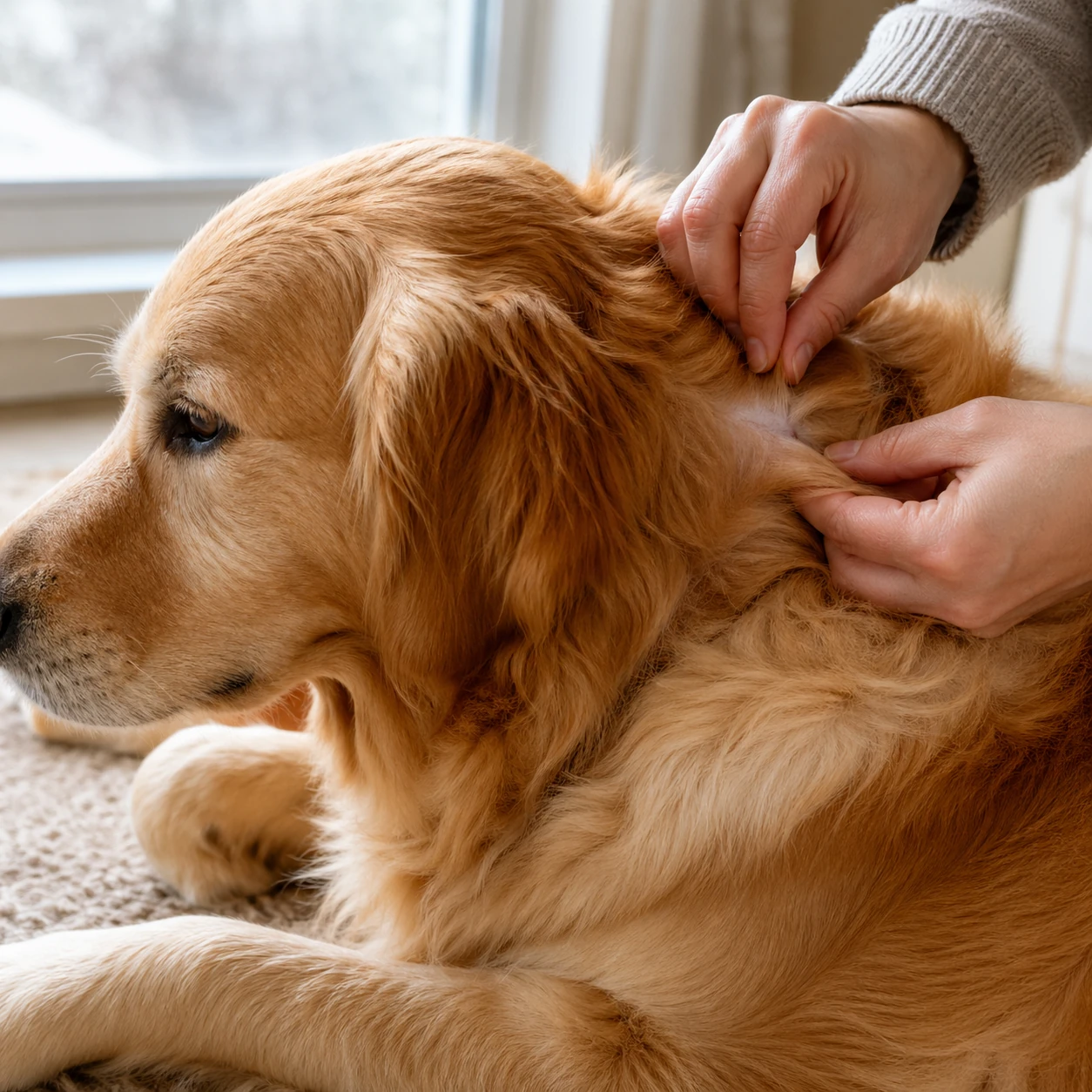
Part the coat to the skin
Use your fingers to part the hair. A single coat usually opens easily. A double coat shows a softer, denser undercoat beneath tougher top hairs. A curly or wool coat can look fluffy on top while hiding knots close to the skin.
03
Check with a comb, not force
After a gentle brush, a metal comb should move without sudden resistance. If you feel a snag, hear hair catching, or see your dog flinch, stop and work smaller. For tool choice, use the dog brush by coat type guide.
Which dog coat type does your dog have?
Use these six beginner categories as a practical grooming map. They are not show-ring definitions. They are a way to decide what the coat is likely to need at home.
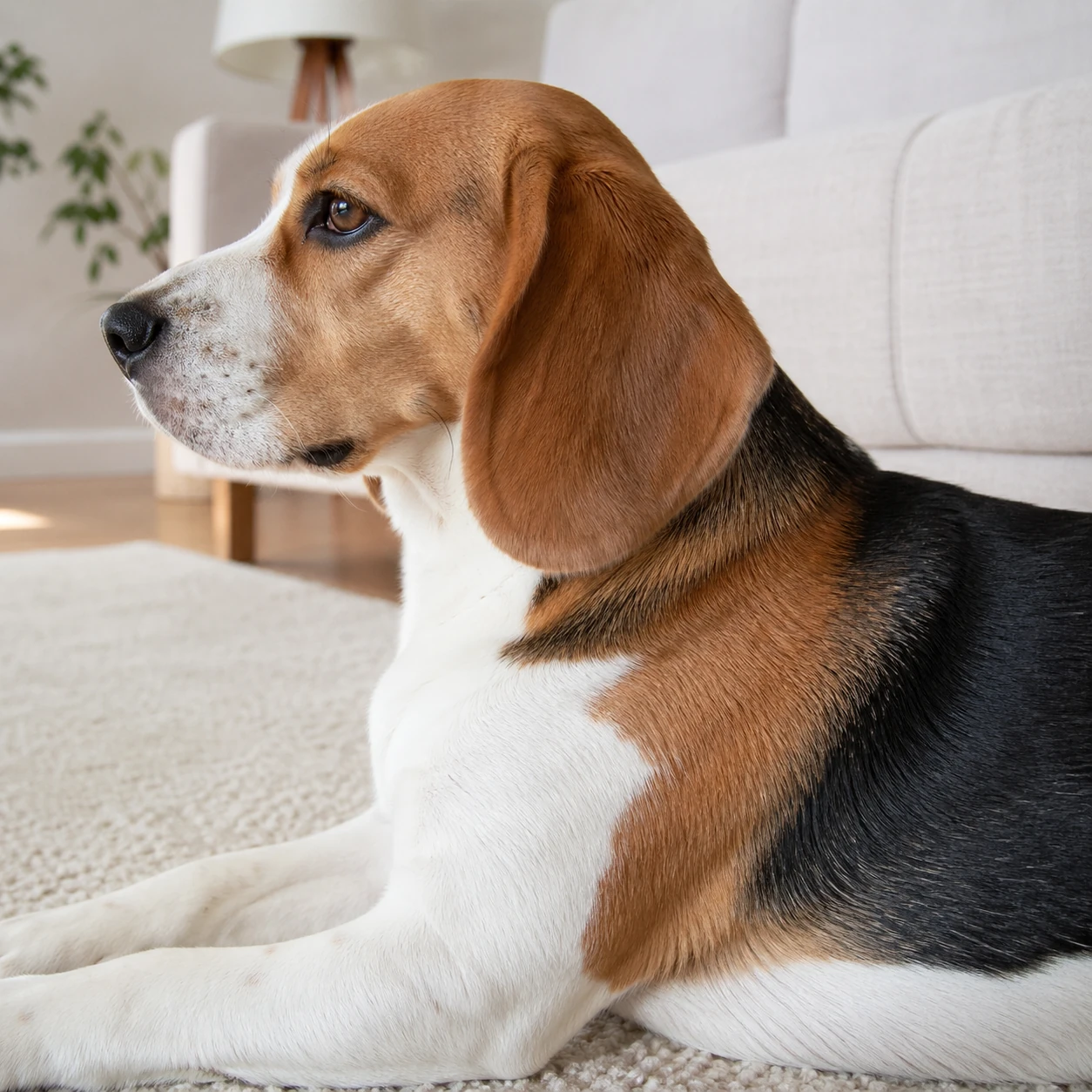
Smooth or short coat
The hair lies close to the body and feels sleek. You can usually see the shape of the skin and muscles easily. Use a rubber curry brush, grooming mitt, or soft bristle brush to lift loose hair without scraping.
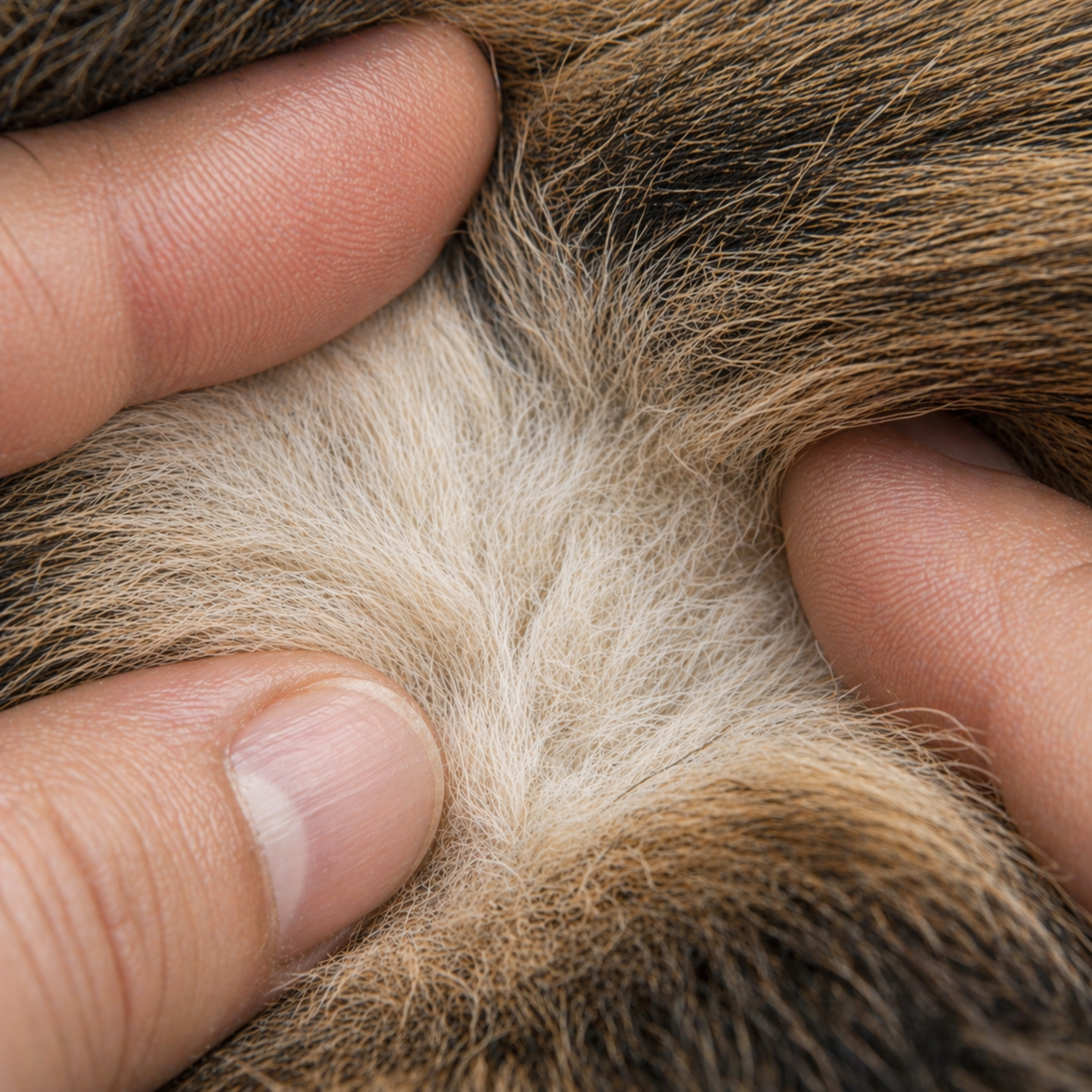
Double coat
Part the coat and you will see a softer undercoat under tougher guard hairs. These dogs can shed heavily. Use an undercoat rake or suitable de-shedding tool gently, then tidy with a slicker, pin brush, or comb.
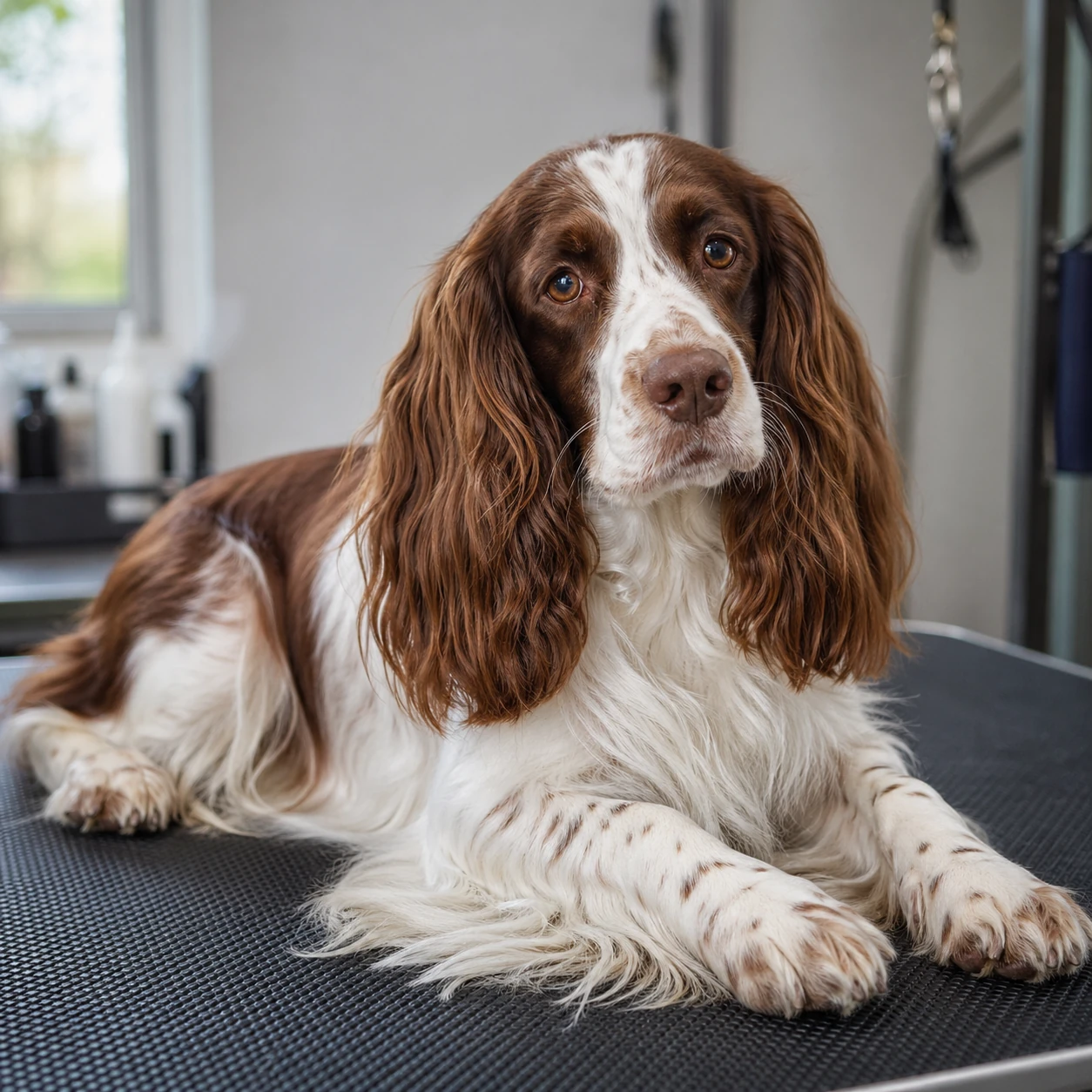
Long or silky coat
The coat hangs, feathers, or forms longer curtains on ears, legs, chest, belly, and tail. Knots start where hair rubs. Brush in sections, then comb behind ears, armpits, collar line, legs, and tail.
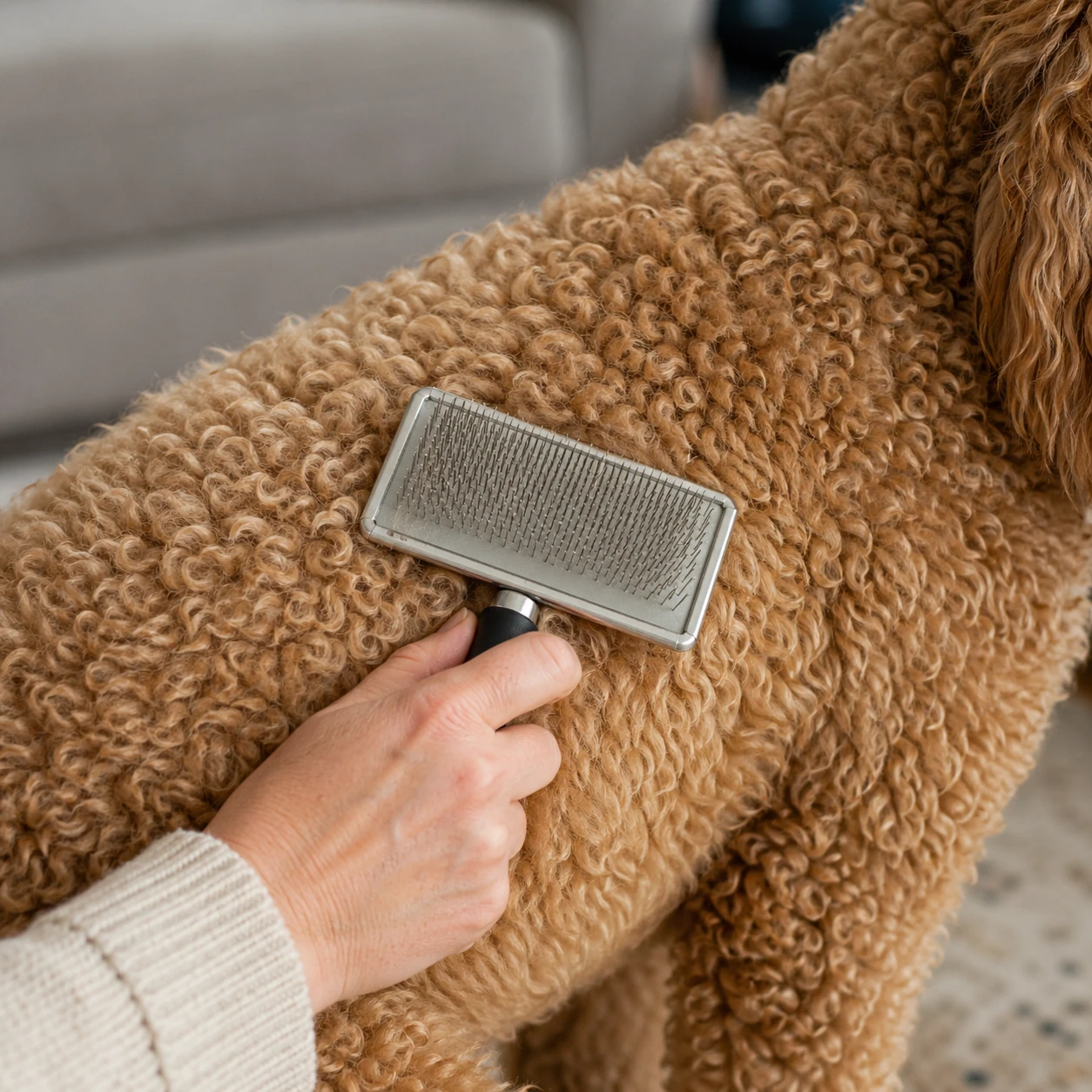
Curly, wool, or fleece coat
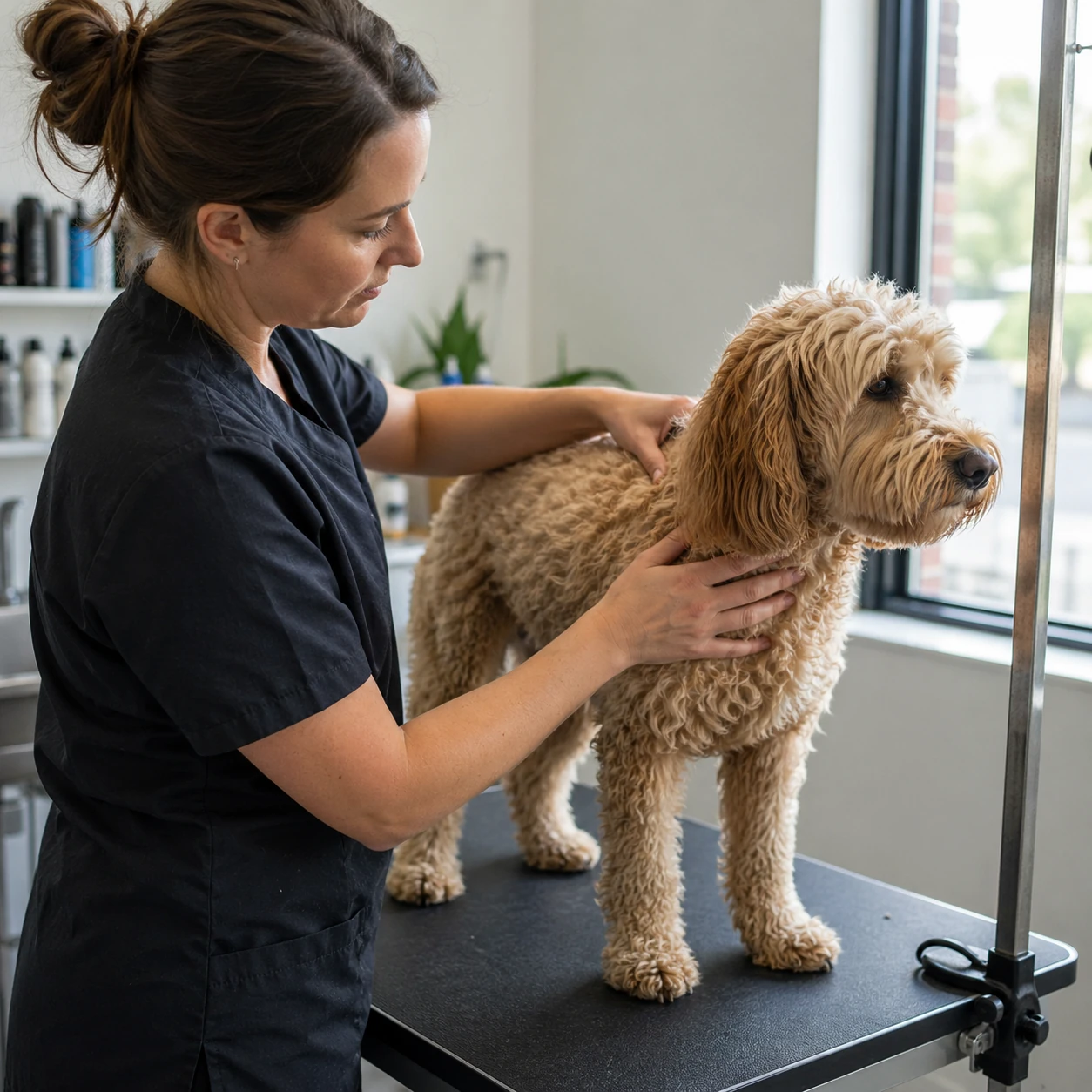
The coat springs back, traps loose hair, and can hide mats near the skin. This includes many poodle-type coats and poodle mixes. Use a soft slicker and comb, and keep a regular trim schedule.
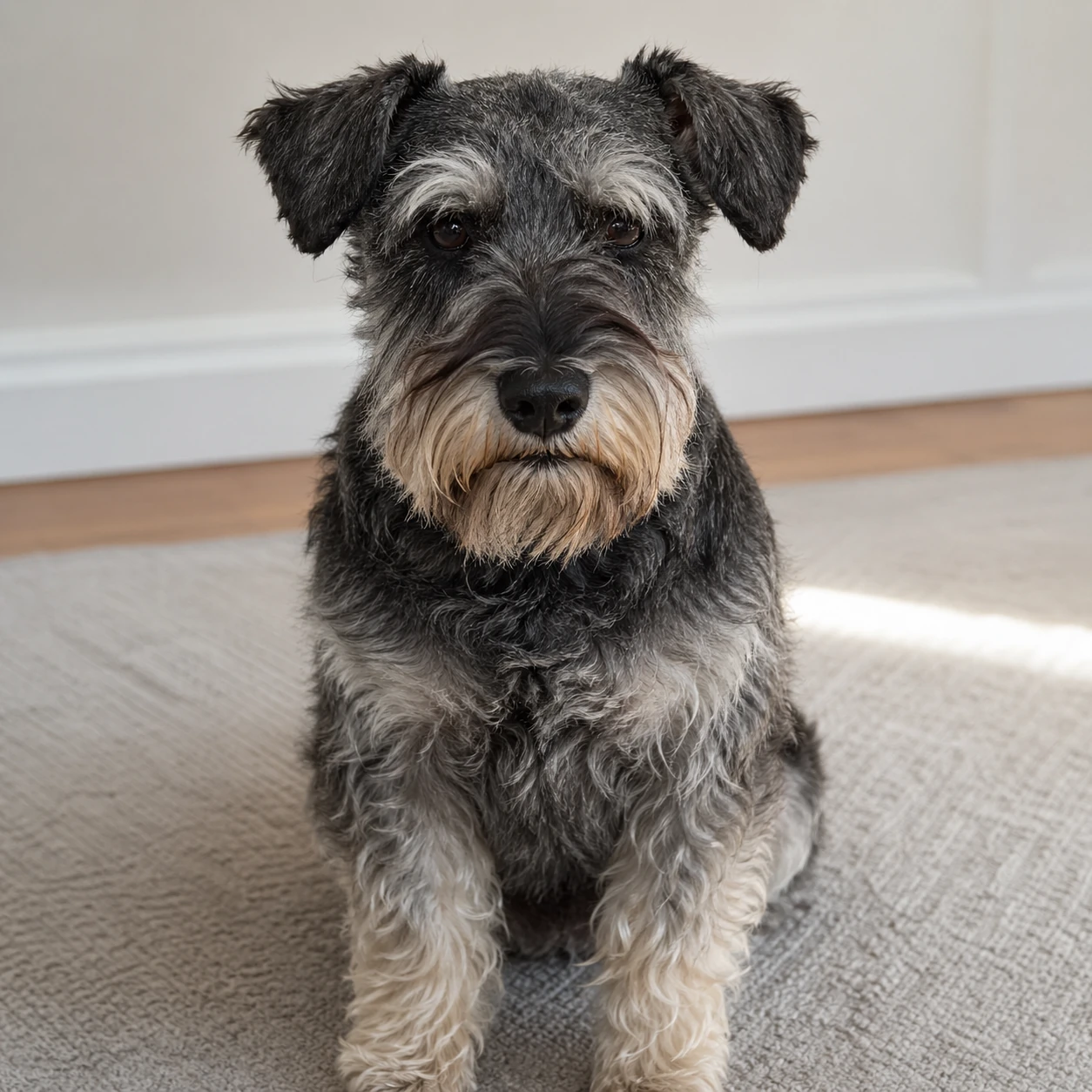
Wire or rough coat
The outer coat feels coarse, bristly, or broken, often with beard, eyebrow, or leg furnishings. At home, keep dirt and tangles out. Ask a groomer whether clipping, carding, or hand stripping suits the dog.
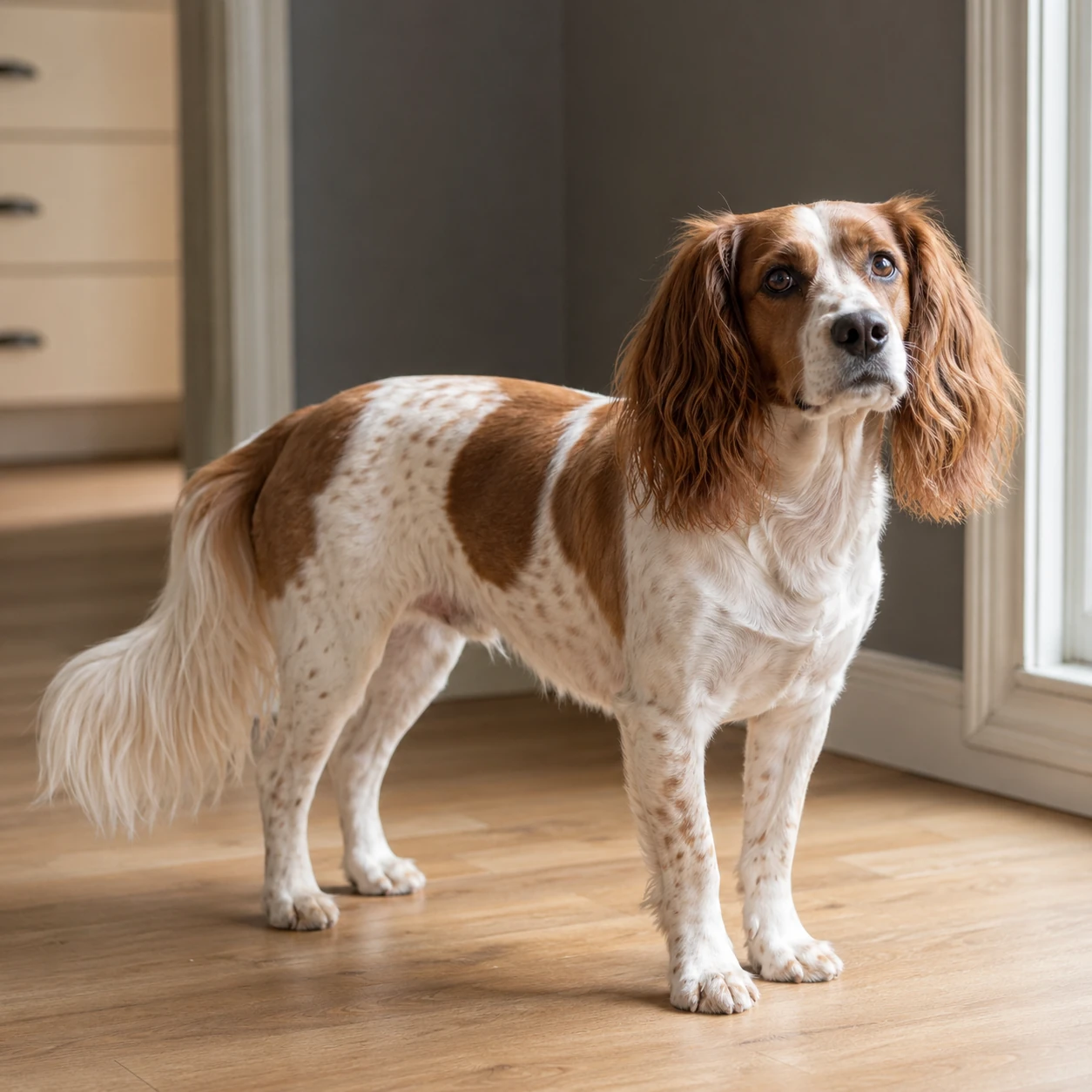
Combination coat
Many dogs are not one neat category. A spaniel may have a shorter body with feathered ears and legs. A crossbreed may have curls, undercoat, and silky areas. Treat each area by what it does, not by the label.
What does each coat type need from you?
The routine changes because the coat changes. The right routine should remove loose hair, keep the skin comfortable, and prevent tangles without dragging tools through knots.
SHORT
Smooth coats need simple maintenance
A short smooth coat may only need a few minutes each week, but it still sheds and still needs skin checks. Use light pressure. If the coat is dusty after a walk, a damp cloth or rubber mitt is often enough.
TANGLE
Long and curly coats need section work
Work in small areas. Lift the coat, brush from the ends toward the body, then use a comb to check. Rain, harness friction, jumpers, and bath water can make tangles worse, so check these coats after wet walks and before washing.
DENSE
Double and wire coats need judgement
Double coats need dead undercoat removed without shaving the protective outer coat. Wire coats may need specialist grooming to keep the texture. If your dog is nervous, build handling first with calm grooming practice at home.
When should you ask a groomer or vet?
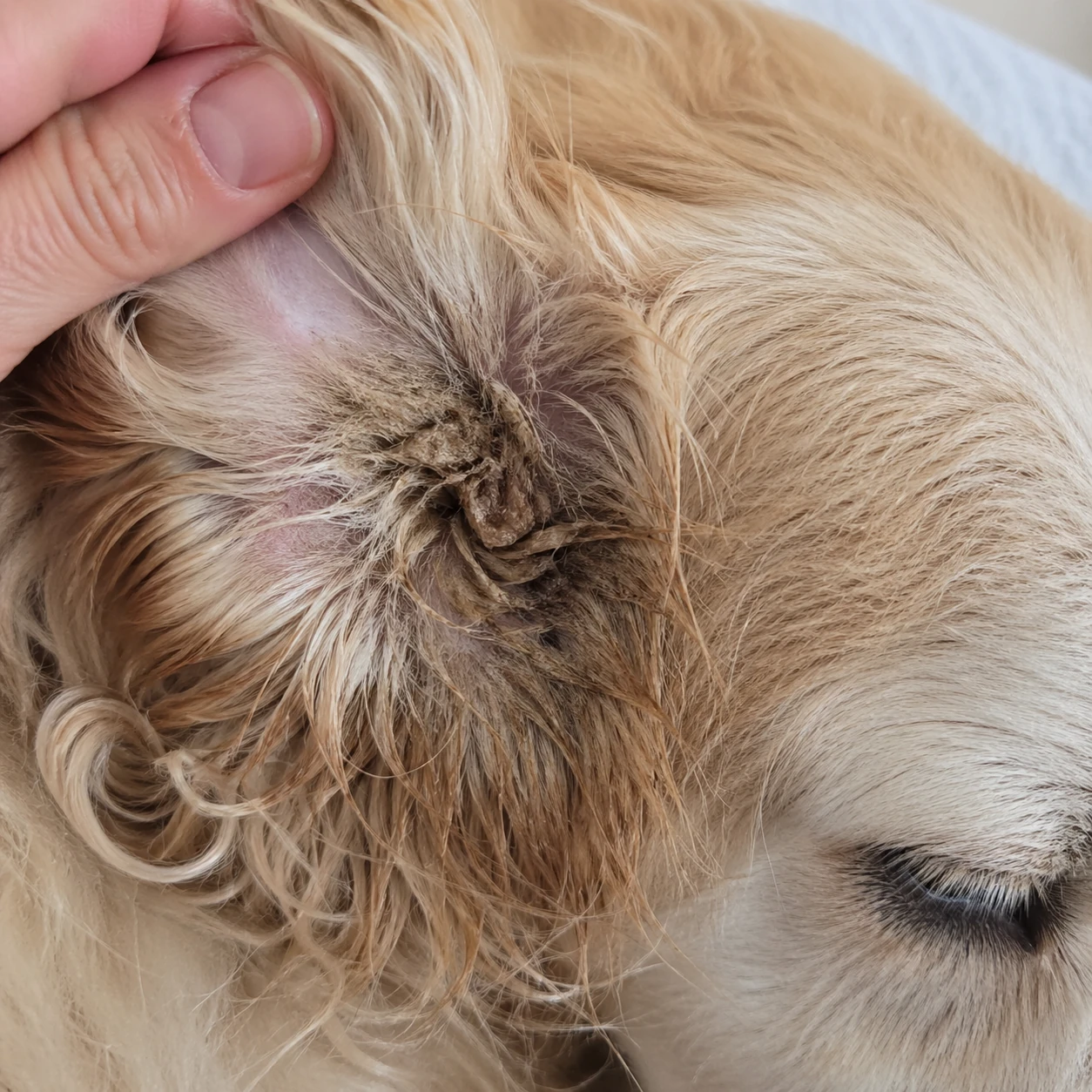
Home grooming is for normal maintenance, not pain, fear, skin trouble, or tight mats. Get help if a mat is close to the skin, your dog guards the area, the coat has a strong unusual smell, the skin looks red or sore, the ears smell bad, or you need to hold your dog down to continue. A calm partial session is better than a complete groom that teaches panic.
What mistakes should beginner dog owners avoid?
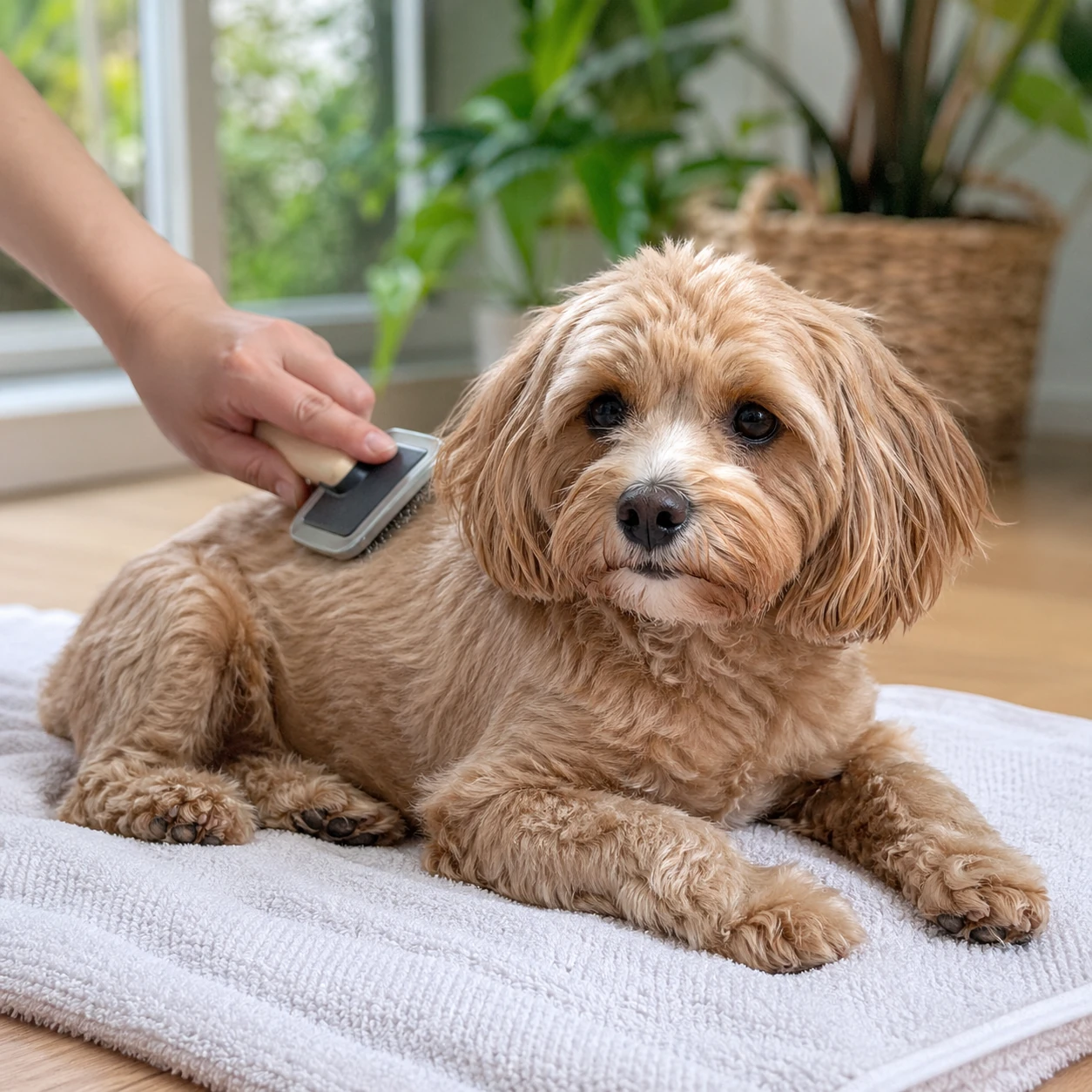
Most coat problems get worse because the owner tries to finish quickly. Slow down, use the gentlest tool that works, and stop when the coat or the dog is telling you the plan is wrong.
01
Brushing only the surface
A fluffy coat can look tidy while mats sit underneath. Part the coat, brush in layers, then comb the high-friction areas. The comb should glide. If it stops, the coat is not clear yet.
02
Bathing before tangles are out
Water can tighten knots. Brush and comb before bathing, rinse properly, then dry in sections so damp hair does not clump. Use the home dog bath guide and the calm drying guide when the coat is ready.
03
Using sharp tools as a shortcut
Do not cut tight mats with scissors, do not scrape repeatedly with harsh de-shedding tools, and do not shave a double coat just because it sheds. If nails also need care, do them in a separate calm session using a safe dog nail trimming routine.
COAT QUESTIONS
Frequently Asked Questions
Straight answers for beginner owners trying to understand dog coat types and keep home grooming simple.
Use six practical groups: smooth or short, double, long or silky, curly or wool, wire or rough, and combination coats. Some dogs fit one group neatly. Many crossbreeds and spaniels need area-by-area grooming because different parts of the body behave differently.
Part the hair with your fingers. If you see a softer, denser layer underneath tougher top hairs, your dog likely has a double coat. During shedding seasons, this undercoat may come out in soft clumps. Do not shave it as a shortcut unless a vet or qualified groomer gives a specific welfare reason.
Yes. Short-haired dogs still shed, collect dust, and can have skin issues, fleas, ticks, lumps, or sore patches. They usually need less time than long or curly coats, but a quick regular brush and skin check is still sensible.
Curly and wool coats catch loose hair instead of dropping it cleanly. The top can look soft while knots form close to the skin, especially after rain, bathing, harness friction, or wearing a jumper. Brush small sections and always finish by combing to the skin.
Brush and comb before the bath. Water can tighten tangles and make mats harder to remove. After the coat is fully dry, brush or comb again if your dog has a long, curly, double, wire, or tangle-prone coat.
You can maintain a wire coat at home by brushing, combing furnishings, and removing dirt. Specialist coat work, such as hand stripping, clipping, or carding, should be discussed with an experienced groomer because the right approach depends on the dog, coat condition, and owner goals.
Use coat type as the starting point. Smooth coats may need weekly light grooming. Medium and double coats often need a few sessions a week and more during heavy shedding. Long, silky, curly, wool, and mat-prone coats may need daily or near-daily checking in problem areas.
Further information
These external references are useful for general grooming and coat-care background. They are not a substitute for a vet if your dog has pain, skin disease, wounds, sudden coat changes, or severe anxiety.
BLUE CROSS
General grooming advice
Blue Cross explains why regular grooming helps prevent matting, removes dead hair and dirt, and gives owners a chance to check skin, ears, eyes, teeth, claws, fleas, ticks, lumps, and bumps. Read Blue Cross dog grooming advice.
PDSA
How often to groom
PDSA gives practical frequency guidance for long-haired, medium-haired, short-haired, and poodle-cross coats. Read PDSA grooming frequency advice.
VCA / AKC
Coat care and specialist coats
VCA covers regular coat care and problem areas. The Kennel Club covers short, medium, long, and wire-coated grooming basics. AKC explains double-coat grooming and why shaving is not a shedding fix. Read VCA coat care advice, The Kennel Club grooming advice, and AKC double-coat grooming advice.